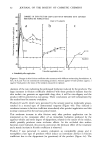
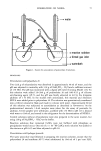
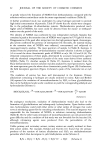
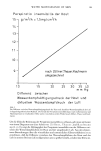
78 JOURNAL OF THE SOCIETY OF COSMETRo CHEMISTS solution. A buffered solution without ethanolamine was also prepared to be used as a control. The solution was heated without aeration in an amber bottle immersed in the waterbath. ANALYTICAL METHOD Determination of NDEIA The concentration of NDEIA was determined by high-pressure liquid chromatography method using a Thermal Energy Analyzer model 502 detector (Thermo Electron Corp.). The procedure was fully described previously (10). Determination of peroxide The spectrophotometric method used for the determination of peroxide in this study was originally described by Banerjee and Budke (17) and later modified by Gruber and Klein (18) to determine the stability of benzoyl peroxide in pharmaceuticals. One ml of the sample was diluted to 25.0 ml with 2:1 acetic acid-chloroform solution in a culture tube equipped with a screw cap with Teflon liner. After purging the solution with nitrogen gas for 1.5 minutes, 1.0 ml of fresh 50% KI (iodate free) aqueous solution was added and purging was continued for an additional minute. The tube was closed tightly and stored in the dark for one hour. Then the absorbance of the liberated iodine was immediately measured in a 1-cm covered silica cell versus a 2:1 acetic acid-chloroform blank at either 470, 410 or 360 nm depending on the intensity of the color (VARIAN model 635 spectrophotometer). The concentration of peroxide, reported as active oxygen, was obtained from one of the standard curves prepared as described below. Standard curves of absorbance versus concentration were made from a 1.27 mg/ml iodine solution in 2:1 acetic acid-chloroform. This iodine concentration is equivalent to 80 mcg/ml of active oxygen. One to five ml aliquots were separately diluted to 25.0 ml and then treated the same way as the samples. This standard curve was made for absorbances at 470 nm and used for the active oxygen levels of 80-400 mcg/ml. By means of successive 1 to 10 and then 2 to 5 dilutions of the above iodine solution, standard curves were also made for absorbances at 410 (active oxygen levels 8-80 mcg/ml) and 360 nm (active oxygen levels below 16 mcg/ml), respectively. RESULTS AND DISCUSSION According to Donbrow et al. (16), aqueous solution of polysorbate 20 would undergo autoxidation during storage. The peroxide level thus formed would increase to a maximum and then decrease again. This kinetic pattern is in accordance with the free radical mediated chain reaction involving the initiation, propagation, and termination steps. The decrease of peroxide level is also caused by the breakdown of the hydroperoxides to form short chain degradation products. Figure 2 shows the rate of peroxide formation in aqueous solution of polysorbate 20 without ethanolamine. These solutions serve as control to show that peroxide was indeed formed in the reaction solutions under study. The formation of peroxide was deliberately accelerated by heating at 50øC, bubbling air to deliver a constant supply of oxygen, constantly

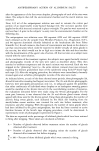
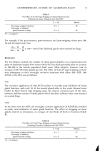
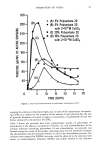
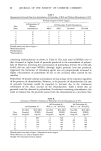
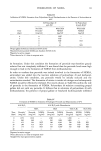
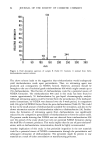
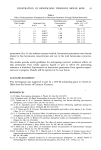
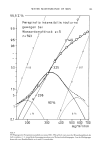
FORMATION OF NDE1A . 79 co 240 200 160 =. 120 IJ, J 40 o (A) 3% Polysorbate 20 ß (B) 3% Polysorbate 20 with 2x10'4M CuS04 ß (C) 20% Polysorbate 20 ß (D)10% Polysorbate 20 with 2x10'4M CuS04 0 5 10 15 2O 25 TIM E (DAYS) Figure 2. Rate of peroxide formation in polysorbate 20 solutions at 50øC. 30 exposing the solution to fluorescent light, and, in some of the experiments, incorporat- ing CuSO4 as a catalyst for the initiation of free radicals. It was observed that the rate of peroxide formation increased at higher concentration of polysorbate 20 and was further enhanced by the presence of CuSO4. Table I shows the peroxide data from representative studies of polysorbate 20 autoxidation in the absence and presence of mono-, di-, and triethanolamines. In the reaction solutions containing polysorbate 20 and ethanolamine, no peroxide was formed during the course of the studies, ind!cating some kind of interaction between the ethanolamine and the peroxide formed in situ by the autoxidation process. The solutions were assayed for NDEIA, but none could be detected in the solutions with mono- or triethanolamine. However, NDEIA was indeed formed in the solutions
Purchased for the exclusive use of nofirst nolast (unknown)
From: SCC Media Library & Resource Center (library.scconline.org)