j. Soc. Cosmet. Chem., 32, 255-273 (September/October 1981) Properties, application and nuclear magnetic resonance spectroscopic study of some new non-ionic surface active agents useful in formulation of water-in-oil emulsions KEIICHI HONDA, AKIRA TSUGITA, TOHRU YONEYA and YASUSHI NISHIJIMA, Cosmetics Laboratory Kanebo, Ltd., 5 - 3 - 28 Kotobuki- cho, Odowara 25 o, Japan. Received January 5, 1981. Presented at the 1 lth IFSCC Congress, Venice, Italy, September, 1980. Synopsis Two novel types of surface active agents useful in preparation of water-in-oil (w/o) emulsions are described: N-(3-alkyloxy-2-hydroxypropyl)-alkanolamines and N-(3-alkyloyloxy-2-hydroxypropyl)- alkanolamines. The dynamic behavior of these materials and their model compounds in reversed miceliar state was characterized by Z3C-Nuclear Magnetic Resonance (•3C-NMR) spectroscopy in order to seek some explanation for their distinctive nature. Measurements of •3C spin-lattice relaxation times indicated that the segmental motion around the double-bonded carbons in the lipophilic group was restricted and that the mobility of carbons at the hydrophilic position was also reduced. The results suggested that the mobility of surfactant molecules may correlate with the stability of w/o emulsibns. A brief investigation of the physiological safety of these compounds revealed that they are not toxic and do not cause skin irritation or ellicit allergic response. INTRODUCTION One particularly useful property of water-in-oil (w/o) emulsions is their affinity for epidermal tissue. This has a dual effect of enhancing the permeation of various bioactive ingredients to deeper cutaneous layers and of protecting the tissue against detrimental environments. Water-in-oil emulsions have not so far gained wide acceptance with most users, however, presumably because of their greasy, oily and shiny nature, which is ascribable to the higher proportion or viscosity of oily substances used to improve the stability of the w/o emulsions. For that reason, w/o emulsions with high water content appear desirable, but the preparation of such emulsions is difficult even utilizing such modifications as the addition of oil-soluble polyvalent metallic soaps or wool wax, among others. Although numerous synthetic surfactants have been developed for industrial use during the last several decades, relatively few are adequate emulsifiers for the 255

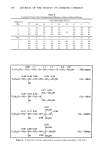
256 JOURNAL OF THE SOCIETY OF COSMETIC CHEMISTS preparation of w/o cosmetics endowed with both physiological safety and sufficient physical and chemical stability. The development of such surfactants has been one of the major concerns of a number of cosmetic scientists. We now wish to report on two new types of surface active agents with excellent emulsifying properties and minimal toxicity: N-(3-alkyloxy-2-hydroxypropyl)alkanol- amines and N-(3-alkyloyloxy-2-hydroxypropyl)alkanolamines. In the present work, the physical nature and the scope of application to cosmetic preparations of these surfactants are examined, and the correlation between their dynamic behavior characterized by •3C-nuclear magnetic resonance spectroscopy (CMR) and the stability of w/o emulsions is discussed. In addition, physiological safety of the new compounds is also evaluated. EXPERIMENTAL PREPARATION OF SURFACE ACTIVE AGENTS Various surface active agents (aminoether and aminoester types as shown below) were prepared by reaction of glycidyl alkyl ethers or glycidyl alkanoates with an excess of alkanolamines in the absence of any solvents: R 2 RxCH2OCH 2 CHCH2N (1) I N OH R 3 R 2 R•CO2CH2 CHCH2N (2) OH R3 Formula 1 is the aminoether type, N-(3-alkyloxy-2-hydroxypropyl)-alkanolamine. Formula 2 is the aminoester type, N-(3-alkyloyloxy-2-hydroxypropyl)-alkanolamine. R• represents the alkyl or alkenyl group (Cn-C2•) R2 and R• each represent the hydroxyalkyl group (C2-C6), CH• or H. Glycidyl ethers of stearyl, isostearyl, oleyl, palmityl, myristyl and lauryl alcohols and glycidyl esters of behenic, stearic, isostearic, oleic, palmitic, myristic, lauric and soy bean oil fatty acids were chosen as starting materials, which in turn were prepared by the reaction of epichlorohydrin with respective alcohols or fatty acids. As alkanol- amines, monoethanolamine (MEA), diethanolamine (DEA), diisopropanolamine (DIPA), 2-amino-2-methyl-l,3-propanediol (AMPD), 2-amino-2-ethyl-l,3-propanediol (AEPD), trimethylolaminomethane (TMAM) and N-methylglucamine (MG) were used. In this report we use abbreviations for the new compounds. For instance, N-(3-stearoxy-2-hydroxypropyl)-diethanolamine and N-(3-oleyloyloxy-2- hydroxypropyl)-trimethylo!aminomethane will be designated as ST-DEA and OLA- TMAM, respectively.
Purchased for the exclusive use of nofirst nolast (unknown)
From: SCC Media Library & Resource Center (library.scconline.org)