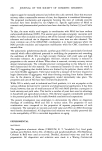
276 JOURNAL OF THE SOCIETY OF COSMETIC CHEMISTS edges to again be mutually attracted and reform the cubic network. Since this structure recovery takes a measurable amount of time, the dispersion is considered thixotropic. The proposed mechanisms and arguments favoring this view of colloidal smectite structure have been detailed by van Olphen (1). Specific applications of MAS to cosmetic and pharmaceutical products have been described by Carlson (2,3) and Ciullo (4). To date, the most widely used organic in combination with MAS has been sodium carboxymethylcellulose (CMC). This anionic gum provides synergistic viscosities with MAS, even when included at as little as 10% of the mineral's weight. Greater electrolyte tolerance and reduced rise in dispersion viscosity over time are also obtained. The most common use of the MAS/CMC combination is in liquid makeups where the MAS provides emulsion and suspension stabilization while the CMC contributes to smooth flow. The polyanionic polyheterosaccharide, xanthan gum (XG) is a particularly functional material which offers additional potential in modifying the properties and extending the usefulness of MAS. XG is a high viscosity thickener with yield value and high electrolyte tolerance. As a pseudoplastic thickener, solution viscosity is reduced in proportion to the amount of shear. When shear is removed, viscosity recovery occurs almost instantaneously. The colloidal structure corresponding to this behavior is not well characterized for this material. The commercial literature (5) cites the work by Rees (6,7) suggesting that double helices are formed by the polymer chains, which in turn form flexible aggregates. Yield value would be a measure of the force required to begin dissociation of aggregates, with shear thinning resulting from further dissocia- tion. In the absence of shear, reaggregation would immediately take place. The properties and uses of XG have been reviewed by Jeanes (8). While XG is widely used in industrial and food products, it is not as popular as the various cellulose derivatives for cosmetic and pharmaceutical applications. It has been found, however, that use of small amounts of XG with MAS provides a synergism in both viscosity and yield value. This has for a number of years been used to advantage in household and agricultural products. This likewise suggests considerable potential in the personal products field for stable flowable emulsions and suspensions. The present investigation was undertaken to demonstrate the effects on dispersion rheology of combining MAS and XG in various ratios. The properties of each combination were compared to the properties of separate preparations of each component. The synergism in viscosity and yield value and effect on MAS thixotropy were thereby demonstrated. All dispersions and solutions were suitably preserved due to the susceptibility of XG to microbial degradation on aging. EXPERIMENTAL MATERIALS The magnesium aluminum silicate (VEEGUM, R. T. Vanderbilt Co.), food grade xanthan gum (Keltrol, Kelco Div. of Merck), and paraformaldehyde, 95% (Matheson, Coleman & Bell) were used as received. Distilled, deionized water was used for all preparations. All dispersions and solutions were made in a Waring Commercial

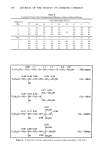
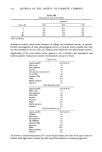
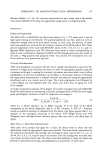
RHEOLOGY OF MAS/XANTHAN GUM DISPERSIONS 277 Blender (Model 31 L 41). All viscosity determinations were made with a Brookfield Viscometer (Model LVT) using the appropriate single point or helipath spindle. PROCEDURE Dispersion Preparation The MAS, XG, or MAS/XG dry blend was added to 23 -+ 2øC water with 3 min of high speed mixing in the blender. The paraformaldehyde was then added at 0.2% on dispersion weight with brief slow speed mixing. In each case, the amount of water used was adjusted to account for the moisture content of the MAS and/or XG. Three percent dispersions were made with MAS:XG ratios of 29:1, 19:1, 9:1, 4:1, 2:1, and 1:1. Separate MAS dispersions and XG solutions were made at solids corresponding to those in each combination. Separate 3% MAS and XG preparations were also made. In all cases, a 750g quantity was prepared which was poured off immediately into one 16-oz. and two 4-oz. glass screw cap jars. Viscosity Determinations After each dispersion was poured off, the 16-oz. sample was allowed to stand for five minutes. A single point viscosity was then run with the appropriate spindle using the viscometer at 60 rpm. A reading for viscosity calculation was taken after 6 min to allow equilibration of structure breakdown and buildup in thixotropic systems. Following the single point determination, a helipath viscosity was obtained using the appropriate attachment and a one minute run at 6 rpm. The 6-min single-point run followed by 1-min helipath run was repeated after one, seven, and thirty days of aging for each 16-oz. sample. A simple comparative measure of the degree of viscosity synergism for each MAS/XG blend was determined by calculating a viscosity synergism factor (VSF) for both single point and helipath viscosities of each 3% dispersion according to: VB• 3% VSF = (1) V,•Z%+ V,, (• (3 -- Z)% ' where V• is blend viscosity, V,• is MAS viscosity, Z is the level of the MAS component in the blend dispersion, and V,, is XG viscosity. A VSF of 1 indicates merely an additive viscosity is obtained from the blend. Any figure greater than 1 is a measure of the synergism occurring in the blend. VSF (Single Point) and VSF (Helipath) were calculated from viscosity figures after one, seven, and thirty days of aging. Shear Stress vs. Shear Rate Determination After each 16-oz. sample had aged for 11 days, the shear stress vs. shear rate was determined using the appropriate single point spindle. The shear stress, represented by the numerical viscometer dial reading, was recorded at shear rates of 0.6, 1.5, 3, 6, 12, 30, 60, 30, 12, 6, 3, 1.5, and 0.6 rpm in succession. The dial reading was recorded after one minute of shear at each rate. The shear stress (dial reading) vs. shear rate (rpm) was plotted to determine thixotropy, pseudoplasticity, and presence of yield value.
Purchased for the exclusive use of nofirst nolast (unknown)
From: SCC Media Library & Resource Center (library.scconline.org)