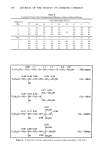
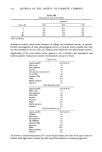
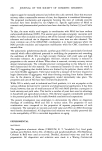
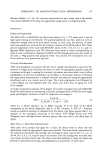
IN VIVO TESTING OF TOPICAL ANTIMICROBIALS 319 B. TEST MATERIALS Undecylenic acid ointment (5% undecylenic acid and 20% zinc undecylenate) and decylenic acid powder (10% calcium undecylenate) were examined. C. APPLICATION OF OINTMENT OR POWDER Circular areas 2.7 cm in diameter were drawn on the flexor surface of both forearms (Figure 1). Ointments (0.5 ml) were applied to one arm and the vehicle (placebo) to the other. Each ointment was delivered via a needleless syringe to the previously delineated areas (Figure 2). The topical agent was then spread evenly within the area with a sterile wooden applicator stick excess material was scraped off. The powder (0.5 gm) was applied to the delineated areas of the forearm and spread with an applicator (Figure 3). Figure 3. The powder (0.5 gm) was applied with an applicator to the delineated areas of the forearms and excess scraped off. D. APPLICATION OF ORGANISMS S. aureus, $. pyogenes, P. aeruginosa and C. albicans, isolated from clinical lesions and identified by appropriate chemical methods (3), were grown overnight (18 hrs) at 37øC in tryptic Soy Broth (TSB). The $taphylococcus was resistiant to 5 #g/ml tetracycline. A microsyringe was used to dispense 0.0! ml of a microbial suspension to the test areas and the inoculum was spread wi-thin the circle with a sterile inoculating loop. Each test site was occluded for 5 hr with a !% inch square Plastic Disposable Weigh Boat (VWR Scientific Inc.) (Figures 4 & 5).

320 JOURNAL OF THE SOCIETY OF COSMETIC CHEMISTS Figure 4. After application of bacteria to the test sites, plastic cups were placed on each delineated area. Figure 5. Micropore © surgical tape was applied to secure the cups over the test sites.
Purchased for the exclusive use of nofirst nolast (unknown)
From: SCC Media Library & Resource Center (library.scconline.org)