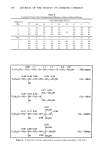
IN VIVO TESTING OF TOPICAL ANTIMICROBIALS 321 E. REMOVAL OF ORGANISMS Organisms were removed at the end of the test period using the detergent scrub method (4). One-tenth ml of appropriate dilutions (10 to 104) of the harvested organisms were plated on trypticase soy agar with 5/ag/ml tetracycline (for S. aureus) 5% blood agar with 1/ag/ml crystal violet for S. pyogenes pseudomonas isolation agar (Difco) for P. aeruginosa and Sabouraud dextrose agar (for C. albicans). Following incubation of plates at 35øC for 48 hrs, the number of colony forming units (CFUs) per dilution was determined. RESULTS UNDECYLENIC ACID OINTMENT The antimicrobial activity of undecylenic acid ointment and placebo was compared against S. aureus, S. pyogenes, P. aeruginosa and C. albicans (Table I). Skin sites treated with undecylenic acid ointment demonstrated significantly reduced S. aureus counts when compared with the placebo treated sites (1.1 x 10 vs. 1.9 x 10⁶). These differences were statistically significant (p = 0.0003). Generally S. pyogenes does not survive well on healthy human skin (5). As a result, S. pyogenes counts were low at both the test and the control sites. Undecylenic acid treated sites did not permit S. pyogenes survival, and the placebo treated sites also demonstrated low counts. When the test and the placebo sites were compared, the differences were statistically significant (p = 0.0137). P. aeruginosa counts were variable at the test and the control sites. Pseudomonas counts were considerably lower on the undecylenic acid treated sites, the differences being statistically significant when compared with the placebo treated sites (p = 0.0100). No Candida was noted on the undecylenic acid treated sites. The differences between the placebo and product treated sites were significant (p = 0.0550). UNDECYLENIC ACID POWDER The antimicrobial activity of undecylenic acid powder and placebo was compared (Table II). Undecylenic powder demonstrated antimicrobial activity against S. aureus and S. pyogenes (p = 0.0005 and p = 0.0545 respectively). The difference in antimicrobial Table I In Vivo Antimicrobial Activity of Undecylenic Acid Ointment (Zinc Undecylenate) Against Several Microorganisms • Undecylenic Initial Microorganism Acid Placebo p-value Inoculum size S. aureus 1.1 x 10 1.9 X 10 6 0.0003 1.7 X 10⁹ CFU $. pyogenes 0 2.9 x 10 0.0137 2.8 x 10⁶ CFU C. albicans 0 2.9 x 10³ 0.0550 7.5 x 10⁵ CFU P. aeruginosa 0.1 X 10 3.0 X 10² 0.0100 x.x X 10 x CFU •Overnight undiluted cultures were used for inoculation, except for Candida (which at high concentration size may initiate skin lesion), diluted to 10 5 to 10 6 CFU dose level (observation).

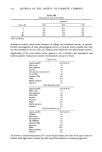
322 JOURNAL OF THE SOCIETY OF COSMETIC CHEMISTS Table II In Vivo Antimicrobial Activity of Calcium Undecylenate Powder Against Several Microorganisms • Undecylenic Initial Microorganism acid powder Placebo p-value Inoculum size S. aureus 6.1 X 10 4 2.9 X 10 6 0.0005 1.9 X 10⁹ CFU S. pyogenes 0 6.2 x 10⁴ 0.0545 3.8 x 10 v CFU C. albicans 6.4 X 10 3 2.5 X 10⁴ 0.1944 2.6 X 10⁶ CFU P. aeruginosa 0.1 x 10 2.0 x 10² 0.1705 3.0 x 10⁶ CFU 'Overnight undiluted cultures were used for inoculation, except for Candida (which at high concentration size may initiate skin lesion), diluted to 105 to 10 6 dose level (observatiotl). activity between the test powder and the placebo was not significant against C. albicans and P. aeruginosa. DISCUSSION We have demonstrated on humans a simple quantitative in vivo method by which antimicrobial activity of a topical test product was measured against several organisms under occlusion. Since many bacteria are sensitive to dessication, semioocclusive devices are recommended to allow hydration and proliferation of microorganisms. Resident skin bacteria are most numerous in moist intertrigenous areas (6). On the glabrous skin, the bacterial population is around 1,000/cm 2. When skin is wrapped with occlusive plastic films, the level of bacterial growth is enormously increased to millions/cm 2 within 24 hr (1). In previous methods, polyvinylidine film (Saran Wrap) or other plastic dressings were placed on the test areas to provide occlusion (1,2). These occlusive devices were in intimate contact with the skin it is assumed that their removal would remove the adhering bacteria. The plastic weigh boats utilized in this study do not provide occlusion only. Since these dishes do not touch the test sites, bacterial counts would not be affected. These devices further permit up to four test organisms to be used on a single forearm (the other arm serving as the control). In this investigation, an antifungal ointment and powder was assayed for their antimicrobial activity in vivo. Undecylenic acid ointment has demonstrated significant antimicrobial activity against S. aureus, S. pyogenes, C. albicans and P. aeruginosa. We have shown that this compound used prophylactically for tinea pedis (athlete's foot) was not only antifungal but also antibacterial. Undecylenic acid powder was effective against S. aureus and S. pyogenes, but not against C. albicans and P. aeruginosa. The reduction of microbial counts in placebo group was noteworthy. This could be attributed to the inherent ability of skin to destroy artificially applied organisms (4). Although topical antifungals are prescribed for their effect on fungi, it has been postulated that bacteria also play an important role in the pathogenesis of certain human fungal infections (7,8,9). The new topical antifungals (imidazoles) have been chosen for clinical use for both their antifungal spectra and their antibacterial potency.
Purchased for the exclusive use of nofirst nolast (unknown)
From: SCC Media Library & Resource Center (library.scconline.org)