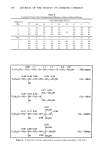
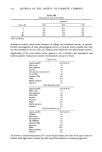
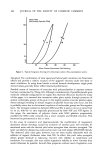
306 JOURNAL OF THE SOCIETY OF COSMETIC CHEMISTS 6. Inverse dose relationships, making suspect the test agent identity or proper dilution used to prepare the materials. REPORTING OF THE RESULTS AND CAUTIONS In reporting results, the character as well as diameter of any zone of inhibition is reported. Comments on the relative phototoxic potential of two compounds should be made with caution since a possible influence on zone diameter is very likely to be the rate of chemical diffusion in the agar system. Thus a very phototoxic material could conceivably appear weak, simply because of poor diffusion in the aqueous system. On the other hand, comparisons between compounds are possible when it can be presumed on a structural basis or from other data that the compounds have similar diffusion characteristics. When questions on successful diffusion arise, a similar study can be constructed using shaker cultures and measuring inhibition by determining per cent transmittance of light compared to untreated cultures as a measure of growth of yeast. In routine assays of large numbers of samples, we have constructed a one page report format (results page) which also serves as the laboratory notebook entry. This page contains the information needed to identify the study number and compound plus the laboratory notebook references. It also contains a small section in which the reagent weights and calculations are shown which were used to make the reagent dilutions. There is also a result section in which the millimeters of inhibition of yeast growth are recorded for each plate at each of the three concentrations and a comparable section for recording inhibition in the plates kept in the dark. Finally, this section of the page contains the results of the 8-MOP control at 10-4%. Near the bottom of the page is a small section for conclusion. This section has blanks indicating whether positive control validation was achieved and whether a phototoxic response (in % of test agent) was achieved. Also at the bottom is a place for signatures of the investigators and date. RESULTS The process of adapting Daniels' method began with reproducing his results. Figure 1 depicts schematically how this was accomplished. The Petri plate was filled with nutrient agar and inoculated with Candida albicans. Immediately after inoculation, the air-dried paper disc containing the test materials was placed on the seeded agar and exposed to ultraviolet light. The exposure we found appropriate was 1.5 to 2.0 milliwatts per centimeter per second which is approximately the intensity that we measured during a sunny day this past summer. The l$-hour exposure period accumulates about 30 joules. This exposure produces only slight retardation of yeast growth. A dark control is used to identify antifungal effects that do not require ultraviolet light as an essential component. The lightly shaded areas are intended to show the freshly seeded agar and the dark shading indicates developed contrast after 48 hours of incubation. For illustrative purposes, an idealized test agent (the "unknown") is shown. Unknowns are routinely diluted to 10, 1 and 0.1% concentra- tions and should produce zones of inhibition which are dependent on concentration. In those cases where phototoxic activity is present as shown, the UVAoexposed

DANIELS' YEAST ASSAY PETRI PLATE + NUTRIENT + CANADIDA ALBICANS AGAR UNKNOWN 8 MOP 10-4% PAPER DISCS + TEST CHEMICAL 320-400 nrn / LI••••%1.5-2•MW-S UVA 10% / UNKNOWN 0.1% UNKNOWN DARK NON SPECIFIC INHIBITION 0 HOUR 48 HOURS Figure 1. Schematic summary of Daniels' method of demonstrating phototoxicity in vitro. Examples of phototoxic inhibition are shown using three 10-fold dilutions of a representative phototoxic fragrance chemical. The pale shading represents freshly inoculated agar the dark shading represents confluent cultures two days after initiation of the test. Both UVA-specific and non-specific inhibition of yea,st growth are shown.
Purchased for the exclusive use of nofirst nolast (unknown)
From: SCC Media Library & Resource Center (library.scconline.org)