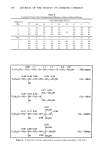
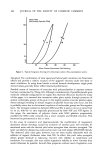
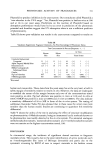
308 JOURNAL OF THE SOCIETY OF COSMETIC CHEMISTS unknown (at 10% in this example) may occasionally encroach on other spots, prompting our subsequent adaption of a compartmentalized well-system. The 8-MOP control produced typical 4-6-ram-diameter zones following UVA exposure but there was no inhibition in the dark as expected. There was also a substantial zone of inhibition produced by the unknown at 10% indicative of non-specific, non-phototoxic inhibition. This effect was extinguished in the higher dilution, 1%. In such cases, the compound is clearly phototoxic at 1% and directly fungistatic at 10% as well. We have modified the original methods to use Bakers Yeast instead of the pathogen Candida albicans and now use an environmentally uniform, four well plate which contains barriers against diffusion interference from the various test site locations. These modifications have also precluded interference through volatilization of test material with only a single exception, and this was detected in the 8-MOP control wells in the form of complete failure of the yeast to grow. Figure 2 shows typical results from the original system while Figure 3 illustrates results in the present system. Figure 2. Typical results of an assay of a phototoxic fragrance material studied using Daniels' method. 8-methoxypsoralen is present as a control at 10 -4 w/v concentration. After the phototoxic inhibition of yeast was demonstrated in the modified system at levels of sensitivity equal to that of the original system, tests of validation were performed after acquiring as many known animal/human fragrance phototoxins and non-phototoxins as possible. Table I shows a list of fragrance materials that have been associated with phototoxic properties in animal or human studies. All were detected in

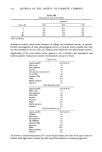
PHOTOTOXIC ACTIVITY OF FRAGRANCES 309 Figure 5. Typical results of an assay of a phototoxic fragrance material studied by modified methods using baker's yeast and a four-well plate. the in vitro screen system at standard 1% test concentrations. In vivo, Bergamot and Rue Oil were positive in hairless mice at about 3% and Fig Leaf Absolute was phototoxic down to 0.001% in 50% of the mice tested (data supplied by Research Institute of Fragrance Materials, Inc. (RIFM). Table II shows results for exposed RIFM fragrance chemicals tested as high as 10% that had no known phototoxic effect on Table I Validation Experiments: Positive Validation With Fragrance Chemicals • Results Expected 2 UVA 3 No UVA Phototoxic 3 8 mop Phantolid Bergamot Oil Expressed Rue Oil Angelica Root Orange Oil Bitter Expressed Lime Oil Pos. Pos. Neg. Yes Pos. Pos. Neg. Yes Pos. Pos. Neg. Yes Pos. Pos. Neg. Yes Pos. Pos. Neg. Yes Pos. Pos. Neg. Yes Pos. Pos. Neg. Yes •Correlation with expected: 100%. ZFrorn results in vivo or analogy. 3Maximum concentration tested: 1%. Lowest concentration tested: 0.1%.
Purchased for the exclusive use of nofirst nolast (unknown)
From: SCC Media Library & Resource Center (library.scconline.org)