j. Soc. Cosmet. Chem., 32, 317-323 (September/October 1981) In vivo methods for testing topical antimicrobial agents RAZA ALY, PH.D. and HOWARD I. MAIBACH, M.D., Dept. of Dermatology University of California, San Francisco, CA 94143. Received March 30, 1981. Synopsis An improved method is presented for testing topical antimicrobial agents (ointment or powder) against several microorganisms under occlusion on human skin. INTRODUCTION In vitro methods measuring antimicrobial efficacy are well established. Antimicrobial activity of agents demonstrated in a test tube may diminish or vanish when tested on the skin. The biological activities in the cutaneous environment are complex, therefore reliable and reproducible methods are required to study the antimicrobial activity of a test agent on human skin. Antimicrobial agents are incorporated in creams, powders, ointments, soaps and solutions with various objectives. Hence, no single test can cover all potential applications. Our objective was to improve previously described in vivo methods for testing antimicrobial agents against several inoculated organisms under occlusion. With occlusion, the skin surface becomes moist, producing conditions favorable for microbial multiplication (1). To provide occlusion in our investigation, we substituted plastic weigh boats for the previous used plastic films (2). Staphylococcus aureus, $treptococcus pyogenes, Candida albicans and Pseudomonas aeruginosa were selected, as they are involved in the majority of the skin infections. These organisms are not consistantly present on normal skin. MATERIALS AND METHODS A. SUBJECTS Fifteen subjects, male and female with normal skin, were included in each trial. They were instructed to use non-medicated soap for bathing and washing for one week prior to study. 317

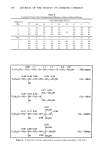
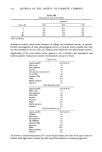
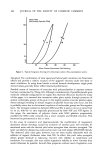
318 JOURNAL OF THE SOCIETY OF COSMETIC CHEMISTS . .• •, . .•.. . 4 ' Figure 1. Circles were drawn on the flexor surface of both forearms. Figure 2. Ointments were applied with an applicator to one arm and the placebo to the other excess material was scraped off with an applicator.
Purchased for the exclusive use of nofirst nolast (unknown)
From: SCC Media Library & Resource Center (library.scconline.org)