NEW NON-IONIC SURFACE ACTIVE AGENTS 259 oo II I I I I o I I I o o o -d o

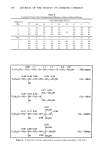
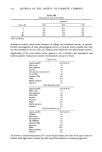
260 JOURNAL OF THE SOCIETY OF COSMETIC CHEMISTS APPRAISAL OF PHYSIOLOGICAL SAFETY Acute toxicity (oral) of the new surfactants was examined by an ordinary method using three groups of four-week-old ICR strain male mice (each group comprising 10 animals). The mortality and general appearance of the animals were recorded for seven days after administration. Primary skin irritation and eye membrane irritation tests were carried out according to the method described by Draize (3), employing New Zealand White strain female rabbits which weighed 2.8 to 3.2 kg. Primary irritation index was calculated from the score determined for intact and abraded skins. Accumulative skin irritation test was conducted in a similar manner except that application of samples to skin was continued for 25 days with a frequency of once a day. Two groups of Hartley strain female guinea pigs (each group consisting of 10 animals) were also subjected to sensitization tests, where the usual maximization method (4) was utilized. Phototoxic action to skin was investigated using New Zealand White strain rabbits (6 animals). Samples (100/a 1/cm 2) were applied to intact and abraded skins, to which, 24 hr later, UV ray was irradiated for 33 min from a distance of 10 cm. Total energy was estimated at ca. 30 joule/cm 2. RESULTS AND DISCUSSION Structures and physical properties of the new surface active agents prepared in this study are listed in Tables I (aminoether type) and II (aminoester type), together with the appraisal of their ability as w/o emulsifiers. Emulsification tests revealed that in both groups of aminoethers and aminoesters, compounds of which lipophilic alkyl chains range from C•6 to C• have a tendency to produce w/o emulsions, while the others were liable to give o/w emulsions. Of these compounds, those with unsaturated bond(s) in long lipophilic chain (e.g. oleyl group) constituted one of classes exhibiting superior emulsifying power and capable of formation of stable w/o emulsions, whereas those with a side chain at c•-carbon in hydrophobic group, such as IST-DEA and ISTA-DEA, showed poor emulsifying power in this emulsion system. Further investigation of structural effect of alkanol- amines on the emulsifying properties of OL-alkanolamines demonstrated that OL- MEA, -DEA, -AMPD, -AEPD and -DIPA are ready to form w/o emulsions, and OL-DEA, -AMPD and -AEPD proved to be highly effective w/o emulsifiers. On the other hand, the type of emulsion prepared with OL-TMAM was dependent on the emulsification condition, and OL-MG produced o/w emulsion. Once formed, the w/o emulsions produced with OL-TMAM proved to be quite stable. HLB values of several new emulsifying agents were determined and compared with those of conventional surfactants such as Sorbitan sesquioleate (SSO) and Oleth-3 (POE-OLE) which are widely used for w/o cosmetics. The results are given in Table III. HLB values of the new emulsifiers that were considered usable for w/o emulsification ranged from 5 to 9, which ranks them between those of SSO (ca. 5) and POE-OLE (ca. 9). Estimation of water numbers, which also reflect the emulsifying power of w/o emulsifiers, was conducted on various surfactants, and Table IV summarizes the result.
Purchased for the exclusive use of nofirst nolast (unknown)
From: SCC Media Library & Resource Center (library.scconline.org)