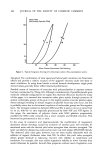
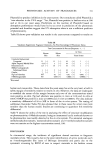
j. Soc. Cosmet. Chem., 32, 303-315 (September/October 1981) The evaluation in vitro of fragrance materials for phototoxic activity E.H. WEINBERG and S.T. SPRINGER, International Flavors and Fragrances, I515 Highway 36, Union Beach, NJ. 07735. Received.June 4, I98I. Presented at the Society of Cosmetic Chemists Annual Scientific Seminar, May 21-22, I98I, lVashington, D.C. Synopsis Phototoxicity or photoirritation, has historically been evaluated in mice or pigs by various methods as a safety test prior to initial exposure of humans. These methods have been expensive. We have modified an assay for routine evaluation of fragrance chemicals for phototoxic potential prior to HUMAN TESTING. Our method uses ultraviolet (UVA) irradiation during diffusion of test chemicals from a paper disc placed upon agar freshly seeded with Fleischman's Baker's Yeast. A concurrent positive control, 8- METHOXYPSORALEN is tested at 10-4%. The test for each chemicall: is contained within a four-compartment plastic unit. Light-specific zones of inhibited yeast growth 'r•flect phototoxic events. Duplicate units are run in the absence of ultraviolet light to account for any direct, UV-independent anti-fungal activity. Correlations are made with UV ABSORPTION data. The test is inexpensive, simple to conduct and provides results within 72 hours. Correlations with positive human phototoxicity results have been excellent. The test provides a tool to easily pre-screen for phototoxic changes related to structural modifications of useful chemicals. It is used primarily to set safe initial dose levels for human panelists in the hazard assessment program. i'• INTRODUCTION This paper presents work on the adaptation and evaluation of the procedure of Daniels (1) for the detection of fragrance chemicals which may produ•ce ultra-violet-light- induced irritation to human skin. The commercial and medical significance of such photochemical irritation has been universally accepted. The hairless mouse screen is being used by the fragrance industry to safeguard human panelists from excessive hazard during the conduct of safety studies (2). Much of the data developed by the Research Institute for Fragrance Manufacturers (RIFM) is ge'nerated in this system however, naturally hairless parts of normal mice are also used (3). This animal assay is both expensive and time consuming. For these reasons we have been encouraged to seek simpler methods to evaluate new chemicals for phototoxic potential. These procedures should allow for studying the effects of structural modifications on photoreactivity as well as provide data adequate to set initial concentrations for the safe testing of new fragrance ingredients on the skin of human volunteers. We envision the subsequent use of animal tests only in cases where ia vitro methods indicate very 303

304 JOURNAL OF THE SOCIETY OF COSMETIC CHEMISTS potent phototoxic effects or if questions arise on bioavailability of test material in the microbiological system. Assays in yeast have been used to measure specific phototoxic substances such as bergapten (4). The original method has recently been adapated by us for the screening of fragrance chemicals in order to gain control over the rising cost of development, yet continue to address the ethical considerations incumbent on those who expose humans to new products. Our modified Daniels method is a sensitive, practical way for assessing the potential phototoxicity of chemicals in topically applied products. This test may not be satisfactory for the detection of systematically administered compounds like demeclocycline and sulfonamide (5), possibly because hepatic metabolic alteration is necessary for the production of a phototoxic molecule. Additional studies using metabolic activation systems, perhaps in the form of cell culture, or additional indicator organisms such as staphlococci (6) may be necessary to expand the sensitivity spectrum of the test to include the assessment of materials administered systematically or altered metabolically in the skin. It is unlikely however, that these refinements will be needed to test fragrance materials in the vast majority of cases. MATERIALS AND METHODS MATERIALS Discs--Schleicher and Schuell, Inc., Kean, New Hampshire 740-E 9.52 mm-diameter absorbent paper discs. Micropipette--Oxford Laboratories, 1702501 adjustable 10-50/,tl. UV Bulbs--F15T8 BLB Sylvania (or equiv.) 320-400 nm, Peak 370 nm. Plates--Falcon tissue culture cluster dish #3004, 1950 Williams Drive, Oxnard, California 93030. These plates contain four 35-mm wells arranged in a square. Irradiation with UVA is made through the plastic lid which reduces the amount of transmitted light by only a small degree. UV Meter--Sunburn/UVA meter, Solar Light Co., Philadelphia, Pa. Microorganism--Fleischman's Active Dry Yeast, commercial food grade. The inoculum was prepared by dissolving 0.02 gm of lyophilized yeast in 15 ml of warm sterile distilled water. After preparing a uniform suspension by mixing, an 8-fold dilution was made using warm sterile distilled water. This final dilution was used to innoculate the agar surface by streaking with thoroughly moistened sterile cotton-tip swabs. The surface of the agar should contain no excess liquid at the time of application of test agent. Agar--Potato dextrose agar from Difco, 39 grams per 1000 ml of water, boil, autoclave, dispense into each well to nearly full. Test Diluent--Methanol absolute, Baker Chemical Company or equivalent. Positive Control--8-Methoxypsoralen (8-MOP) diluted in methanol to 10-4%. METHODS With the exception of substituting Saccharomyces for Candida albicans, the method- ology is similar to that described by Daniels. All dilutions of test substances are done
Purchased for the exclusive use of nofirst nolast (unknown)
From: SCC Media Library & Resource Center (library.scconline.org)