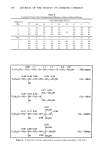
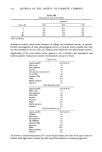
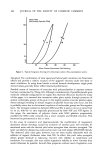
320 JOURNAL OF THE SOCIETY OF COSMETIC CHEMISTS Figure 4. After application of bacteria to the test sites, plastic cups were placed on each delineated area. Figure 5. Micropore © surgical tape was applied to secure the cups over the test sites.

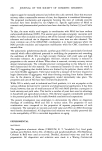
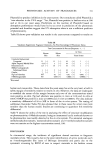
IN VIVO TESTING OF TOPICAL ANTIMICROBIALS 321 E. REMOVAL OF ORGANISMS Organisms were removed at the end of the test period using the detergent scrub method (4). One-tenth ml of appropriate dilutions (10 to 104) of the harvested organisms were plated on trypticase soy agar with 5/ag/ml tetracycline (for S. aureus) 5% blood agar with 1/ag/ml crystal violet for S. pyogenes pseudomonas isolation agar (Difco) for P. aeruginosa and Sabouraud dextrose agar (for C. albicans). Following incubation of plates at 35øC for 48 hrs, the number of colony forming units (CFUs) per dilution was determined. RESULTS UNDECYLENIC ACID OINTMENT The antimicrobial activity of undecylenic acid ointment and placebo was compared against S. aureus, S. pyogenes, P. aeruginosa and C. albicans (Table I). Skin sites treated with undecylenic acid ointment demonstrated significantly reduced S. aureus counts when compared with the placebo treated sites (1.1 x 10 vs. 1.9 x 10⁶). These differences were statistically significant (p = 0.0003). Generally S. pyogenes does not survive well on healthy human skin (5). As a result, S. pyogenes counts were low at both the test and the control sites. Undecylenic acid treated sites did not permit S. pyogenes survival, and the placebo treated sites also demonstrated low counts. When the test and the placebo sites were compared, the differences were statistically significant (p = 0.0137). P. aeruginosa counts were variable at the test and the control sites. Pseudomonas counts were considerably lower on the undecylenic acid treated sites, the differences being statistically significant when compared with the placebo treated sites (p = 0.0100). No Candida was noted on the undecylenic acid treated sites. The differences between the placebo and product treated sites were significant (p = 0.0550). UNDECYLENIC ACID POWDER The antimicrobial activity of undecylenic acid powder and placebo was compared (Table II). Undecylenic powder demonstrated antimicrobial activity against S. aureus and S. pyogenes (p = 0.0005 and p = 0.0545 respectively). The difference in antimicrobial Table I In Vivo Antimicrobial Activity of Undecylenic Acid Ointment (Zinc Undecylenate) Against Several Microorganisms • Undecylenic Initial Microorganism Acid Placebo p-value Inoculum size S. aureus 1.1 x 10 1.9 X 10 6 0.0003 1.7 X 10⁹ CFU $. pyogenes 0 2.9 x 10 0.0137 2.8 x 10⁶ CFU C. albicans 0 2.9 x 10³ 0.0550 7.5 x 10⁵ CFU P. aeruginosa 0.1 X 10 3.0 X 10² 0.0100 x.x X 10 x CFU •Overnight undiluted cultures were used for inoculation, except for Candida (which at high concentration size may initiate skin lesion), diluted to 10 5 to 10 6 CFU dose level (observation).
Purchased for the exclusive use of nofirst nolast (unknown)
From: SCC Media Library & Resource Center (library.scconline.org)