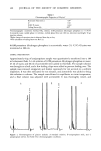
318 JOURNAL OF THE SOCIETY OF COSMETIC CHEMISTS Furthermore, sebum quantity is not likely to be the only factor in perception of oiliness. Apart from some physical properties of the hair itself (e.g., fiber diameter, curliness, softness), differences in the physical properties of the sebum (e.g., melting point, viscosity, surface tension) caused by the different chemical composition might also play a role by influencing the velocity of spreading on the hair surface (2,3), the stickiness and the postulated limitation of sebum production by the feed back mechanism (4). Such correlations between lipid composition and appearance have already been found for skin sebum (5). Therefore, it should be as important to analyse the composition of sebum as to determine its quantity. In an earlier publication (6), a method has been described for the quantitative determination of total amount and composition of sebum lipids in hair extracts, allowing at the same time the preparative isolation of the different lipid groups for further analytical characterization by e.g., gas liquid chromatography/mass spectrosco- py. A prerequisite for obtaining reliable and comparable analytical results with this method is a well defined and reproducible hair cutting and extraction procedure for the isolation of the surface lipids, which should be responsible for the oily appearance of hair. Further investigations were concerned with the detection of carboxylic acids bound to the hair surface as calcium- and magnesium-soaps and of internal lipids, i.e., lipids which are not extractable even with the most intensive shampooing procedure, in this case simulated by solvent extraction under defined conditions. EXPERIMENTAL SOLVENT EXTRACTION OF EXTERNAL LIPIDS Swatches of human hair (batch A, B, and C) were cut to pieces of about 3 mm length. Each of these batches was mixed thoroughly in order to secure homogeneity. 450 mg samples were used for each extraction. For pre-conditioning, some of them were stored at ambient temperature for 2 h at 100% relative humidity (RH). In the initial experiments they were subsequently immersed in 25 ml of the respective pure or water-saturated* solvent** and stirred slightly for 10 min at room temperature. The finally adopted extraction conditions included two 10 min extractions under reflux, each with the 50-fold quantity of H20-saturated ether and two subsequent washings with 10 ml of ether each. The combined extracts and rinsings were filtered through a funnel with a fritted disc No. 3D4, the solvent evaporated, and the residue dried over CaCI2 for 2 h at 10 mm/60øC and subsequently at room temperature till weight constancy. Quantity and composition of the extracted sebum were determined gravimetrically and by high performance liquid chromatography (HPLC) according to reference 6. For the HPLC analyses (6) the free fatty acids in the extracts were methylated with CH2N2 in ether and after addition of an appropriate quantity (c. 15% of extract) of internal standard in CHCI 3 and evaporation of the solvent, the samples were ready for LC analysis. Blind values were obtained from samples prepared in the same way from pure solvents and reagents. *Only in case of CHCI 3: MeOH = 2: 1, 4% of H20 were added. **Solvents were analytical grade and further purified by filtration through an A1203-column.

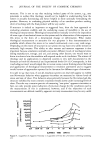
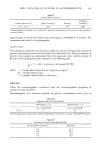
ttAIR OILINESS 319 DETERMINATION OF SURFACE-BOUND CA- AND MG-CARBOXYLATES 400 mg of hair were conditioned and extracted with water-saturated ether according to the standard conditions described above. The ether solution containing the external lipids was analysed according to reference 6. In order to prevent contaminations by Ca and Mg from the glassware, all following operations leading to the determination of Ca 2+ and Mg 2+ by atomic absorption spectroscopy (AAS) were carried out in polyethylene-, Teflon-, or methylpentene polymer-vessels. Furthermore, blank determinations were carried out. The extracted hair was immersed in the 50-fold quantity of a 1% solution of gaseous HC1 in dry ether and stirred slightly for 20 rain at room temperature. After decanting the solvent the hair was washed 3 times with 10 ml of H20-saturated ether at room temperature and 2 times with doubly-distilled H20. All aqueous and ethereal solutions were combined in a separating funnel and agitated for 5 min. The organic phase was washed with 5 ml of water, the water phase with 10 ml of ether. The combined aqueous solutions were freed from ether by short evacuation and made up to 25 ml with doubly-distilled H20 for determination of Ca 2+ and Mg •+ by AAS. The ether solutions were also combined, dried with Na2SO 4 sicc. and filtered through a funnel with a fritted disc. After evaporation of the solvent, methylation of the free fatty acids with CH2N2 and addition of internal standard the quantity of the fatty acid methylesters was determined by HPLC according to reference 6. ENZYMATIC DIGESTION OF HAIR AND DETERMINATION OF INTERNAL LIPIDS 100 mg of the extracted hair was treated 6 h at 55øC with papain and Clelands reagent in a phosphate buffer according to reference 7. The reaction mixture was extracted once with 50 ml and once with 15 ml of CHC13. Undissolved membranes present in the aqueous layer were filtered-off and extracted with boiling CH2C12 for 30 min. The CHC1 c and CH2C12-solutions were combined, the solvent evaporated, and the residue dried over CaC12. Addition of CH2N 2 and internal standard with subsequent HPLC analysis were performed according to reference 7. RESULTS AND DISCUSSION EXTRACTION CONDITIONS FOR EXTERNAL LIQUIDS Solvent considerations: The aim of the following investigations was to find a solvent which desorbs quickly and completely all sebum components from the hair surface without extracting lipids from the inside of the hair fiber. The results of Curry et al. (8) indicate that organic solvents at moderate temperatures are not effective in extracting "internal" lipids. Apart from this, only little additional information has been published about the influence of extraction conditions on the quantity and quality of hair lipids. Most authors (e.g., 9-11) concerned with hair sebum investigations aimed at a more or less exhaustive extraction with petroleum ether or ether for hours and days, regardless of their relevance to oiliness. Only Gloor et al. (12,13) used milder conditions. Hair samples were extracted with petroleum ether at room temperature for only 2 min.
Purchased for the exclusive use of nofirst nolast (unknown)
From: SCC Media Library & Resource Center (library.scconline.org)