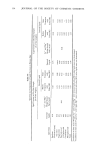
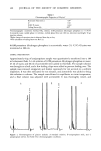
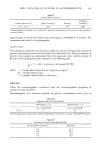
320 JOURNAL OF THE SOCIETY OF COSMETIC CHEMISTS Under these conditions, surface extraction of the more polar components (mono- and diglycerides and cholesterol) is incomplete, but one can argue that a small portion of the total quantity does not play a noticeable role for the rough estimation of total lipids. For an analysis of the composition, however, this is an important deficiency, especially because monoglycerides and cholesterol are suspected of having a prominent influence on the physical properties of sebum. In our preliminary experiments we compared the extraction efficiency of ether, petroleum ether, and a 2:1 mixture of CHC13 and methanol (MeOH), which was expected to remove all surface lipids instantaneously and possibly some internal lipids. Subsequently, the samples were submitted to two additional extractions with the other solvents under the same conditions. The results, compiled in Table I, clearly indicate Table I Successive Extractions of Lipids from Hair Samples (batch A) with 3 Solvents (room temperature, each solvent 10 min) Quantity Quantity of Total of Extract Lipids Solvents (mg) (mg)* Remarks 1 a) Ether 16.5 14.0 normal sebum composition b) Petroleum ether 0.2 mainly nonpolar lipids (squalene, wax esters/ cholesterol esters) c) CHCyMeOH = 2:1 3.6 mainly polar lipids (mono- glycerides, diglycerides/ cholesterol, free fatty acids) 2 a) Petroleum ether 14.5 13.6 less polar lipids than 1 a), 3 a) b) Ether 3.8 mainly polar lipids c) CHCIs:MeOH = 2:1 3.5 mainly polar lipids 3 a) CHCIs:MeOH = 2:1 19.3 14.2 similar composition as 1 a) b) Petroleum ether 0.3 c) Ether 0.3 *Calculated from peak area of the internal standard added to the samples before HPLC. that, after extraction with ether, only an insignificant additional amount of sebum (containing mostly unpopular compounds) can further be extracted with petroleum ether, but a considerable quantity, consisting mainly of polar constituents, with CHCI•/MeOH. If the same quantity of hair is first extracted with petroleum ether, rather large additional amounts are still extractable with ether, and these contain the polar compounds missing in the petroleum ether extract. Finally, with CHC13/ methanol, again a considerable amount of lipids is extractable. After these initial experiments we rejected petroleum ether as extractant, because for our purpose it was essential that all sebum constituents were extracted to the same extent and replaced it by CHCI3 in the following experiments. Effect of water on lipid extraction: In a second series of extractions we studied the effect of the water contents of the hair and of the solvents on the amount of extracted lipids. The results of this investigation have already been mentioned in reference 14.

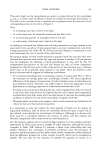
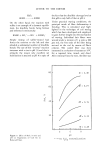
HAIR OILINESS 321 Table II Extraction of Lipids from Hair Samples (batch A) with Dry and with Water-Saturated Solvents Solvents Hair Quantity Quantity of Total of Extract Lipids (mg) (mg) Ether unconditioned 16.5 14.0 Ether/H20 swollen 21.6 14.7 CHC13 unconditioned 15.5 13.2 CHC13/H20 swollen 19.7 13.5 CHCi•:MeOH = 2:1 unconditioned 21.3 14.2 CHC13:MeOH:H20 = 16:8:1 swollen 28.1 14.4 Hair is known to absorb large quantities of water from moist air, most of it rather quickly a gravimetric determination of the water uptake of dried hair in air of 100% RH showed a weight increase of 11% within 20 min and of 15% within 3 h. This absorption is accompanied by a corresponding swelling of the hair fibres. During the process of shampooing the hair is swollen and this might affect the desorbability of lipids from the surface and the accessibility of the sebum underneath the cuticle edges. On the other hand, ether and CHCI3/MeOH are fairly well miscible with water and might act as dehydrating agents which should cause the hair to shrink, thereby possibly occluding or squeezing out part of the sebum e.g., under the cuticle scales. To a certain but lesser extent this should apply to most organic solvents. The following extractions were, therefore, carried out with dry and water-saturated solvents (Table II) and with hair samples which were either conditioned at --•50% RH or at 100% RH (Table III). Table III Extraction of Lipids from Hair Samples (batch B) Before and After Swelling in a Water-Saturated Atmosphere with Dry and with Water-Saturated Solvents Solvents Unconditioned Hair Hair Conditioned in Water-Saturated Atmosphere Quantity Quantity Quantity of Total Quantity of Total of Extract Lipids of Extract Lipids (mg) (rag) (mg) (mg) Ether 14.4 11.7 17.6 12.1 Ether/H20 19.0 12.4 25.3 12.7 CHC13 13.4 11.1 14.0 11.2 CHCl,/H20 17.6 11.4 17.7 11.4 CHC13:MeOH = 2:1 18.1 12.0 19.7 12.3 CHC13:MeOH:H20 = 16:8:1 21.6 12.1 22.3 12.3 In all cases, the composition of extracted lipids was similar, with the presence of water leading to a considerable increase in total weight of extracts. It should be, however, borne in mind that these weight changes are not so much due to lipids as to other water-soluble polar substances as e.g., proteins, phospholipids, urea, detergents, which do not appear in the liquid chromatogram under the elution conditions chosen.
Purchased for the exclusive use of nofirst nolast (unknown)
From: SCC Media Library & Resource Center (library.scconline.org)