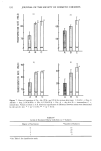
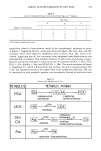
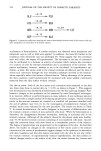
j. Soc. Cosmet. Chem., 35, 183-195 (July 1984) Free amino acids of stratum corneum as a biochemical marker to evaluate dry skin JUNICHI KOYAMA, IZUMI HORII, KIYOSHI KAWASAKI, YASUHISA NAKAYAMA, YOSHIHIRO MORIKAWA, and TAKEO MITSUI, Shiseido Laboratories, 1050 Nippa-cho, Kohoku-ku, Yokohama 223, and HIROKO KUMAGAI, Shiseido Merchandise Evaluation Laboratories, 3-9-1 Nishigotanda, Shinagawa-ku, Tokyo 141, Japan. Received November 15, 1983. Presented at the SCC Annual Meeting, New York, December 1, 1983. Synopsis In experimentally induced hyperkeratosis, remarkable changes in the composition of free amino acids were observed in the stratum comeurn. The metabolites, pyrrolidone carboxylic acid, urocanic acid, citrulline, and alanine, are believed to have been formed from glutamic acid, histidine, ornithine, and aspartic acid, respectively, at the final stage of keratin formation. The rates of conversion to these amino acid metabolites greatly decreased in hyperkeratosis. Accordingly, the conversion rates can be useful parameters to represent the extent of hyperkeratosis. When skin became dry, rough and sometimes flakey in winter, the rates of amino acid conversion varied in the same patterns as seen in the experimentally induced hyperkeratosis. In addition to this, there were a number of nucleated cells in the stratum comeurn. These findings indicate that the lesion of rough skin in winter involves changes not only limited to the outermost cornified layer, but also in the viable epidermis. PURPOSE It is well known that free amino acids are the main component of water soluble substances in the stratum corneum and that the amino acids undergo changes in some types of hyperkeratotic epidermis such as psoriatic epidermis (1-3) and hexadecane- induced hyperkeratotic epidermis (4). This suggests that changes in free amino acids may reflect epidermal changes. The relationship of free amino acids to the keratinization process, however, remains to be elucidated. The present study was initiated to deter- mine whether free amino acids in the stratum corneum can be an indicator of skin condition. Changes in free amino acids in the stratum corneum were studied in human skin, to which surfactant solution was applied to experimentally induce hyperkerati- nization. Dry skin is a skin condition in which the skin surface is dry and rough with visible scales. It is frequently encountered during the winter season. Whether the skin lesion physically involves only the outermost cornified layer of the epidermis or other layers 183

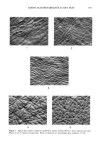
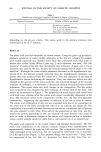
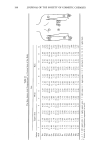
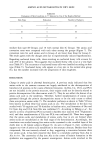
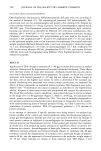
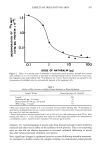
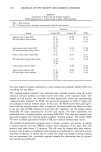
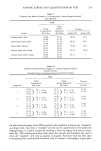
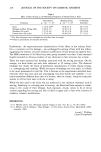
184 JOURNAL OF THE SOCIETY OF COSMETIC CHEMISTS of epidermis is an interesting question. In order to clarify this point, changes in amino acids and occurrence of nucleated cells in the stratum corneum were studied in dry skin. METHOD SKIN MEASUREMENT Morphology of the skin surface. A negative replica of the skin surface was taken with quick-drying synthetic silicone rubber, and the structure of the skin surface was re- constructed with synthetic polysulfide rubber. The positive replica was microscopically photographed. The surface of the skin was assigned to one of five classes depending on its morphology (Figure 1). Furrows and ridges are indistinct in the skin (1). The skin is macroscopically dry and rough and, scales are frequently visible. Furrows and ridges are somewhat indistinct in the skin (2). The skin in classes ! or 2 was defined as a dry skin (A). The skin shown in 4 has relatively distinct furrows and ridges. In the skin shown in 5, the furrows and ridges are distinct and regularly reticulated. These two types of skin were defined as normal skin (C). The skin shown in 3 was intermediate between (A) and (C) and defined as (B). Based on these criteria, the skin of each subject was evaluated. Measurement of free amino acids in the stratum corneum. Extraction of water soluble sub- stances (mainly amino acids) from the stratum corneum was carried out with a glass cup, 1-4 cm in diameter. A glass cup was fixed on the skin. Ethyl ether was applied for 30 seconds to remove the skin surface lipids and then amino acids were extracted with distilled water for 2 minutes. A high speed amino acid analyzer, Hitachi Model 835, was used for amino acid analysis. Pyrrolidone carboxylic acid (PCA) and urocanic acid (UCA) were determined by reverse phase chromatography (5) with a high-perfor- mance liquid chromatograph. Histology ofcornidqed layer cells. A sheet (7 X 12 mm) of transparent two-sided Scotch © tape was stuck on a slide glass. The reverse side was applied to the skin, pressed for 5 seconds under a load of 800 g, and then removed. The detached cornified horny cells were stained with HE and the nucleated horny cells in each 7 X 12 mm were counted under a microscope. The results were classified depending on the number of nucleated cells as shown in Table I. SUBJECTS Experimentally induced abnormal keratinization. Abnormal keratinization was induced by applying sodium lauryl sulfate (LAS) solution to the skin of the right forearm in three male subjects. A round piece of gauze, 2 cm in diameter, moistened with ! ml of 3% LAS solution, was applied to the skin and sealed up with adhesive tape for 24 hours. The left forearm served as control. Dry skin. In December (mean temperature 7.4øC and mean humidity 57%), cheek skin was examined for rough'ness in 77 healthy female subjects, ranging from 20 to 50 years of age, 2 hours after being washed. The skin condition was evaluated by the replica technique and classified into five types. The degree of parakeratosis was estimated
Purchased for the exclusive use of nofirst nolast (unknown)
From: SCC Media Library & Resource Center (library.scconline.org)