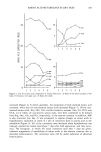
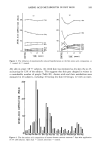
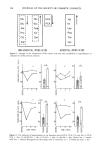
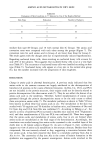
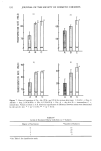
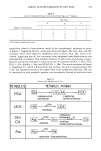
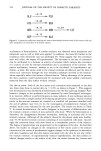
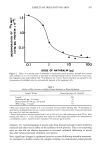
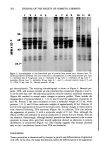
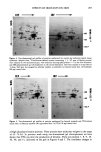
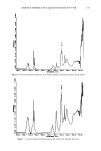
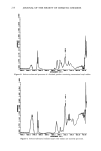
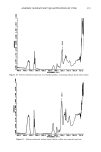
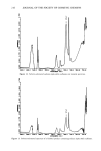
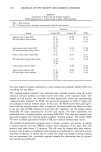
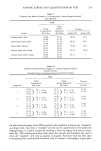
204 JOURNAL OF THE SOCIETY OF COSMETIC CHEMISTS all of these proteins are unique to TPA and are not observed with other irritant, hyperplasiogenic agents including ethylphenylpropiolate, acetic acid, and turpentine oil (13). In the present paper we sought to expand these studies and determine whether the alterations in protein production were common to other promoting agents. The tumor promoters evaluated were anthralin and benzoyl peroxide. We found that anthralin, but not benzoyl peroxide, was able to mimic nearly all of the effects of TPA on mouse skin proteins. These included changes in the production of the same keratins, except for protein 51, and a similar reduction in protein 2, the identity of which is not known. When compared to TPA, anthralin was a more potent inhibitor of epidermal protein synthesis, This could be accounted for, at least in part, by the inhibition of keratin biosynthesis. Using one- and two-dimensional gels, we also found that overall production of protein was inhibited non-selectively. At the present time, the basis for the lowered rate of protein synthesis after anthralin and TPA treatment of mouse skin is not apparent. Inhibition of' protein synthesis in epi- dermal cells in culture by TPA has been reported (20). It is possible that this step may be required for tumor promotion induced by these agents. In the case of anthralin, this phenomenon may account for its anti-psoriatic activity (21). The failure of benzoyl peroxide to induce changes in epidermal protein synthesis is surprising in view of its known promoting activity. It is known that benzoyl peroxide is unstable and breaks down rapidly when applied to skin (22). However, Slaga et a! (3), have shown that a single promoting dose of benzoyl peroxide (40 mg) when applied topically to the backs of mice induced epidermal hyperplasia and morphologic changes similar to those caused by TPA. There is evidence that peroxides and free-radicals may be intermediates in tumor promotion induced by TPA (23) and that benzoyl peroxide may work directly in this fashion. Peroxides have also been shown to damage DNA directly and to be mutagenic (24). It is possible that benzoyl peroxide-induced tumor promotion represents a distinct mechanism in chemical carcinogenesis. Further studies are necessary to clarify this mechanism. REFERENCES (1) N. L. Lowe and J. Breeding, Anthralin, Arch. Dermato/., 117, 698-700 (1981). (2) S.C. Harvey, "Antiseptics and Disinfectants Fungicides Ectoparasiticides," in The Pharmacological Basis of Therapeutics, 6th ed., A. G. Gihnan, L. S. Goodman, and A. Gilman, Eds. (Macmillan Publ. Co., New York, 1980), p 974. (3) T.J. Slaga, A. J. P. Klein-Szanto, L. L. Triplett, L. P. Yotti, and J. E. Trosko, Skin tumor- promoting activity of benzoyl peroxide, a widely used free radical-generating compound, Science, 213, 1023-1025 (1981). (4) A. Segal, C. Katz, and B. L. VanDuuren, Structure and tumor-promoting activity ofanthralin (1,8- dihydroxy-9-anthrone) and related compounds, J. Med. Chem., 14, 1152-1154 (1974). (5) I. B. Weinstein, L. S. Lee, P. B. Fiscl-ter, A. Mufson, and H. Yamasaki, Action of phorbol esters in cell culture: Mimicry of transformation, altered differentiation, and the effects on cell membranes, J. Supratool. Struct., 12, 195-208 (1979). (6) I. Berenblum, "Sequential Aspects of Chemical Carcinogenesis: Skin," in Cancer.' A Comprehensive Treatise, F. F. Becker, Ed. (Plenum Press, New York, 1975), Vol. 1, pp 323-344. (7) A. N. Raick, Ultrastructural, histological and biochemical alterations produced by 12-0-tetradeca- noyl-phorbol-13-acetate on mouse epidermis and their relevance to skin tumor promotion, Cancer Res., 33, 269-286 (1973). (8) T. S. Argyris, The regulation of epidermal hyperplastic growth, CRC Critical Rev. Toxicol. 9, 151- 2OO (1981).

EFFECTS OF IRRITANTS ON SKIN 205 (20) (21) (22) (23) (24) (9) J. M. Clark and P. C. Hanawalt, Inhibition of DNA replication and repair by anthralin or danthron in cultured human cells, J. Invest. Dermatol. 79, 18-22 (1982). (10) L. B. Fischer and H. I. Maibach, The effect of anthralin and its derivatives on epidermal cell kinetics, J. Invest. Dermato/., 64, 338-341 (1975). (11) M. C. Poirier, B. T. DeCicco, and M. W. Lieberman, Nonspecific inhibition of DNA repair syn- thesis by tumor promoters in human diploid fibroblasts damaged with N-acetoxy-2-acetylaminoflu- orene, Cancer Res., 35, 1392-1397 (1975). (12) A. J.P. Klein-Szanto and T. J. Slaga, Effects of peroxides on rodent skin: Epidermal hyperplasia and tumor promotion, J. Invest. Dermato/., 79, 30-34 (1982). (13) J. D. Laskin, R. A. Mufson, L. Piccinini, D. L. Engelhardt, and I. B. Weinstein, Effects of the tumor promoter 12-0-tetradecanoyl-phorbol-13-acetate on newly synthesized proteins in mouse epi- dermis, Cell, 25, 441-449 (1981). (14) R. Raineri, R. C. Simsiman, and R. K. Boutwell, Stimulation of the phosphorylation of mouse epidermal histones by tumor promoting agents, Cancer Res., 33, 134-139 (1973). (15) P. H. O'Farrell, High resolution two-dimensional electrophoresis of proteins, J. Biol. Chem., 250, 4007-4021 (1975). (16) M. Bradford, A rapid and sensitive method for the quantitation of microgram quantities of protein utilizing the principle of protein-dye binding, Anal. Biochem., 72, 248-254 (1976). (17) U. K. Laemmli, Cleavage of structural proteins during the assembly of the head of bacteriophage T4, Nature, 227, 680-685 (1970). (18) C. R. Merril, D. Goldman, S. A. Sedman, and M. E. Ebert, Ultrasensitive stain for proteins in polyacrylamide gels shows regional variation in the cerebrospinal fluid proteins, Science, 211, 1437- 1438 (1980). (19) F. Marks, S. Bertsch, W. Grimm, and J. Schweizer, "Hyperplastic Transformation and Tumor Promotion in Mouse Epidermis: Possible Consequences of Disturbances of Endogenous Mechanisms Controlling Proliferation and Differentiation," in Carcinogenesis, A Comprehensive Survey, T. J. Slaga, A. Sivak, and R. Boutwell, Edso (Raven Press, New York, 1978), Vol. 2, pp 97-116. F. Cabral, M. M. Gottesman, and S. H. Yuspa, Induction of specific protein synthesis by phorbol esters in mouse epidermal cell culture, Cancer Res., 41, 2025-2031 (1981). I. Brody, Treatment of psoriasis vulgaris: Gentleness to the entire psoriatic skin and the use of low concentrations of anthralin, Br. J. Dermatol., 105, Supp. 20, 109-110 (1981). J. E. Fulton, A. Farzad-Bakshandeh, and S. Bradley, Studies on the mechanism of action of topical benzoyl peroxide and vitamin A acid in acne vulgaris, Jr. Cutaneous Path., 1, 191-200 (1974). B. D. Goldstein, G. Witz, M. Amoruso, D. S. Stone, and W. Troll, Stimulation of human poly- morphonuclear leukocyte superoxide anion radical production by tumor promoters, Cancer Letters, 11, 257-262 (1981). I. Fridovich, "Oxygen Radicals, Hydrogen Peroxide and Oxygen Toxicity," in Free Radicals in Biology, W. A. Pryor, Ed. (Academic Press, New York, 1976), Vol. 1, pp 239-277.
Purchased for the exclusive use of nofirst nolast (unknown)
From: SCC Media Library & Resource Center (library.scconline.org)