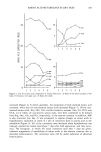
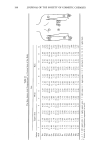
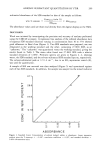
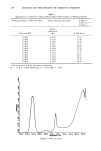
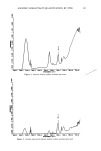
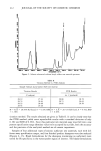
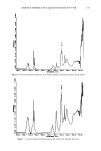
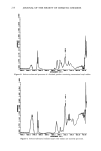
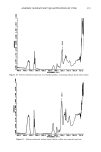
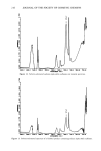
220 JOURNAL OF THE SOCIETY OF COSMETIC CHEMISTS spectral storage and recall as applied to quantitative analyses. To date, all results obtained have verified the acceptability of floppy disk storage. In conclusion, the method of surfactant quantitation presented here has proven to be a viable alternative to the mixed indicator titration procedure. The FTIR method is simple, accurate, precise, and easily applicable to both raw material and finished product surfactant samples. Presently, we are investigating the extended use of the CIRCLE and FTIR techniques for a wide variety of cosmetic raw materials and finished products. REFERENCES (1) S. R. Epton, A rapid method of analysis for certain surface-active agents, Nature [London], 160, 795-796 (1947). (2) S. R. Epton, A new method for the rapid titrimetric analysis of sodium alkyl sulphates and related compounds, Trans. Faraday Sot., 44, 226 (1948). (3) J. W. Reid, G. F. Longman, and E. Heinerth, Determination of anionic-active detergents by two- phase titration, Tenside, 4 (9), 292-304 (1967). (4) American Society for Testing and Materials, Standard test method for synthetic anionic ingredient by cationic titration, Designation D3049-75. (5) J. W. Jenkins and K. O. Kellenbach, Identification of anionic surface active agents by infrared absorption of the barium salts, Anal. Chem., 31 (6), 1056-1059 (1959). (6) R. Matissek, Combination of thin-layer chromatography and infrared spectrometry for the identifi- cation of ethoxylated and non-ethoxylated alkyl sulfate surfactants, Parfumerie und Kosmetik, 64, 59- 64 (1983). (7) S. Hashimoto, H. Tokuwaka, and T. Nagai, Determination of c•-olefin sodium sulfonate, linear alkylbenzene sodium sulfonate and sodium alkyl sulfate in detergents by infrared spectroscopy, Bunseki Kagaku, 22 (5), 559-563 (1973). (8) N. B. Colthup, L. H. Daly, and S. E. Wiberley, Introduction to Infrared and Raman Spectroscopy, (Academic Press, NY, 1964), p 409. (9) R. M. Silverstein, G. C. Bassler, and T. C. Morrill, Spectrometric Identification of Organic Compounds, 3rd ed., (John Wiley & Sons, Inc., New York, 1974), pp 73-119.

j. Soc. Cosmet. Chem., 35, 221-228 (July 1984) The dependence of low-pressure indentation, slackness, and surface pH on age in forehead skin of women SHABTAY DIKSTEIN, ABRAHAM HARTZSHTARK, and PNINA BERCOVICI, Unit of Cell Pharmacology, School of Pharmacy, P.O. Box 12065, 91 120Jerusalem, Israel. Received February 28, 1983. Synopsis Low pressure indentation, elastic recovery, levarometry and skin surface pH measurements were carried out on the forehead skin of women aged 20-70. Statistical analysis showed statistically significant age dependence of these parameters. The calculated mean values at the ages of 20 and 70, respectively, were: low pressure indentation: 0.043-0.054 cm elastic recovery: 80.5%-65.5% levarometry (slackness): 0.037-0.068 cm and skin surface pH: 5.25-5.61. The correlation coefficient was low but significant at p 0.05 for indentometry, elastic recovery and skin surface pH (0.21, 0.32, 0.16) and good for levarometry (0.57). INTRODUCTION In order to define the normal values of any measurement, we have to study its variation in the population according to age, sex, etc. We wish to present the normal biological variation and the age dependency of the following parameters on the forehead skin of women: Indentation, as measured by low-pressure indentometry (1) Elastic recovery (re- bound), as measured by low-pressure indentometry (1) Skin slackness, as measured by levarometry (1) and Skin surfacepH, as measured by a pH meter equipped with a planar surface electrode. METHODS Low-pressure indentometry and levarometry measurements were carried out as previ- ously described (1,2). They were based on low-pressure procedures. A brief description of the techniques follows: INDENTOMETRY A light metal measuring rod is counterbalanced so that the net pressure of the system is less than 1 g/cm 2. A circular plate at the end of the rod, having a surface area of 221
Purchased for the exclusive use of nofirst nolast (unknown)
From: SCC Media Library & Resource Center (library.scconline.org)