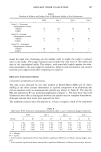
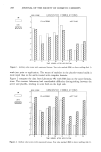
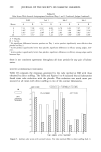
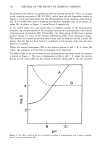
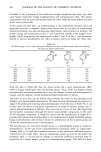
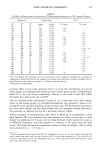
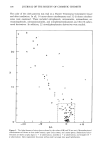
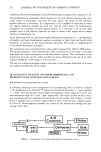
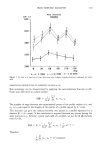
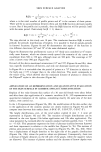
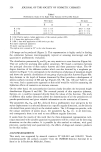
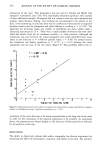
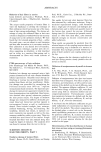
292 JOURNAL OF THE SOCIETY OF COSMETIC CHEMISTS ODOR SCORE 8 SCENTEB FORMULATIONS LAB 1 LAB 2 LAB 3 7 5 4 2 I 3 6 24 0 TIME (HOURS) AFTER APPLICATION 24 Figure 8. Axillary odor scores with scented lotions. Three contract laboratories compared. ically compares the results obtained by direct sniffing in the three contract laboratories. It is evident that there is good agreement at all time intervals for laboratories # 1 and #2. Also evident is the bias in judging apparently related to the fragrance in these lotions. Laboratory #3 was more efficient in discerning malodor when fragrance was present. ANTIPERSPIRANT AEROSOLS In another study, two unscented antiperspirants were compared in a double blind study by the BM group using the tube method and by Laboratory # 1 using direct sniffing. The scores for the two groups were remarkably close at 0, 3, and 6 hours, but not at 24 hours (See Table IV). The BM score for product B at 24 hours does not fit the Table IV Odor Scores With Unscented Antiperspirant Aerosols (Days 1 and 2 Combined Judges Combined) Test Tube Method Direct Sniffing (B-M) (Lab 1) Hours After Product Product Product Product Application A B A B 0 6.47 6.47 6.68 6.74 3 3.11 b 2.84 b 3.67 2.72 a 6 3.12 3.21 3.98 3.53 a 24 4.05 2.96 a 4.62 3.86 a Product B significantly better than Product A. Significant variation among judges at 3 hours no significant differences between products @ .05 level.

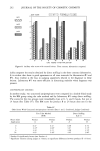
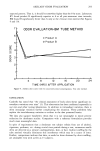
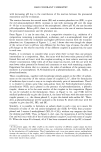
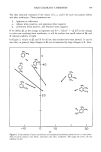
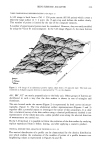
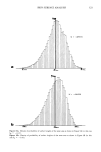
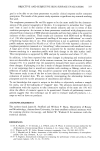
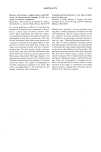
AXILLARY ODOR EVALUATION 293 expected pattern. That is, it should be somewhat higher than the 6-hr score. Laboratory #1 found product B significantly superior to A at all post-treatment time intervals BM found B significantly better than A only at the 24-hour time interval (See Figures 9 and 10). 4 - ODOR EVALUATION-BM TUBE METHOD o Product A [] Product B 0 i I • I I I I I i I i I 4 8 12 16 20 24 TIME (HRS) AFTER APPLICATION Figure 9. Axillary odor scores with two unscented aerosol antiperspirants. Test tube method. CONCLUSION Carabello has stated that "the clinical assessment of body odors shows significant in- trasubject variations over time" (3). This observation has been confirmed repeatedly in our own and other testing laboratories. In addition to intrasubject variation, there is often intrajudge variation further complicating the situation. These problems help explain the interlaboratory variation so evident in the data presented herein. The data also support Carabello's thesis that it is not meaningful to report percent reduction for deodorant studies. Comparison with a reference formulation provides much more meaningful data. In spite of requirements that a deodorant test subject refrain from use of alcohol, cigarettes, perfumes, etc. during crucial time periods during a test, extraneous smells often are detected on a person's undergarments, skin, or hair. Indirect sniffing by the tube method virtually eliminates this interference which may be a source of error. Further, comparisons indicate that data, as useful as those obtained by direct sniffing, are attainable even with as few as 15 subjects.
Purchased for the exclusive use of nofirst nolast (unknown)
From: SCC Media Library & Resource Center (library.scconline.org)