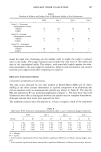
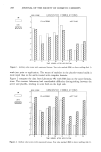
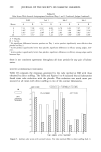
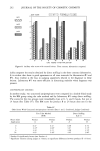
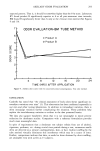
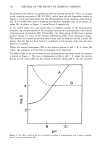
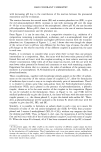
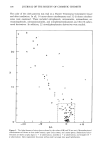
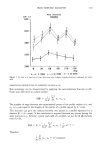
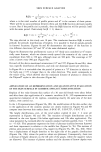
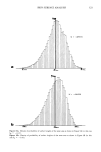
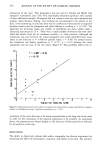
AXILLARY ODOR EVALUATION 293 expected pattern. That is, it should be somewhat higher than the 6-hr score. Laboratory #1 found product B significantly superior to A at all post-treatment time intervals BM found B significantly better than A only at the 24-hour time interval (See Figures 9 and 10). 4 - ODOR EVALUATION-BM TUBE METHOD o Product A [] Product B 0 i I • I I I I I i I i I 4 8 12 16 20 24 TIME (HRS) AFTER APPLICATION Figure 9. Axillary odor scores with two unscented aerosol antiperspirants. Test tube method. CONCLUSION Carabello has stated that "the clinical assessment of body odors shows significant in- trasubject variations over time" (3). This observation has been confirmed repeatedly in our own and other testing laboratories. In addition to intrasubject variation, there is often intrajudge variation further complicating the situation. These problems help explain the interlaboratory variation so evident in the data presented herein. The data also support Carabello's thesis that it is not meaningful to report percent reduction for deodorant studies. Comparison with a reference formulation provides much more meaningful data. In spite of requirements that a deodorant test subject refrain from use of alcohol, cigarettes, perfumes, etc. during crucial time periods during a test, extraneous smells often are detected on a person's undergarments, skin, or hair. Indirect sniffing by the tube method virtually eliminates this interference which may be a source of error. Further, comparisons indicate that data, as useful as those obtained by direct sniffing, are attainable even with as few as 15 subjects.

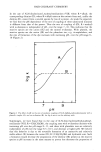
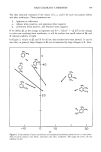
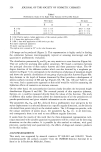
294 JOURNAL OF THE SOCIETY OF COSMETIC CHEMISTS ODOR EVALUATION-DIRECT SNIFFING o Product A [] Product B 0 I I i I i I I I I I • I 4 8 12 I• 20 24 TIME (HRS) AFTER APPLICATION Figure 10. Axillary odor scores with two unscented aerosol antiperspirants. Direct sniffing (Lab 1). However, the peculiar response obtained with aerosol B at 24 hours demonstrates that the method is not foolproof. This error could have been caused by inadequate sampling, judge fatigue, or one or more subjects inadvertantly applying a product to that axilla on the morning of the 24-hour evaluation. Use of additional subjects and/or additional judges would minimize such problems and provide data which might yield better statistical significance. Other advantages of the tube method are: 1. Subjects and judges do not come into recognition proximity--thus minimizing revulsion, embarrassment, and bias. 2. Judges perform in a comfortable, sitting position, concentrating more effectively on odor scoring. 3. Capped tubes can be stored for many hours under refrigeration for later evaluation by a judge unable to be present at the appointed time. Data not presented in this report indicate that odor is virtually unaffected qualitatively and quantitatively after short-term storage under refrigeration. Our experience for almost three years with the tube method and the comparison studies described herein indicate that the indirect tube technique provides meaningful deo- dorancy test data while offering several advantages over conventional, direct-sniffing methods.
Purchased for the exclusive use of nofirst nolast (unknown)
From: SCC Media Library & Resource Center (library.scconline.org)