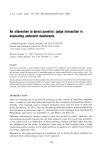
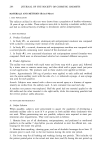
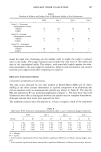
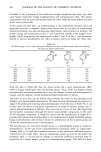
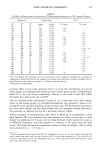
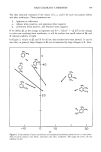
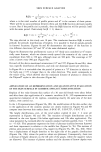
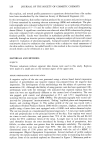
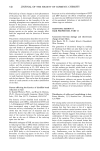
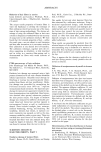
298 JOURNAL OF THE SOCIETY OF COSMETIC CHEMISTS Table I Oxidation Dye Precursors Currently Used by Four Hair Dye Manufacturers in the United States Manufacturer Primary Intermediates A B C D 1. p-Phenylenediamine (PPD) X X 2. 2-Chloro-p-phenylenediamine X 3. N,N-bis(2-hydroxyethyl) PPD -- 4. N-Phenyl-PPD -- -- 5. p-Aminophenol X X 6. 0-Aminophenol X -- x x x -- -- x x -- x x -- -- Couplers Pyrogallol X -- -- Hydroquinone X -- -- 2,3-Naphthalenediol X -- X -- Resorcinol X X -- X 4-Chlororesorcinol -- -- X -- 2-Methylresocinol X -- -- X 1-Naphthol -- -- -- X m-Aminophenol X X X X 5-Amino-2-methylphenol X -- -- X 5-Hydroxyethylamino-2-cresol -- X -- -- m-Phenylenediamine -- -- -- 2,4-Diaminophenoxyethanol -- X -- 2,4-Diaminophenetole -- -- X N-Phenylpyrazolone -- X -- Direct Dyes 4-Nitro-0-phenylenediamine (NOPD) N L(2-Hydroxyethyl)-NOPD Color with Designated Primary Intermediates Brown with 1 Brown with 1 Green/Brn with 1 or 2 Green/Brn with 1 or 2 Yellow-green with 1 Blue with 3 Magenta with 1 or 2 Orange-red with 5 Orange-red with 5 Blue with 1 or 2 Blue with 1 Blue with 1 or 2 Magenta with 1 Color Yellow Orange-yellow © ox, +H NH• NH NH (I) (1[) (lid NH Hz,N '• '0 e HO • •"•/' H•,N' • '0 0 (XI) (XII) (XIII) /OH •CH• \ i /o H•C• N' -H ox.,,3 NN NH NH (viii) (IX) (x) N H CzH4.0 H NH C2H4.0H N H C, zH, .OFI N(C•.H4OH) 2 H•C N CaH•.OH N(CH3)2 536 nm 524 rim. 505 nm, (XlV) (Xv) (XV0

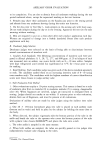
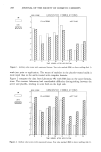
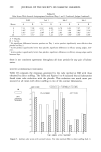
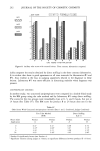
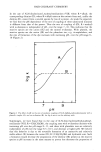
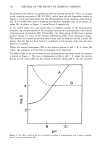
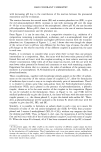
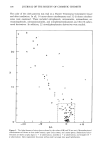
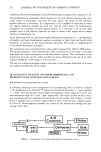
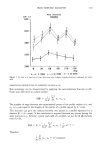
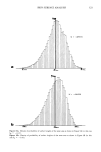
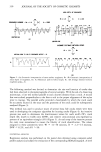
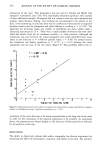
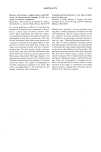
HAIR COLORANT CHEMISTRY 299 been shown to be the reactive intermediates in the color formation process (1). The coupler components are relatively stable to hydrogen peroxide but undergo rapid reac- tion with the p-benzoquinone imines to form leuco indo-dyes. These couplers are generally meta difunctional benzene derivatives bearing amino and/or hydroxy groups. Their reactions with p-benzoquinone diimines and p-benzoquinone monoimines have been studied extensively by the author and the results have been reviewed (2,3). In addition to the colorless precursors, direct dyes, such as nitrophenylenediamines, are sometimes used in the formulation to produce golden or auburn nuances in a shade. While the chemical reactions involved in color formation from mixtures of primary intermediates and couplers in solution are now well understood, the stage has not been reached where this knowledge could be used in computer formulation of shades. The formulation of permanent hair coloring remains an art which is underpinned by qual- itatively applicable scientific principles. The reason for this is the complexity of the process under the actual conditions of hair dyeing. For example, it is known that during the dyeing process, color formation occurs more rapidly in the t•air fiber than it does in the dyebath. The reason for this may lie in the fact that while, in aqueous solution, hydrogen peroxide is a poor oxidant towards p-phenylenediamine (I), oxygen is quite effective. We can employ relatively high cc•ncentrations of hydrogen peroxide in the dyebath and this small molecule can readily diffuse from the dyebath into the hair fiber. It seems likely that once inside the hair fiber, the hydrogen peroxide is decom- posed to give a high internal concentration of oxygen which can then oxidize p-phen- ylenediamine (I). A further complication in predicting the outcome of competing reactions inside the hair fiber is that it will depend not only on the relative reactivity of the competing couplers, but also on their relative rates of diffusion from the dye bath into the hair. Furthermore, for competing reactions taking place inside a swollen keratin fiber, we do not know to what extent the rate of the coupling reactions will be diffusion con- trolled. If the rates are diffusion controlled, the competition between the various cou- plers will be dependent more on their relative concentration in the fiber than on their relative reactivity. Having discussed the complexities of the color formation process under the conditions of use, consideration can be given to what is known about the process in aqueous solution and, in particular, the effect of pH on the various coupling reactions. Kinetic studies of oxidative coupling reactions have shown that the change of rate of color development with pH is readily understood in terms of the ionic nature of the reactive species taking part in the rate-controlling step. Thus, in the pH range of 8-10, it has been shown (2) that the reactive species of the p-benzoquinone diimine (II) is its conjugate acid (III). Since the pKa of (III) is 5.75, it is the minority species in this pH range, and the proportion of the diimine present as its reactive form will decrease tenfold for each unit increase in pH. For the m-diamine couplers, the only reactive species is the free base (IV). Since the pKa of m-diamines is about 5.0, the proportion existing as the free base increases twofold (from 50% to 100%) between pH 5-7 and is independent (-100%) ofpH above pH 7. From this it can be deduced that the rate of formation of the blue aminoindamine dye (V) will decrease slowly between pH 6 and 7 and then decrease tenfold with each unit increase in pH (Figure 1).
Purchased for the exclusive use of nofirst nolast (unknown)
From: SCC Media Library & Resource Center (library.scconline.org)