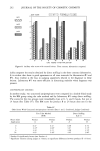
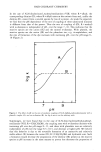
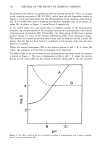
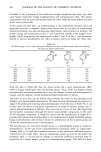
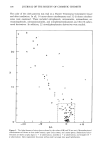
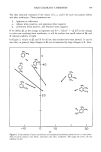
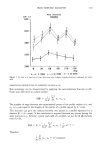
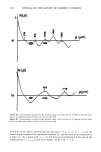
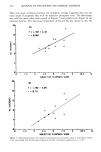
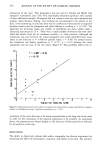
310 JOURNAL OF THE SOCIETY OF COSMETIC CHEMISTS it can be seen that AL is usually negative, i.e., the color fades on irradiation. In the figure, points close to the origin represent the most light-stable dyes. It is immediately obvious that, among the mono-substituted nitrobenzenes, the ortho isomers (30 ex- amples, shown as closed circles) are particularly stable while the para isomers (8 ex- amples, shown as crosses) are particularly unstable, and the meta compounds (12 ex- amples, shown as open circles) have intermediate stability. For the nitrobenzenes bearing two electron-donating substituents, there is also an evident correlation between structure and light fastness. Thus the 2,5-disubstituted compounds (18 examples, shown as plus signs) are clearly the most stable, while the 2,4- (3 examples, shown as asterisks) and 3,4-disubstituted compounds (12 examples, shown as triangles) have moderate-to-poor stability. These correlations are graphically illustrated in Figure 6, where the a and b values are plotted on a color plane for the nitroanilines and nitrophenylenediamines. The longer the arrow, the less lightfast is the color. This figure indicates that if a yellow-green to yellow dye were required, p-nitroanilines and 4-nitro-m-phenylenediamines should be ignored, while particular attention should be paid to 0-nitroaniline derivatives and derivatives of 4-nitro-0-phenylenediamine. However, compounds having a disubstituted amino group, such as dimethylamino, in the position ortho to the nitro group should be avoided. Stability is apparently lost by steric overcrowding between such groups and the nitro group. The apparent anomalous points in Figure 5 correspond to such compounds. It is particularly interesting to note that all the nitro dyes listed in Tables I and II fall into the structural categories that we have found to give the better light fastness. From the data that has been presented, it is evident that the search for novel and useful dyes for semipermanent hair colorants can be focused by application of the correlations between molecular structure and physical properties. ACKNOWLEDGEMENTS The author would like to thank Mr. David Cohen and Drs. Keith Brown and David Palling, all of Clairol Laboratories, for their technical assistance. REFERENCES (1) J. F. Corbett, p-Benzoquinonediimine--A vital intermediate in oxidative hair dyeing,J. Soc. Cosmet. Chem., 20, 253 (1969). (2) J. F. Corbett. The role of meta difunctional benzene derivatives in oxidative hair dyeing. I. Reaction with p-diamines, Ibid., 24, 103 (1973). (3) K. C. Brown and J. F. Corbett. The role of meta difunctional benzene derivatives in oxidative hair dyeing. II. Reactions with p-aminophenols, Ibid., 30, 191 (1979). (4) J. F. Corbett. A relationship between the color and structure of simple nitro dyes, J. Soc. Dyers and Colorists, 83, 273 (1967).

j. Soc. Cosmet. Chem., 35, 311-325 (September/October 1984) Statistical analysis and three-dimensional representation of the human skin surface S. MAKKI and P. AGACHE, Laboratoire de Biologie Cutande et Clinique Dermatologique Universitaire, Place St. Jacques, 25030 Besanoeon, France,' J. MIGNOT and H. ZAHOUANI, Groupe de Recherche en Ggnie Thermique, Institut Universitaire de Technologie, rue Engel Gros, 90016 Belfort, France. Received April 27, 1983. Presented in part at the 12th Symposium of the International Federation of Societies of Cosmetic Chemists, Paris, September 13-17, 1982. Synopsis A profilometric apparatus (Talysurf 5©) was used to quantitatively analyze the human skin surface and to perform three-dimensional (3-D) topographic representations of the same surface. Positive replicas of abdominal and volar forearm skin surfaces were analyzed in this study. The skin microtopography was scanned with the stylus of the Talysurf 5 ©, recording the x, y, and z coordinates of each point on the surface. The 3-D images revealed the skin surface microstructure accurately (furrows, pores, etc...) and allowed a better understanding of the quantitative evaluation of the human skin surface profiles, as traced by the Talysurf 5©. Use of additional statistical parameters (Skewhess, Kurtosis, etc...) provided new perspectives for ana- lyzing the skin surface and the possibility of detecting the effects of drugs and cosmetics on the human skin surface. INTRODUCTION The quantitative analysis of the human cutaneous relief has been performed using a profilometric technique (1,2). Positive replicas of skin surfaces* were scanned by a profilometer (Talysurf 5©), and from the resulting profiles, quantitative parameters were measured to determine the depths of skin furrows and the spacings between them. By this technique, differences between the structures of the skin surfaces were dem- onstrated (1) and skin surface relief alterations were detected in relation to age and sex (3). It was clearly pointed out that the profilometric method was a good technique for * The replicas were prepared using a two-stage technique: (a) an impression of the skin surface was taken by employing a silicone rubber impression material (Silflo, Flexico Development Ltd) (b) a cast (positive replica) made by using a epoxy resin (Araldite My 778, Hardener Hy 956, C•ba-Geigy), curing at room temperature (1). 311
Purchased for the exclusive use of nofirst nolast (unknown)
From: SCC Media Library & Resource Center (library.scconline.org)