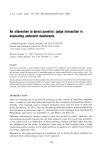
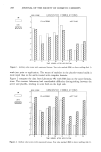
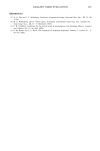
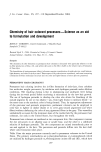
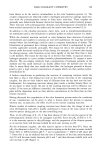
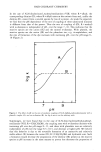
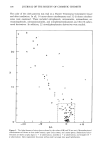
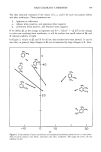
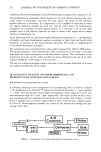
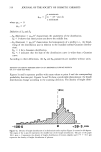
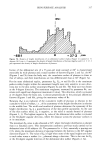
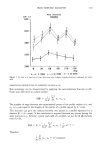
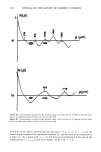
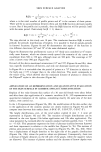
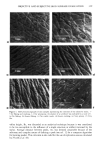
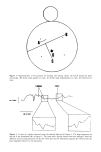
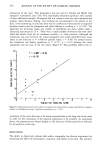
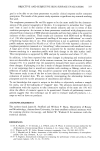
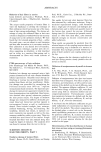
OBJECTIVE AND SUBJECTIVE SKIN SURFACE EVALUATION 329 b Figure I. SEM photomicrographs of skin samples representing the extremes of the subjective scales, 1- 5 for flaking and cracking, 1-8 for plumpness the absence of an attribute was indicated by a score of 1. (a) No flaking. (b) Severe flaking. (c) No visible cracks. (d) Severe cracking. (e) Very plump. (f) Very flat. valley height, Rt, was discarded as an analytical technique because it was considered to be too susceptible to the influence of a single structure or artifact traversed by the stylus. Average distance between peaks, At, was deemed unsuitable because of the arbitrary and complex nature of defining a peak (see ref. 12 for a computer algorithm for locating peaks). This criticism is also valid for the use of replication area as calculated by Nicolls et al. (8).

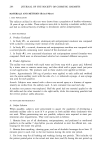
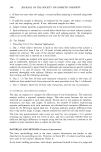
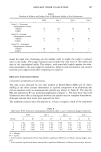
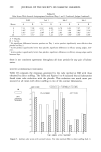
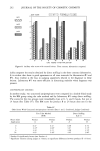
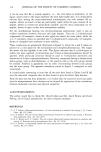
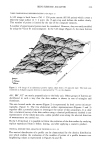
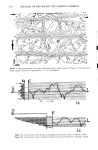
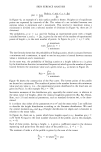
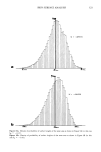
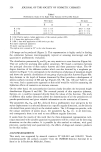
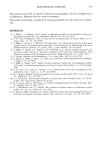
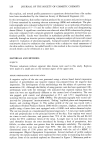
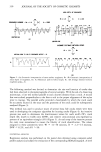
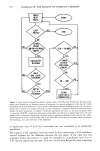
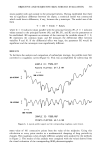
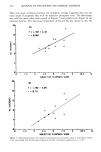
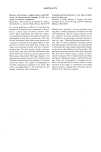
330 JOURNAL OF THE SOCIETY OF COSMETIC CHEMISTS HEI:IH DEPTH OF ROUF-d'•qESS HI:IXU'4UIq • TO VRLLEY RO• NEI{•[I' - R'r Rz = I•N •. Zx N = 13S _ Figure 2. (A) Geometric interpretation of mean surface roughness, Ra. (B) Geometric interpretation of mean depth of roughness, Rz. (C) Maximum peak-to-valley height, Rt. (D) Average distance between roughness peaks, At. The following method was devised to determine the size and location of cracks that had been observed in photomicrographs of several samples. With the aid of a dissecting microscope, a line was scribed parallel to and a known distance from a crack. A second line was scribed perpendicular to the first to aid in the proper alignment of the stylus prior to tracing. The parallel scribe provided a benchmark by which the crack could be accurately located in the trace and the geometry of the crack could be subsequently analyzed (Figure 3). This method was used to produce traces of several bona fide cracks which were then used in developing the computer algorithm for locating cracks (Figure 4). An iterative process was used to determine the discriminator values for crack width (W), crack depth (D), depth to width ratio (D/W), and relative cross-sectional area expressed as percent of an equivalent triangle (A%) (Figure 5). At each step of the iterative process the casts were reexamined to insure the fidelity of crack identification. The values assigned to these parameters were: W = 32-50 microns, D = 2.2-4.4 microns, D/W 8.2%, and A% 90. STATISTICAL ANALYSIS Regression analysis was performed on the paired data obtained using computer-aided profile analysis and subjective evaluation of the corresponding SEM photograph. A level
Purchased for the exclusive use of nofirst nolast (unknown)
From: SCC Media Library & Resource Center (library.scconline.org)