j. Soc. Cosmet. Chem., 36, 297-302 (July/August 1985) Sanguinaria extract, a new agent for the control of volatile sulfur compounds in the oral cavity R. T. BOULWARE and G. L. SOUTHARD, Vipont Laboratories, Inc., Fort Collins, CO 80524,' S. L. YANKELL, University of Pennsylvania, Philadelphia, PA 19104. Received September 4, 1984. Synopsis In addition to its documented antiplaque properties, sanguinaria extract has been demonstrated to be potentially effective in controlling the volatile sulfur compounds (VSC) responsible for bad breath. The relative effectiveness of several commercial oral rinses in controlling VSC was evaluated using incubated salivary samples and a colormetric method of sulfhydryl analysis. This screening method employed 4,4'- bis(dimethylamino)diphenylcarbinol, a thiol-sensitive reagent, and inexpensive instrumentation. Among the four rinses tested, an oral rinse containing sanguinaria extract and zinc chloride was found to be significantly more effective (99% confidence level) in reducing measurable VSC levels than rinses containing zinc ion alone, a mixture of cetylpyridinium chloride and domiphen bromide, or a rinse compounded with a high concentration of "essential oils." INTRODUCTION There has long been an awareness of the presence of volatile sulfur compounds in the oral cavity: it was observed in the late 19th century that the in vivo formation of metal sulfides could produce a phenomenon described as "black gum line" (1). Contemporary methods of quantitative analysis have established that levels of hydrogen sulfide as low as .05 I-tg/10 ml of mouth air are perceived as objectionable (2). Aside from the obvious social implications of breath realodor, the presence of reactive sulfides in the oral cavity may also have significant physiological consequences. Hy- drogen sulfide, a major component of oral realodor, is a pernicious irritant. Oral VSCs have been implicated in the solubilization of gingival collagen and have the potential to alter the permeability of the crevicular epithelium. Other evidence suggests that methylmercaptan, another component of oral realodor, inhibits protein and collagen synthesis at concentrations as low as 10.0 ng/ml. High localized concentrations of VSCs have been identified above the gingival margin (3,4). It may therefore be desirable both for health as well as social reasons to control the levels of volatile sulfur compounds in the oral cavity. Certain criteria for VSC agents have been proposed: low toxicity, the ability to react 297

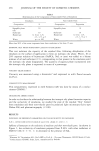
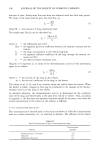
298 JOURNAL OF THE SOCIETY OF COSMETIC CHEMISTS with volatile sulfurous compounds and potential thiol substrates, and long-term residual levels at effective concentrations (2). Useful approaches to controlling VSC levels include the use of bactericidal agents, thiol trapping agents, such as zinc salts, and microbial metabolic inhibitors. A new anti- plaque agent, sanguinaria extract, a mixture of benzophenanthridine alkaloid salts, could be effective via any of these three mechanisms, thus making it a potentially formidable VSC control agent (5,7, 10). This paper compares four commercial oral rinses as VSC control agents using a new method of preliminary analysis. The analytical method, in contrast to gas chromatog- raphy techniques for VSC analysis, utilizes easy-to-use, inexpensive instrumentation available to most laboratories. Products screened included oral rinses containing cetylpyridinium chloride with dom- iphen bromide (D), zinc chloride (B), sanguinaria extract with zinc chloride (A), and a product containing a mixture of "essential oils" (C). The method utilized a thiol-specific colormetric reagent, 4,4'-bis(di-methylamino)di- phenylcarbinol (BDC-OH), to measure the levels of reactive sulfur present in incubated saliva. BDC-OH has historically been used as a reagent for the analysis of sulfhydryl groups in proteins based on this chemistry (6,9), a patent was recently issued for the use of BDC-OH as a general colormetric indicator of "bad breath." Under mildly acidic conditions (pH 5.1) and in the presence of certain surfactants, BDC-OH is present as CH3 CH 3 CH3 CH3 \N • NN • H + BDC-OH ----HC (• H + R-SH •, HC-SR N N /\ CH3 CH3 CH3 CH3 • max BDC + -- 612 nm • max BDC - SR = no abs. Figure 1. Chemistry of 4,4'-Bis(dimethylamino)diphenylcarbinol (BDC-OH) determination of sulphydryl groups.
Purchased for the exclusive use of nofirst nolast (unknown)
From: SCC Media Library & Resource Center (library.scconline.org)