•l. Soc. Cosmet. Chem., 36, 303-311 (July/August 1985) Comparative study of propylene glycol and caprylic/capric triglyceride vehicles for topical application DINESH PATEL,* DON WELSH, and MICHAEL BAKER, Alcon Laboratories, Inc., Fort Worth, TX 76134. Received October 17, 1984. Presented at the American Pharmaceutical Association Academy of Pharmaceutical Sciences 36th National Meeting, Montreal, May 5-10, 1984. Synopsis The influence of propylene glycol and caprylic/capric triglyceride on the in vitro percutaneous absorption and on the in vivo vasoconstriction activity of various steroids was studied. Propylene glycol is widely used as a solvent for topical applications. Although the use of propylene glycol improves drug solubility and bioavailability in topical formulations, propylene glycol has been reported to cause irritation and/or sen- sitization when the concentration exceeds ten percent. Caprylic/capric triglyceride has been shown to be a non-irritating and non-sensitizing solvent. In the in vitro study, caprylic/capric triglyceride vehicles gave slightly higher steady-state penetration flux--with a maximum being a four-fold difference with diflo- rasone diacetate. There were no statistically significant differences between the vehicles in the in vivo vasoconstriction assay. From this study, it is apparent that caprylic/capric triglyceride is an acceptable vehicle for topical applications and is the vehicle of choice in optimized formulations requiring high solvent concentrations. INTRODUCTION Propylene glycol is widely used as a solvent for topical application (1-14). Incorpo- ration of propylene glycol into a vehicle base may modify the barrier properties in the stratum corneum, facilitating the passage of the active drug into the skin (15). Polano et al. (9) found that propylene glycol carries at least a portion of the steroid through the epidermis membrane. As propylene glycol is a humectant, it increases stratum corneum hydration, resulting in an increase in the penetration rate across the skin. Although the use of propylene glycol improves drug solubility and bioavailability in topical formulations, propylene glycol has been reported to cause irritation and/or sensitization when the concentration exceeds ten percent (16-28). Using the Draize skin test (16) and the chamber scarification test (28), propylene glycol has been classified as a moderate irritant. The Draize test (16) also indicates that propylene glycol might be a sensitizer. Present address: Therapeutics Technologies, Inc., Salt Lake City, Utah. 3O3

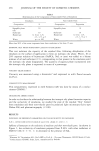
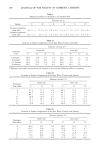
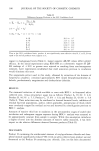
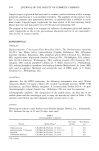
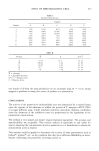
304 JOURNAL OF THE SOCIETY OF COSMETIC CHEMISTS Caprylic/capric triglyceride has been used in cosmetic products because of skin coverage properties and because it is an excellent emollient. The suppliers of this product claim that it can promote skin penetration however, no published data is available to verify these claims. Caprylic/capric triglyceride has been shown to be non-irritating (using Draize skin test and skin patch test) (29,30) and non-sensitizing (29). The purpose of this study is to compare the influence of propylene glycol and caprylic/ capric triglyceride on the in vitro percutaneous absorption and the in vivo vasoconstric- tion activity of various steroids. EXPERIMENTAL CHEMICALS Hydrocortisone 17-butyrate (Gist-Brocades, Delft, The Netherlands), desonide (S.I.R.S. Spa, Milan, Italy), hydrocortisone (Upjohn, Kalamazoo, MI), diflorasone diacetate (Upjohn, Kalamazoo, MI), propylene glycol (Dow Chemical Co., Midland, MI), caprylic/capric triglyceride (Ionelex Chemical Div., Philadelphia, PA), polysor- bate 60 (ICI Americas, Wilmington, DE), sorbitan stearate (ICI Americas, Wil- mington, DE), sodium phosphate (dibasic) 0. T. Baker Chemical Co., Phillipsburg, NJ), sodium phosphate (monobasic) and sodium chloride (Mallinckrodt, St. Louis, MO) were used as supplied. Methanol and acetonitrile were of HPLC grade 0- T. Baker Chemical Co., Phillipsburg, NJ). ANALYTICAL Apparatus. For the HPLC separation, the following instruments were used: Waters Associates Model 510 pump, Model 481 variable wavelength detector, WISP 710B autoinjector, and Data Module integrator. A reversed phase Zorbax O.D.S. (10 chromatographic column (Supelco Inc., Bellefonte, PA) was used for separation. Chromatographic conditions. Th6 composition of the mobile phase, the flow rate of the mobile phase and the wavelength used to assay the steroids are listed in Table I. The solvents were filtered and then degassed under vacuum prior to use. ANIMALS Homozygous athymic male hairless mice (Harlan Sprague Dawley, Inc., Indianapolis, IN), between the age of 42 and 56 days, were used. Table I Chromatographic Conditions Flow Rate Wavelength Steroid Mobile Phase* mL/min nm Hydrocortisone CH3OH:CH•CN:H_•O, 30:30:40 1.1 264 Hydrocortisone 17-butyrate CH3OH:CH3CN:H20, 32.5:32.5:35 1.1 264 Desonide CH3OH:CH3CN:H20, 30:30:40 1.1 264 Diflorasone Diacetate CH3OH:CH•CN:H:O, 25:25:50 1.1 264 * By volume.
Purchased for the exclusive use of nofirst nolast (unknown)
From: SCC Media Library & Resource Center (library.scconline.org)