400 JOURNAL OF THE SOCIETY OF COSMETIC CHEMISTS sity between particle and medium but rather to that difference raised to the 1/n power. Also, sedimentation rate is not proportional to particle radius to the second power, but to the 1 + 1/n power. For example, if n is 0.33 (a value typical for a highly pseudo- plastic liquid), the equation predicts that settling velocity will be related to the radius raised to the 4th power. PLASTIC FLOW The most important characteristic of plastic flow is the existence of a yield value, which implies solid-like behavior under quiescent conditions. This has the advantage of locking particles into a rigid network, which may effectively inhibit sedimentation altogether. Agitation temporarily disrupts the network, making it possible to do such things as shake, pour, or spread a preparation onto the skin. THIXOTROPY Thixotropic materials are characterized by the existence of a structural network of col- loidal particles that is disrupted by shear. Reformation of the structure is time-de- pendent. This means that after disturbing a suspension containing thixotropic stabi- lizers (as by shaking), the recovery of sufficient yield value and viscosity to effectively resist sedimentation takes anywhere from several minutes to hours or days. During the period of time that the structure is incomplete, the product can easily be removed from the container and spread over the skin or other target surface. However, after the product has been used, it is important that restructuring of the stabilizing network take place rapidly. These characteristics, shear thinning, existence of a yield value, and thixotropy, depend on concentration as well as the type of agent used. Certain agents capable of producing structural networks in the medium at low concentrations are therefore efficient stabi- lizers. SOME THICKENING AGENTS USED IN COSMETICS Cellulose derivatives, particularly methylcellulose and hydroxypropylmethylcellulose (Methocel ©, Dow) and carboxymethylcellulose have been used in aqueous suspensions and other disperse systems for many years. These agents are pseudoplastic. Solutions of carboxymethylcellulose exhibit a larger difference between high shear and low shear viscosity than methylcellulose solutions. The carbomers (Carbopol ©, Goodrich Chemical) are an example of a family of polymers that impart plastic behavior to aqueous systems at relatively low concentration. These polymers are anionic and require neutralization by base to develop full viscosity and yield value. Much of the work on carbomer theology has been summarized by Barry (13). The effectiveness of the yield value of carbomers in preventing sedimentation of suspen- sions of sand grains and golf balls was demonstrated by Meyer and Cohen (14). Berney and Deasy (15) prepared nonsettling aqueous suspensions of sulphadimidine with car- bomer 934.

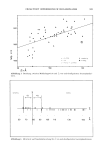
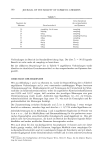
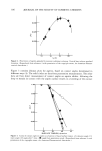
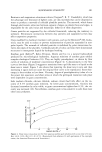
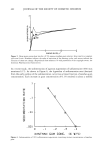
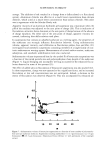
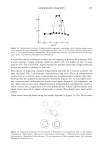
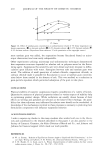
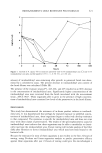
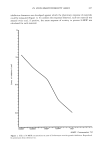
SUSPENSION STABILITY 401 Bentonite and magnesium aluminum silicate (Veegum ©, R. T. Vanderbilt), which has the advantage over bentonire of lighter color, are clay materials that can be dispersed in water to produce a network of colloidal platelike particles. The network, which forms through electrostatic attraction between opposite charges on platelet faces and edges, is responsible for the yield value and thixotropic behavior of these dispersions. Coarse particles are supported by the colloidal framework, reducing the tendency to sediment. Electrostatic interactions between clay particles and suspended actives may affect suspension properties. Clays modified by chemical treatment with amines, such as the Bentones © (NL Indus- tries), may be used to reduce or prevent sedimentation of particles suspended in non- polar liquids. The network of colloidal particles is stabilized by polar interactions be- tween the edges of the platelets. Colloidal particles of silica can form three-dimensional structures in nonaqueous liquids by hydrogen bonding. Xanthan gum (Keltrol ©, Kelco Division, Merck and Co.) is a natural hydrocolloid produced by microbiological husbandry. Aqueous solutions of xanthan gum exhibit complex rheological behavior (16). They are highly pseudoplastic, as shown by flow curves of solutions of moderate concentration (Figure 4). A discontinuity in the flow curve at low shear (Figure 5) suggests a transition from a gel-like state to a liquid as the shear rate is raised. Figure 5 also shows that lowering the shear rate to zero and then increasing it again does not cause the original flow curve to be reproduced. Some thix- otropy is thus evident at low shear. Viscosity, degree of pseudoplasticity (value of n in the power law equation), and shear stress at which the gel-liquid transition took place were dependent on gum concentration. Salts (sodium chloride, calcium chloride, sodium citrate) had little effect on the vis- cosity of 0.3% xanthan gum solutions. At lower gum concentrations, viscosity was decreased somewhat by salts while, at gum concentrations higher than 0.3%, the vis- cosity was increased (16). Nevertheless, xanthan gum is less sensitive to salts than most other ionic polymers. __ I i I I 6 12 18 24 SHEAR RATE, s -• Figure 4. Shear stress versus shear rate for three aqueous xanthan gum solutions with a scan time of 4 min. Key: (A) 0. 133% (B) 0.3% (C) 0.5%. (Reproduced from reference 16 with permission of the copyright owner, the American Pharmaceutical Association.)
Purchased for the exclusive use of nofirst nolast (unknown)
From: SCC Media Library & Resource Center (library.scconline.org)