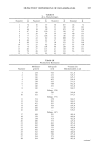
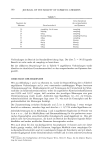
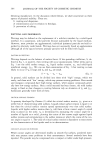
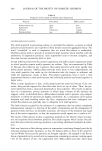
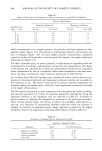
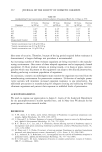
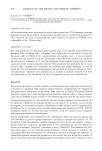
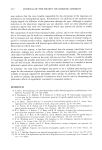
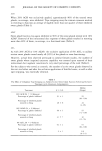
404 JOURNAL OF THE SOCIETY OF COSMETIC CHEMISTS Table II Properties of Flocculated and Deflocculated Suspensions Property Flocculated Deflocculated Sedimentation rate rapid slow Supernatant clear cloudy Sediment voluminous compact Redispersibility easy difficult CONTROLLED FLOCCULATION The third approach to preventing caking is controlled fiocculation, a process in which particles are permitted to join together to form loosely connected aggregates (flocs). The word "controlled" is used to emphasize that too much fiocculation is undesirable. Overfiocculation leads to growth of excessively large particles which interfere with the uniformity of suspension products. Such suspensions tend to become unsightly, and they may become excessively thick as well. Several differences between fiocculated suspensions and deflocculated suspensions (those in which particles remain totally separate) are evident. They are summarized in Table II. Because their effective size is greater, fiocculated particles settle more rapidly than defiocculated particles. Defiocculated particles settle more or less independently the very small particles that make up the distribution take the longest to sediment and make the supernatant cloudy or hazy. Flocculated suspensions tend to leave a clear supernatant behind as they settle because the individual particles are bound together in larger units. What is most significant is that, as fiocculated particles reach the bottom of the con- tainer, they provide support for other riocs that settle on top of them. Thus, the par- ticles themselves form a structural framework as they sediment. This results in deposi- tion of a voluminous, porous sediment in which large volumes of the medium are trapped, while, as described above, defiocculated systems tend to produce very compact sediments in which the particles are highly coordinated. As a consequence of the porous sediment and weak bonding within the riocs, suspensions that have undergone con- trolled fiocculation are generally easy to redisperse with mild agitation. The final volume occupied by the sediment in a suspension that has settled completely (sedimentation volume) is a function of the solids' concentration and the arrangement of particles within the riocs. In favorable situations, the volume of the sediment may equal that of the entire suspension, so that the suspension would appear not to settle at all. The extent of fiocculation within a suspension depends on the relative values of attrac- tive and repulsive forces between particles. Flocculants (agents which induce fioccula- tion) function either by reducing repulsion or providing additional interparticle attrac- tion. Salts may function as flocculating agents in suspensions containing charged particles by reducing interparticulate repulsion, so that the balance shifts in favor of the attractive van der Waals' forces and the particles are brought together. An example is the floccu- lation of griseofulvin by several salts in suspensions containing an anionic wetting agent (19). In the absence of salt, the suspensions were deflocculated and they caked upon

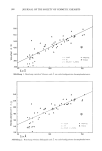
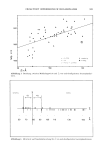
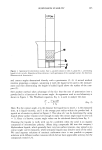
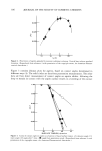
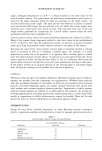
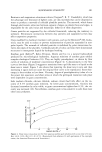
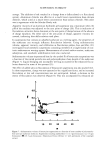
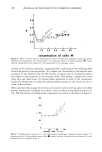
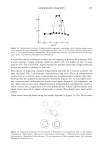
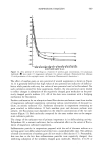
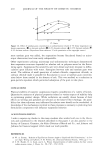
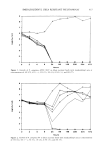
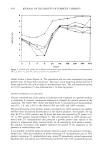
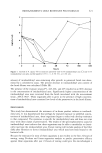
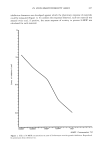
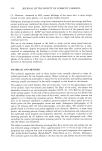
SUSPENSION STABILITY 405 storage. The addition of salt resulted in a change from a defiocculated to a fiocculated system. Aluminum chloride was effective at a much lower concentration than calcium chloride, which acted at a much lower concentration than sodium chloride. This order was in agreement with the Schulze-Hardy rule. Apparent viscosity of an aluminum hydroxide gel suspension was a maximum when the pH of the medium was adjusted to the zero point of charge (20). This is indicative of flocculation attractive forces dominate at the zero point of charge because of the absence of charge repulsion. On either side of the zero point of charge, apparent viscosity de- creased, indicating that deflocculation took place. In suspensions that contain an adsorbed surfactant as a wetting agent, the properties of the surfactant can strongly influence flocculation behavior. Using sedimentation volume, apparent viscosity, and refiltration as fiocculation probes, Liao and Zatz (21) investigated local anesthetic suspensions containing members of a single family of non- ionic surfactants as wetting agents. Measurements of critical surface tension, surfactant / .... adsorption, and anesthetic solubfi•zauon were also conducted. Sedimentation volume (represented here by the symbol F) of benzocaine suspensions was a function of the initial particle size and polyoxyethylene chain length of the surfactant (Figure 7). Liquid bridging and incomplete wetting accounted for the enhanced fioccu- lation observed in some of the systems (21). The effect of added salts on fiocculation of benzocaine suspensions was also studied (22). In these suspensions, charge was not expected to be a significant factor, and so increased flocculation at low salt concentrations was not anticipated. Indeed, a decrease in the extent of flocculation was observed (Figure 8). This was accompanied by enhanced ad- 0.8 F 0.6 0.4 0.2 i i i I I , 10 20 30 40 50 n Figure 7. Sedimentation volume of benzocaine suspensions as a function of mean number of polyoxyethy- lene units per surfactant molecule. Suspensions standing undisturbed. (O) 2.3 benzocaine (0) 20.3 I-tin benzocaine. (Reproduced from reference 21 with permission of the copyright owner. )
Purchased for the exclusive use of nofirst nolast (unknown)
From: SCC Media Library & Resource Center (library.scconline.org)