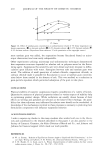
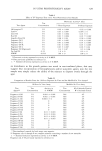
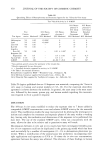
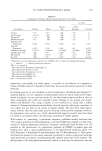
432 JOURNAL OF THE SOCIETY OF COSMETIC CHEMISTS may indicate that the wave lengths responsible for the elicitation of the responses are absorbed by the benzophenone agent. Alternatively, the addition of the sunscreen may simply impede the diffusion of the phototoxin through the agar. Although a complete reduction in the phototoxic response was not observed, there are other absorbers and sunscreen agents that were not investigated which may possess the ability to totally inhibit the effects of phototoxic materials. The comparison of results from existing human, animal, and in vitro tests indicates that the in vitro assay may be useful as a screening technique to determine phototoxic poten- tial in humans and can eliminate or at least reduce the amount of animal testing re- quired to evaluate product safety. Applicability of the in vitro assay to evaluate a broad spectrum of raw materials will depend upon additional work to determine the extent of false positives which may result. In an in vivo test system, it has been speculated that the primary subcellular level of phototoxic damage may involve the cellular membrane, cytoplasmic organelles, and cross-links with DNA in the nucleus leading to chromosomal breaks. The mechanisms of phototoxic agents' actions in the yeast cells are not clear. Thus, it would be valuable to investigate the possible penetration of the phototoxic agent or its precursors through the cell wall of yeast. Nevertheless, the in vitro results obtained on a number of known phototoxic agents show agreement with published animal and human data. In summary, the yeast assay developed may prove to be a valuable prescreening tech- nique for the evaluation of phototoxic materials and a practical method for reducing the number of animals required for pre-market safety testing. In addition, the method may be useful to evaluate the potential of substances which may be used in eliminating the phototoxic effects of ingredients contained in consumer products. REFERENCES (1) A. Reitz, Untersuchungen mit photodynamischen stoffen (Photobiologischen sensibilisatoren), Centr. Bakteriol. Parasitenk, 45, 270-285 (1908). (2) S. Tenenbaum, J. C. DiNardo, W. E. Morris, B. A. Wolf, and R. W. Schnetzinger, A quantitative in vitro assay for the evaluation of phototoxic potential of topically applied materials, Ce//Bio. Tox- icol., 1, 1-6 (1984). (3) J. H. Draize, "Dermal Toxicity" in Association of Food and Drug Officials of the U.S., Austin, Texas. Appraisal of the safety of chemicals in foods, drugs and cosmetics, pp 46-59 (1959). (4) J. A. Parrish, M. A. Pathak, and T. B. Fitzpatrick, Prevention of unintentional overexposure in topical psoralen treatment of vitiligo, Arch. Dermatol., 104, 281-283 (1971). (5) R. F. Dahlen, S. I. Shapiro, C. Z. Berry, and M. M. Schreiber, A method for evaluating sunscreen protection from longwave ultraviolet, J. Invest. Dermatol., 55, 164-169 (1979). (6) F. J. Akin, A. P. Rose, T. W. Chamness, and E. Marlowe, Sunscreen protection against drug-in- duced phototoxicity in animal models, Toxicol. App/. Pharmacol., 49, 219-224 (1979). (7) E. H. Weinberg and S. T. Springer, The evaluation in vitro of fragrance materials for phototoxic activity, J. Soc. Cosmet. Chem., 32, 303-315 (1981). (8) P. D. Forbes, F. Urbach, and R. E. Davies, Phototoxicity testing of fragrance raw materials, Fd. Cosmet. ToMco/., 15, 55-60 (1977). (9) D. L. J. OpDyke, Fragrance raw materials monographs angelica root oil, Fd. Cosmet. Toxico/., 13, 713 (1975). (10) D. L. J. OpDyke, Fragrance raw materials monographs rue oil, Fd. Cosmet. Toxicol., 13, 455 (1975). (11) W. M. Sams, The experimental production of drug phototoxicity in guinea pigs, Arch. Dermato/., 94, 733-777 (1966).

IN VITRO PHOTOTOXICITY ASSAY 4.53 (12) F. N. Marzulli and H. I. Maibach, Perfume phototoxicity, J. Soc. Cosmet. Chem.. 21, 695-715 (1970). (13) I. E. Kochevar, R. B. Armstrong, J. Finbinder, R. R. Walther, and L. C. Harber, Coal tar photo- toxicity active compounds and action spectra, Photothem. Photobtol., 36, 65-69 (1982). (14) R. Muller and J. C. Mitchell, Psoralen-type phototoxicity of tetramethylthiuram-monosulfate for candida albicans not for mouse or man, J. Invest. Dermatol., 56, 340 (1971). (15) F. Daniels, A simple microbiological method for demonstrating phototoxic compounds, J. Invest. Dermatol., 44, 259-263 (1965).
Purchased for the exclusive use of nofirst nolast (unknown)
From: SCC Media Library & Resource Center (library.scconline.org)