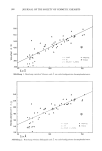
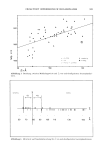
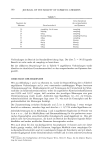
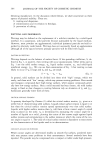
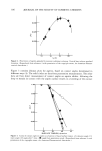
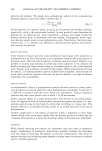
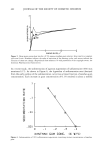
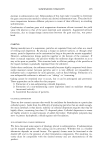
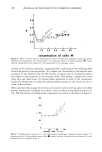
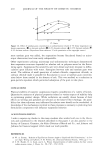
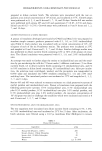
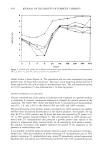
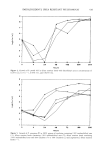
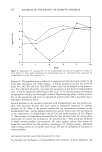
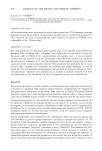
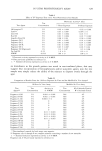
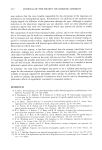
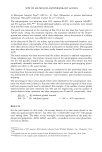
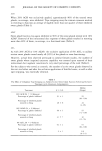
406 JOURNAL OF THE SOCIETY OF COSMETIC CHEMISTS ø.8 f 0.4 0.2 I I I I I 1.0 2.0 3.0 4.0 5.0 concentration of salts (N) Figure 8. Effect of various salts on sedimentation volume of benzocaine suspensions containing polyox- yethylene (15) nonylphenol. (Z•) sodium sulfate (¸) magnesium sulfate ([•) sodium chloride (•') calcium chloride. (Reproduced from reference 22 with permission of the copyright owner.) sorption of the nonionic surfactant, suggesting that a tightening of the stabilizing layer around the particles was responsible. At a higher salt concentration, flocculation again increased. It was observed that the effectiveness of various ions in causing flocculation was related to their position in the lyotropic series. This finding, coupled with cloud point data and observation of incipient phase separation in some of the suspensions, implicates dehydration of surfactant polyoxyethylene groups as the reason for the in- crease in flocculation. Other materials that change the solvation of nonionics used as wetting agents will affect particle interactions. Examples are polyols, such as sorbitol and propylene glycol (23, 24). The flocculation of sulfamerazine suspensions by polyols is illustrated in Figure 9. 0.4 0.3 0.2 0.1 0 • 21 I • l 0 40 60 POLYOL CON. (% v/v ) Figure 9. Sedimentation volume (F) of 10% sulfamerazine suspensions containing various polyols. propylene glycol (¸) polyethylene glycol 400 (I) sorbitol solution. (Reproduced from reference 24 with permission of the copyright owner.)

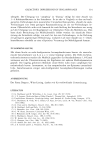
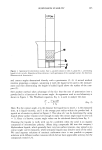
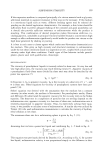
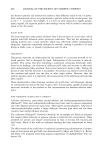
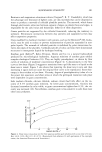
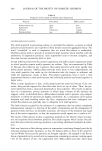
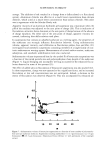
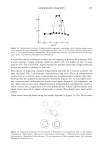
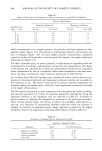
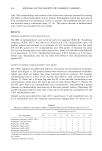
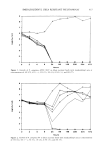
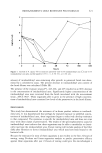
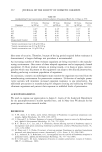
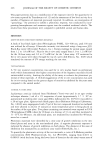
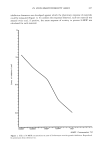
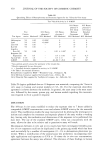
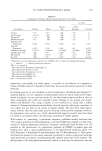
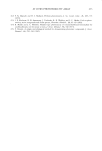
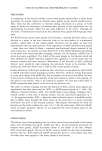
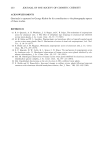
SUSPENSION STABILITY 407 0.4 0.2 --3 --1 1 LOG C Figure 10. Sedimentation volume of sulfamerazine suspensions containing dioctyl sodium sulfosuccinate in the presence of various Primafloc C-3 concentrations. Key: curve 1, 0.2% dioctyl sodium sulfosuccinate curve 2, 1.0% dioctyl sodium sulfosuccinate. (Reproduced from reference 29 with permission of the copy- right owner, the American Pharmaceutical Association.) A third flocculation mechanism is based on the bridging of particles by polymers. This involves having a single polymer molecule adsorb onto the surface of two or more particles (25-28). Intuitively, highly asymmetric polymer molecules of high molecular weight are needed to perform in this way. Flocculation of negatively charged sulfamerazine particles by a cationic polymer has been described (29). Low polymer concentrations had little effect on sedimentation volume but, at a critical value, a precipitous rise in sedimentation volume took place, showing that the suspension had become flocculated (Figure 10). At still higher poly- mer concentrations, sedimentation volume once again decreased the suspension was now deflocculated once more. Measurements of redispersibility paralleled the sedimen- tation volume data: suspensions with low sedimentation volume (deflocculated) were caked while those with higher sedimentation volume (flocculated) were easily redis- persed. These results were explained using the models depicted in Figure 11 (29). With either c Figure 11. Suggested mechanism for the behavior of Primafioc C-3 in suspensions. Key: a, low polymer concentration, defiocculated suspension b, fiocculation by bridging c, defiocculation at high polymer concentrations. (Reproduced f?om reference 29 with permission of the copyright owner, the American Pharmaceutical Association.)
Purchased for the exclusive use of nofirst nolast (unknown)
From: SCC Media Library & Resource Center (library.scconline.org)