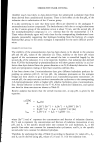
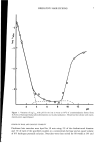
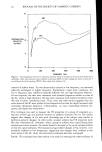
STRATUM CORNEUM HYDRATION 15 anatomical sites for both males and females when the ambient temperature was in- creased from 15 ø to 28øC (22), while the increase was more than 10-fold from 28 ø to 4 IøC. Finally, TWL was measured over the range of 30 ø to 38øC, with results showing that below about 34øC the TWL increased at about 0.3 mg/cm sq/hr/øC, while at higher temperature the increase in TWL was near 2.0 mg/cm sq/hr/øC due to the onset of perspiration. These results serve to demonstrate that at ambient temperatures below about 30øC, the onset of perspiration, TWL is an accurate measure of water flux thru the SC. At elevated temperatures, however, sweating will dramatically increase mea- sured TWL values. Considerable variation in TWL has also been noted for different regions of the body. For example, when in vivo water flux measurements were normalized to correct for varying SC thickness, compared to the back, the values on the palm, back of the hand, and forehead varied by factors of 100, 10, and 4, respectively (38). Finally, like in vitro measurements, in vivo water loss values change with ambient RH. Two groups of investigators measured TWL as a function of ambient RH by main- taining subjects in a controlled humidity and temperature environment (22,23). Re- sults from both investigations show that at temperatures near 25øC TWL exhibits a maximum near 30 to 40% RH. Based on similar in vitro results, it seems likely that two opposing mechanisms are responsible for this nonlinear behavior. On the one hand, the flux will decrease with increasing RH due to a diminished gradient between the inner and outer surfaces of the SC, while on the other hand, hydration-induced increases in the diffusion and partition coefficients will increase the flux. Thus, changes in ambient RH, and hence the water content of the SC, alter TWL in a complex manner. The results of these early experiments show that, like in in vitro water loss, in vivo TWL measurements depend upon the skin site, temperature, RH, and SC water content. In addition, in vivo measurements may be influenced by perspiration at the test site. Thus, experimental conditions must be strictly controlled for quantitative comparisons among data. Recently an unventilated device has become commercially available (Evaporimeter- Servo-Med, Inc.). Due to its availability and ease of use, much recent literature deals with this apparatus. The moisture detector of the Evaporimeter consists of an open tube of circular cross-section placed against the skin. Two RH sensors are placed within the tube at known distances above the skin surface. From the measured RH gradient above the skin surface, the TWL is calculated. Scott and co-workers (39) compared the Evap- orimeter and a ventilated chamber technique under carefully controlled experimental conditions. Rats were housed in a controlled temperature and RH environment for one week prior to as well as during experiments. The TWL was measured on the shaved flanks of 72 animals by both techniques. For normal, untreated skin, both techniques yielded identical TWL values of 0.3 mg/cm2/hr. Similarly, each technique measured the same elevated value near 3.5 mg/cm2/hr, 52 hrs after application of n-hexadecane to the animals. In contrast, after cellotape stripping to remove the outer layers of the SC, the Evaporimeter yielded a TWL value near 7.4 mg/cm2/hr, while the ventilated chamber technique yielded a significantly higher value near 19.0 mg/cm2/hr. These results show that, while both techniques work well at TWL rates below about 8 mg/cm2/hr, at higher rates only the ventilated chamber is useful, presumably due to saturation of the air caused by build up of water vapor in the unventilated Evapo- rimeter.

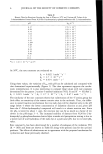
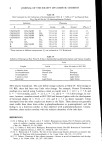
16 JOURNAL OF THE SOCIETY OF COSMETIC CHEMISTS Similarly, Miller et al. (24) compared water loss measurements in humans via air-flow (ventilated) and static (unventilated) methods. Although control and occluded sites gave similar results by the two methods, differences were seen in TWL values when the barrier was compromised by partial removal of the SC. In particular, immediately after partial removal of the SC, the ventilated method yielded a value ten-fold greater than the static method. This is primarily due to enhanced evaporation from the moist skin surface by air flow with the ventilated device and saturation of the static air in the unventilated system. Of all techniques used to measure SC hydration, TWL has the widest clinical applica- tion. Using an Evaporimeter, Rutter and Hull (40) showed that high water loss rates in premature infants could be reduced by the topical application of an occlusive agent. In contrast, Wildnauer and Kennedy (32) found a 30% to 50% decrease in TWL of neo- nares compared to adults. These results were interpreted as either a more efficient bar- rier or, alternatively, decreased perspiration in the newborn. TWL measurements have also been made for a group of patients with a variety of hyperproliferative dermal disorders. Increased TWL rates were measured for subjects with psoriasis and ichthyosis (4). Among various forms of ichthyosis, TWL ranged from 15 to 90% above normal, while psoriatics showed a 2-3-fold greater water loss rate than normal. Interestingly, among patients with a particular form of ichthyosis, a cor- relation between TWL and scaling severity was noted. Since ichthyosis is associated with increased SC thickness (which should decrease flux), these results imply severely compromised barrier function in this disorder. The TWL method has also been used to assess the effect of topically applied agents on water loss. For example, the technique has been used to measure the efficacy of occlu- sive moisturizers by their ability to reduce TWL (32). Similarly, Wu and co-workers showed that application of a moisturizer resulted in a transient decrease in TWL (41,42). Using Fick's Law and a previous estimate of the diffusion coefficient, these investigators calculated the concentration profile within the SC from TWL values. The results suggested that the change in water concentration following the application of a moisturizer occurred primarily in the outermost layers of the SC. Application of surfactants has also been shown to alter TWL values at the treated site (43). Chambers of aqueous surfactants were attached to the arms of volunteers for 24 hrs. One hour after removal, TWL was measured and skin irritation subjectively as- sessed. Results showed up to a two-fold increase in TWL at treated skin sites. More importantly, there was a high degree of correlation between tb•e TWL values and irrita- tion scores for the six surfactants tested. Thus, TWL measurements provided a quanti- tative estimate of skin irritation caused by surfactants. In spite of its widely accepted use, TWL measurements are not without drawbacks. Most notable is large experimental variation due to such factors as ambient temperature and RH, skin site, and rate of perspiration. In addition, ventilated and unventilated techniques may yield differing results, especially at high TWL rates. Finally, since the site is occluded during TWL measurements, water loss values may change. While these variations make quantitative comparisons difficult, under well controlled experimental conditions it is possible to measure relative changes in TWL. In conclusion, TWL techniques are the most widely used to measure hydration changes in the SC. Under properly controlled experimental conditions, TWL measurements
Purchased for the exclusive use of nofirst nolast (unknown)
From: SCC Media Library & Resource Center (library.scconline.org)