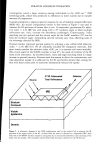
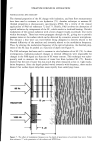
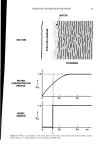
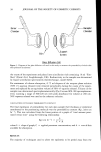
STRATUM CORNEUM HYDRATION 23 investigators noted a large variation among individuals in the 3400 cm-• (OH stretching) peak, which they attributed to differences in water content due to variable amounts of perspiration. Comaish attempted to improve spectral intensity by use of multiple internal reflections (MIR) (62). An optical configuration similar to that shown in Figure 5 was used to measure the IR spectrum of human skin in vivo. A trapezoidal, germanium (Ge refrac- tive index = 4.0) IRE was used along with a 45 ø incidence angle to allow multiple reflections and, thus, increase the absorbance pathlength. Unfortunately, index matching was not optimal and the critical angle for the Ge/SC interface (25 ø) was far from the incidence angle, diminishing spectral intensity and, thus, offsetting some of the advantage obtained by MIR. Puttnam further improved spectral quality by utilizing a zinc sulfide (ZnS refractive index = 2.24) IRE (63). Of all commonly available IR transparent materials, ZnS most closely matches the refractive index of SC, yet it is nontoxic and water insoluble. The critical angle for the ZnS/SC interface is near 45 ø, the angle of incidence of the IR beam in his instrument. As described above, index and angle matching result in a large increase in spectral intensity. Puttnam used this system to detect the concentration- and time-dependent uptake of a surfactant by the SC and further showed that coating the skin with hand cream prior to treatment substantially reduced the uptake. FTI R Attenuated Source Total Reflectance Detector IRE Stratum Corneum Viable Epidermis t Dermis Figure 5. A schematic diagram of the ATR configuration used in the author's lab to measure the IR spectrum of the upper layers of the SC. A beam from the source is directed to a trapezoidal IRE. Each reflection at the IRE/SC interface results in energy loss due to interaction (absorbence and scattering) of the beam with the sample. After multiple internal reflections the beam is directed to the IR detector.

24 JOURNAL OF THE SOCIETY OF COSMETIC CHEMISTS Baier added one further improvement to noninvasive measurement by utilizing a hori- zontally mounted IRE so that the subject could rest the area being investigated against the IRE and thus provide better contact (64). Using a germanium IRE and 45 ø inci- dence angle, his results showed that the OH stretching absorbance near 3400 cm-• increased as the layers of SC were removed by tape stripping, suggesting that water content increased with depth. Osberghaus et al. also used a germanium IRE and 45 ø incidence angle to measure the IR spectrum of volunteers following treatment with a formulation containing polyhy- droxycarboxylic acid (65). Water content was determined from the ratio of Amide I (1645 cm-•) to Amide II (1545 cm -•) intensities, reasoning that the Amide I band is due to protein and water (1640 cm-•) absorbances, while the Amide II band was due to protein alone. This ratio is not a precise measure of the water content, however, since both the Amide I and II bands of keratin, the major protein component of the SC, change with hydration (66). Furthermore, an absorbance due to the topically applied formulation overlapped with the Amide I band, necessitating a correction to the inten- sity. In spite of these difficulties, results showed an increase in the Amide I/II ratio due to treatment which correlated well with in vitro measurements of water uptake. Gloor and co-workers have made extensive use of the ATR-IR technique to measure in vivo moisturization. These investigators used a germanium IRE and an incidence angle far from the critical angle. Referring to the Amide I/II intensity ratio as the moisture factor (MF), the spectra of a group of test subjects were analyzed before and after hydra- tion by either occlusion or immersion of the site in a water bath (67). Results show a significant increase in MF of about 15 to 20% after both occlusion and immersion. The same technique was used to assess the MF in a large group of individuals as a function of age and sex and after repeated tape stripping to partially remove the SC. Results showed no significant difference in MF with age or sex. Surprisingly, however, their results showed that MF decreased by about 10% when the surface layers of the SC were re- moved by tape stripping. These results are at odds with the known increase of water content with depth in the SC. To add to the confusion, two other investigations pub- lished by this group show contradictory results. In one investigation MF increased (68), while in the other MF decreased (5) as the SC was removed by tape stripping. These results serve to illustrate the difficulties inherent in quantitative evaluation of water content from Amide I/II intensity ratios. Stanfield and Kyriakopoulos also used the Amide I/II ratio to quantitate water content (69). Their results showed that the ratio increased initially by about 10% and remained elevated for up to 48 hours following immersion in water and application of oil to the test site. Unfortunately, no mention is made of the effect of oil constituents on the Amide I/II ratio. This is especially disturbing since no increase in the ratio was seen on a contralateral control site immediately after immersion. The combined results from investigations where water content was measured from the Amide I/II ratio suggest that this ratio is at best only a qualitative estimate due to the influence of water on both amide peaks and the overlap of amide peaks with those of topically applied substances. Results of experiments performed in the author's laboratory indicate that quantitative measurement of water content in vivo can be made (70). These experiments were per- formed with a horizontally mounted ZnS IRE (see Figure 5). Like the instrumental configuration described by Puttnam (63), an incidence angle close to the critical angle was utilized in order to maximize spectral intensity. Under these conditions, the beam
Purchased for the exclusive use of nofirst nolast (unknown)
From: SCC Media Library & Resource Center (library.scconline.org)