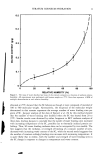
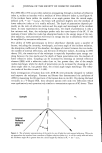
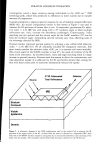
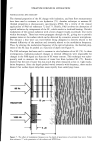
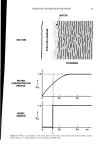
STRATUM CORNEUM HYDRATION 19 skin moisturizers. Using a sonic velocity technique, Dahlgren et al. (1) have shown that topically applied moisturizers will decrease the sonic propagation velocity in skin. Their results also showed that the decrease in Vp was highly correlated with subjective assess- ment of moisturization. More importantly, the Vp change was noted after a few days treatment, while subjective assessments took several weeks. Thus, sonic velocity was predictive of eventual hydradon efficacy. While non-invasive VE techniques have proven useful in the assessment of hydradon, they suffer from several drawbacks. First, it is difficult, if not impossible, to ascertain the contribution of the various layers of the epidermis and dermis. Second, since VE properties are seldom related to water content in a straightforward manner, hydration measurements are at best only qualitative. Finally, small variations in the pressure exerted by the probe can alter the VE properties being measured. On the other hand, VE measurements can be quickly and easily obtained (an important factor when dealing with a clinical population). Furthermore, in several VE methods, stylii of small cross- section rest lightly on the skin surface, minimizing occlusion of the test site during measurement. Thus, while VE techniques may only provide qualitative measurements of hydradon, their ease of use may have particular relevance in the clinical setting. ELECTRIC PROPERTIES The flow of electrical current through the SC is related to water content, and thus impedance or resistance to flow has been widely used to measure hydration of the SC. An excellent review of impedance methods for measuring SC moisturization was re- cently published by Leveque and de Rigal (52). As they point out, the application of an electric field to the SC results in current flow via three distinct mechanisms: 1) Orientation of the dipole moments of SC constituents like keratin. 2) Ionic movement within the SC. 3) Water mobility and proton exchange (i.e., H3 O+ and OH-) within the SC. The influence of water is direct and obvious only for the third mechanism. In the first two, however, the influence is less straightforward, since water indirectly facilitates current flow (reduces impedance) by enhancing dipole motion and ion mobility due to decreased viscosity in hydrated SC. Unfortunately, agents other than water can also produce changes in dipole orientation and ion mobility. For example, urea, a compo- nent of several skin-moisturizing products, can induce changes in keratin dipole orien- tation by virtue of its protein denaturant properties. In addition, salts, whether topi- cally applied or derived from perspiration, can cause a dramatic decrease in $C imped- ance due to their intrinsic ion mobilities. Among the earliest experimental investigations were those of Claret al. (53), who worked at low frequencies, where the net impedance of the SC is quite high and, thus, in order to assure adequate current flow, a liquid junction contact with the skin was required. Unfortunately, liquid junction electrodes affect the water content of the un- derlying skin. To overcome this difficulty, they utilized a series of aqueous polyethylene glycol-saline solutions with water vapor pressures matched with that of the ambient environment. Using these electrodes, they showed that the impedance decreased with increasing water content of the skin and hypothesized that the decrease in impedance was due to enhanced mobility of ions in the SC as the viscosity dropped. Unfortunately,

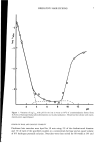
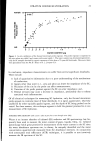
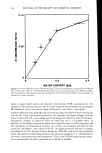
20 JOURNAL OF THE SOCIETY OF COSMETIC CHEMISTS these results are somewhat compromised due to the occlusive nature of the electrodes used, especially in light of the fact that each determination required 20 minutes time. More recently, higher frequency impedance measurements have been employed. The advantage of this technique lies in the fact that the impedance of the SC drops with increasing frequency so that aqueous contact electrodes are not needed. Tagami and co-workers measured skin impedance at 3.5 MHz using an electrode of two concentric brass cylinders (54). Their results also showed a drop in impedance with increasing hydration, both in vivo and in vitro. Furthermore, cellotape stripping to remove layers of the SC resulted in a dramatic decrease in the impedance with each sequential strip, suggesting that the technique was primarily sensitive to changes in the outermost layers. Unfortunately, the impedance dropped continuously with time during the ex- periment, suggesting that occlusion of the site by the electrodes affects the results. Nevertheless, this method has been used to show a decreased impedance after treatment of the skin with a moisturizer (53) and higher impedance at involved psoriatic sites than at non-involved sites on the same subject (2). As described above, the influence of water on SC impedance is not always clear. Fur- thermore, the depth of SC being probed is not well defined. As a result, the technique has been confined to qualitative measurements of changes in SC hydration. Jacques and co-workers have at least partially overcome some of these difficulties. These investi- gators measured the dielectric properties of skin in the very high frequency microwave region, where electric fields primarily cause water molecules to oscillate (13,55). Fur- thermore, the amount of energy required to rotate water molecules is dependent upon their number and, thus, concentration. Microwave radiation has an ability to penetrate deep within tissue. While this may be an advantage for microwave ovens, it causes problems for localized measurements in the SC. To overcome this difficulty, Jacques devised a focused microwave probe based upon fringe fields between closely spaced electrodes (56). A probe, designed so that the microwave field was primarily confined within a depth of a few microns, was calibrated against gravimetrically determined water uptake of in vitro samples of human SC (see Figure 3). Like the results of previous investigations of water uptake (see Water Content section above), these data showed biphasic behavior. At hydration below about 30% (w/w), water was tightly bound, while at higher water contents, additional water behaved like bulk liquid. In addition to shedding light on the mechanisms of water absorbance, data like those of Figure 3 served as a calibration curve for subsequent clinical investigations. Results of in vivo measurements of psoriatic plaque and adjacent noninvolved SC showed a sub- stantially lower water content at the psoriatic site (8 vs. 17% (w/w)). Thus, the focused microwave probe technique is capable of detecting quantitative differences in the water content of diseased vs. normal SC. As a further advantage, results were obtained within seconds, minimizing the effects of occlusion on measured water content. More recently, Jacques et al. have used the focused microwave probe technique to mea- sure the water concentration profile of human SC in vivo (57). Variation in depth was achieved by placing sections of inert film (Teflon) of varying thickness between the probe and SC. Results showed a nonlinear water concentration gradient across the SC, consistent with Fick's Law, provided the diffusion constant increased with increasing water content. Thus, these in vivo results reflect those obtained from in vitro investiga- tions of water flux and binding.
Purchased for the exclusive use of nofirst nolast (unknown)
From: SCC Media Library & Resource Center (library.scconline.org)