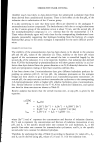
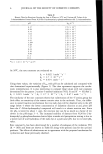
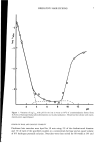
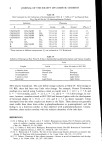
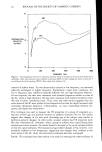
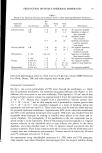
40 JOURNAL OF THE SOCIETY OF COSMETIC CHEMISTS studies is the high coefficient of variation. This variation is, however, also seen in in vivo percutaneous absorption studies (14). DISCUSSION The in vitro percutaneous absorption of [3H] water has been studied previously (5). Its penetration through skin can be used as a guide to the integrity of the diffusion barrier. The divalvent cation, paraquat dichloride, is poorly absorbed through intact skin and any defects in the diffusion barrier of the prepared epidermal membranes would greatly facilitate its absorption (13). We chose paraquat to be a more stringent test of the integrity of the epidermal membranes and, thus, the success of the separation tech- niques. Toluene was used in the study as a non-ionized molecule with lipophilic proper- ties. The [3H] water and [•4C] paraquat dichloride results showed that the prepared epi- dermal membranes have intact permeability barriers with unchanged diffusional charac- teristics. The difference between the diffusional characteristics of toluene between intact whole skin and prepared epidermal membranes supports the hypothesis that in vitro the dermis can act as an "additional" barrier to penetrating lipophilic molecules. This bar- rier is composed of the (relatively) thick aqueous environment which constitutes the dermis and should not be thought of as the subcutaneous fat tissue acting as a "sponge" or infinite sink. This subcutaneous fat tissue was not present in these experiments. This barrier does not have to be crossed in vivo, as the microcirculatory system at the dermo- epidermal junction rapidly removes penetrating molecules. 50% aqueous ethanol was used as the receptor fluid for toluene to increase the solubility of the penerrant in the receptor fluid. Its use as a receptor fluid has been validated for use with lipophilic molecules by comparing absorption in a series of in vivo:in vitro experiments (15). Good agreement between the in vivo and in vitro data was found when this receptor fluid was used in vitro. Consequently, we believe that the in vitro rate of absorption of toluene measured through the epidermal membranes is a more accurate determination of the in vivo situation and that the rate measured through the whole skin in vitro was reduced by the aqueous dermis. Using the described technique (immersion in 2 M NaBr), intact epidermal membranes can be prepared from both rat and human whole skin for use in in vitro percutaneous absorption studies. Such epidermal membranes allow the in vivo absorption of a greater range of chemicals, with different physico-chemical properties, to be predicted using the in vitro technique. Consequently, the absorption of a chemical which will contact skin in a variety of formulations can be measured in vitro. Even allowing for the high coefficient of variance apparent in the experimentally derived data, this will allow the optimization of derreal in vivo studies. Additionally, rates of absorption through rodent skin can be compared to rates measured through human skin which will allow a more accurate extrapolation of rodent data to man and a better definition of the risk or benefits to humans from dermal exposure to chemicals. REFERENCES (1) M. Ainsworth, Methods for measuring percutaneous absorption, J. Soc. Cosmet. Chem., 11, 69-74 (1960).

PRODUCTION OF INTACT EPIDERMAL MEMBRANES (2) P. H. Dugard, "Skin permeability theory in relation to measurements of percutaneous absorption in toxicology," in Advances in Modern Toxicology, F. N. Marzulli and H. I. Maibach, Eds. (John Wiley and Sons, New York, 1979), Vol. 4, Dermatotoxicology and Pharmacology, pp 525-550. (3) P. Grasso and A. B. G. Landsdown, Methods for measuring the factors affecting percutaneous ab- sorption, J. Soc. Costa. Chem., 23, 481-521 (1972). (4) R. L. Bronaugh and R. F. Stewart, Methods for in vitro percutaneous absorption studies. III. Hydro- phobic compounds, J. Pharm. Sci., 73, 1255-1258 (1984). (5) R. J. Scheuplein and I. H. Blank, Mechanism of percutaneous absorption. IV. Penetration of non- electrolytes (alcohols) from aqueous solution and from pure liquid, J. Invest. Dermatol., 60, 286-296 (1973). (6) Y. Kitano and N. Okada, Separation of the epidermal sheet by dispase, Br. J. Dermatol., 108, 555-560 (1983). (7) D. Woolley, D. Saunders, M. J. Tolley, M. Silver, G. Grotendorst, and E. Qwarnstrom, Localisation of the basement membrane components after dermo-epidermal junction separation, J. Invest. Der- matol., 81, 149-153 (1983). (8) E. H. Epstein, N.H. Munderloh, and K. Fukuyama, Dithiothreitol separation of newborn rodent dermis and epidermis, J. Invest. Dermatol., 73, 207-210 (1979). (9) P.M. Elias, H. Mittermayer, and P. Fritsch, Experimental staphylococcal toxic epidermal necrolysis in adult humans and mice. J, Lab, C/in. Med., 84, 414-420 (1974). (10) J.P. Baumberger, V. Suntzeff, and E. V. Cowdry, Methods for the separation of dermis and some physiological and chemical properties of isolated epidermis, J. Natl. Canc. Inst,, 2, 113-123 (1942). (11) J. Fan, Epidermal separation with purified trypsin, J. Invest. Dermatol., 30, 217-220 (1958). (12) M. Walker, P. H. Dugard, and R. C. Scott, Absorption through human and laboratory animal skins: in vitro comparisons, Acta, Suecica Pharma., 20, 52-53 (1983). (13) P. H. Dugard and R. C. Scott, "Absorption through skin," in International Encyclopaedia of Pharma- cology and Therapeutics, H. P. Baden, Ed. (Pergamon Press, Oxford and New York, 1984), Section 110, The Chemotherapy of Psoriasis, pp 125-144. (14) R. J. Feldman and H. I. Maibach, Percutaneous absorption of some pesticides and herbicides in man, Tox. Appl. Pharmacol., 28, 126-132 (1974). (15) R. C. Scott and J. D. Ramsey, Percutaneous absorption: In vitro assessment (in press).
Purchased for the exclusive use of nofirst nolast (unknown)
From: SCC Media Library & Resource Center (library.scconline.org)