j. Soc. Cosmet. Chem., 37, 9-33 (January/February 1986) Stratum corneum hydralion: Experimental techniques and interpretations of results RUSSELL O. POTTS, Pfizer Central Research, Groton, CT 06340. Received December 16, 1985. INTRODUCTION The water content and flux of the stratum corneum (SC) are profoundly influenced by a variety of environmental, pharmacological, and physiological factors. Furthermore, these hydration parameters are undoubtedly involved in the subjective assessment of skin feel and appearance (1) as well as in dermatological disorders (2-5). Not surpris- ingly, a great deal of effort has been spent investigating hydration of the SC, both in vitro and in vivo. It is the purpose of this presentation to briefly review some techniques used to measure SC hydration and interpretations of results in term of the mechanisms of water binding and flux. Particular emphasis will be placed on more recent in vivo methods. The water content and flux are two separate measures of SC hydration. Water flux is passive diffusion from the highly hydrated underlying tissue through the SC barrier. Water concentration and flux are related by Fick's law: J -- K m'D'dC/dX which states that the flux of water (J) is equal to the product of the partition (Km) and diffusion coefficient (D), times the change in water concentration (C) with distance (X) across the SC. The term dC/dX is often referred to as the water concentration gradient. In theory, flux can be calculated from the concentration at any position X, or vice versa, provided D and K m are known. Unfortunately, both are dependent upon water concen- tration in a non-trivial manner. Furthermore, it is experimentally difficult to measure concentration at precisely known positions within the SC. Because of these complica- tions, it is important to remember the distinction between water concentration in the SC and water flux through the SC. Nevertheless, each serves as a measure of SC hydra- tion. IN VITRO TECHNIQUES WATER CONTENT Early investigations of in vitro water uptake of human stratum corneum are best summa- rized by the pioneering work of Blank (6). Samples of callus removed from the plantar surface were dehydrated to dry weight and then suspended in sealed chambers of known ambient relative humidity, all at room temperature. After allowing 48 to 72 hrs for the

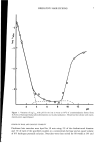
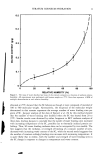
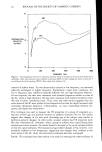
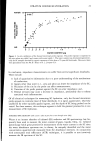
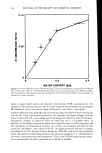
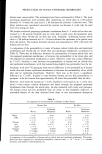
10 JOURNAL OF THE SOCIETY OF COSMETIC CHEMISTS samples to equilibrate, the mass of water absorbed by the SC was determined gravime- trically. His results showed a biphasic nature to water uptake vs. ambient relative humidity (RH). At relative humidities up to about 70%, the mass increased by only about 10% (w/w), while a further increase in RH to 90% resulted in a large increase in water content to about 50% (w/w). Subsequent in vitro investigations utilized SC removed from full thickness, excised skin samples. Anderson and co-workers (7) investigated changes in water uptake due to differences in sample preparation. The SC was separated from skin samples obtained from the human hip at autopsy by three different techniques: (a) stretching of the skin followed by removal of the SC, (b) heating of the skin for 1 min over a 60øC water bath followed by removal of the SC, or (c) trypsin digestion of the underlying tissue followed by removal of the SC. Reasoning that stretching and heating were most likely to alter the stratum corneum, these authors suggested that water uptake results obtained after trypsin treatment were most "in vivo"-like. This technique has been used subsequently by almost all investigators and only those studies will be referred to in this review. Briefly, the technique involves incubation of full thickness skin, dermis side-down on a piece of filter paper soaked with 0.5 to 1% trypsin in an aqueous buffer. After several hrs at 37øC, or overnight at 4øC, the SC can be peeled away from underlying layers. This sample is then washed in soybean trypsin inhibitor and several changes of distilled water and spread out to dry. Many groups have gravimetrically measured the equilibrium water content of trypsin- prepared human SC (7-12). Typical results obtained in the author's lab (Figure 1) show an approximately linear uptake of water with increasing RH, reaching about 10% (w/w) at 60% RH. As the RH is further increased, however, a more dramatic increase in water content is seen, with greater than 50% (w/w) uptake at 95% RH. Further- more, after many days exposure to 100% RH, water contents in excess of 200% (w/w) are noted. Temperature has a profound effect on water uptake by the SC. Spencer et al. (8) mea- sured water uptake at constant temperatures from 20 to 35øC and their results showed little or no temperature dependence at high RH, while at lower RH an increase in temperature resulted in increased water adsorption. From thermodynamic analysis of these data, they concluded that the nature of water binding changed with increasing water content of the SC. In particular, strong binding was evident at water contents up to about 10% (w/w), while at higher concentrations added water molecules were less tightly bound. Similar conclusions were obtained by EI-Shimi and Princen (11, 12) from measurements of water sorption and desorption isotherms of human SC over the temperature range of 23 to 42øC. Analysis of their results and comparison with other tissues (i.e. keratin in human hair) suggested strong binding between water and SC keratin at a water content less than 10% (w/w), while lower strength water-water binding occurred at higher water contents. An alternative explanation of SC water sorption isotherm data was offered by Jacques (13) who analyzed results in terms of water activity (relative humidity) vs. mole frac- tion. Determination of the mole fraction requires knowledge of the molecular weight of the SC, which was estimated by fitting experimental data to RH vs. water content curves generated with a series of ideal solutes of increasing molecular weight. Data
Purchased for the exclusive use of nofirst nolast (unknown)
From: SCC Media Library & Resource Center (library.scconline.org)