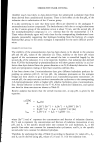
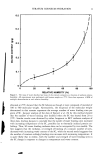
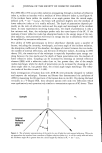
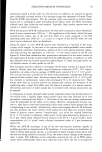
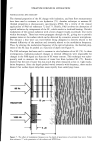
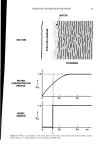
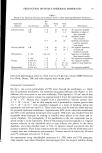
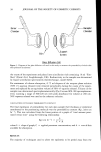
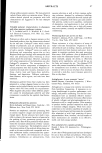
27 STRATUM CORNEUM HYDRATION PHOTOACOUSTIC SPECTROSCOPY The thermal properties of the SC change with hydration, and heat flow measurements have been used to estimate in vivo hydration (71). Another technique to measure SC thermal properties is photoacoustic spectroscopy (PAS). For a review of the clinical applications of PAS see references 72 and 73. Briefly, PAS involves the absorption of optical radiation by components of the SC, which results in localized heating. Periodic modulation of the optical radiation with a beam chopper results in periodic heat waves within the sample. These heat waves propagate through the SC, giving rise to periodic pressure waves at the surface which can be detected by a sensitive acoustic microphone. The distance a heat wave can travel before being dissipated is directly related to the thermal diffusivity of the medium and inversely related to the modulation frequency. Thus, by altering the modulation frequency of the optical radiation, the thermal prop- erties of the SC may be probed as a function of depth (see Figure 7). The PAS technique has been used to measure in vitro hydration of rat SC (74). In these investigations, hydration-induced changes in thermal diffusivity were responsible for changes in the PAS signal as a function of SC water content. This technique was subse- quently used to measure the kinetics of water loss from hydrated SC (75). Results showed that the rate of water loss was much less when measured at low vs. high modu- lation frequency. Since the depth probed varied inversely with frequency, these results showed that surface layers dehydrate more rapidly than underlying tissue. 80 Hz RADIATION 1000 Hz r .. 4 •m I Figure 7. The effect of modulation frequency on the depth of penetration of a periodic heat wave. Taken from reference 77 with permission of the authors and MTP Press.

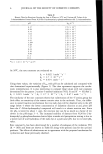
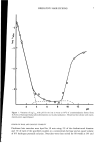
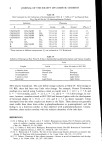
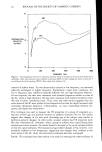
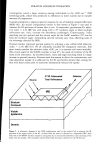
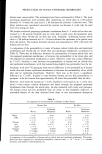
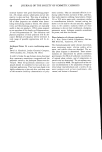
28 JOURNAL OF THE SOCIETY OF COSMETIC CHEMISTS In another in vitro study, the water content of human plantar and abdominal SC was measured (76). Like other in vitro results, these showed hydration-induced changes in thermal diffusivity of the SC. In order to measure the water concentration gradient, experiments were performed over a range of modulation frequencies, with an SC sample mounted over a chamber of aqueous buffer. To facilitate calculation of the water content in the nonuniform SC, a model was utilized consisting of multiple layers of specified thickness and thermal properties. Experimental data were then fit to this model. Data from a sample of abdominal SC fit best to a three-layer model, each layer of 11 thickness. Thus, these investigators concluded that the transition from dehydrated (out- ermost layer) to hydrated tissue occurred at 11 •tm, about half-way through the SC. Unfortunately, no values of water concentration in the underlying hydrated layers are given. The PAS technique has also been used for in vivo measurements in humans (77). These investigators choose to use optical radiation matched to an IR absorbance peak of water and in a transparent region of the SC spectrum. Thus, absorption of optical energy by water in the SC resulted in heating proportional to the amount of water. In theory, water concentration vs. depth in the SC can be determined uniquely from PAS measure- ments over a continuous range of modulation frequencies from about 40 to 2000 Hz. Such measurements, however, are experimentally difficult and time-consuming. Fur- thermore, occlusion of the site during these time-consuming experiments could lead to spurious results. To overcome these difficulties, only three modulation frequencies were measured (250, 480, and 780 Hz) and the data arbitrarily fit to a simplified water concentration-vs.-depth, "step" profile. This "step" profile, shown schematically in Figure 8, was characterized by a depletion zone of zero water concentration extending to a finite depth beneath the surface, with a subadjacent zone of constant concentration throughout the rest of the SC. This model allowed calculation of the average SC water concentration and depth of the depletion zone. Results showed that, following a 15- min application of water to a site on the forearm, the average SC water concentration increased from about 0.7 to 1.1 (w/w), while the depletion depth decreased from about 7 to 3 •tm. Within 45 min after removal of the water, both values returned to pre- treatment levels. These results demonstrate the potential to quantitatively measure the water concentra- tion profile using the PAS method. This method has advantages over optical spectros- copy since thermal radiation is not scattered by the SC. Furthermore, by appropriate choice of modulation frequency, an optical absorption spectrum can be obtained for samples which are optically opaque. In addition, no contact with the SC is necessary, diminishing occlusion problems which compromise other in vivo techniques. The tech- nique is not without drawbacks, however. As described above, experimental difficulties preclude the collection of data over a broad frequency range needed to uniquely charac- terize the water profile. This difficulty possibly could be overcome by incorporation of Fourier transform techniques into the PAS method. In addition, since the technique relies upon acoustic detection in the audible region, ambient noise compromises data collection. Finally, the thermal properties of the SC vary with hydration, further com- plicating quantitative measurement. Nevertheless, like the ATR-IR and focused micro- wave techniques, PAS holds promise for the unique determination of in vivo water concentration (or any other optically absorbent material) in the SC.
Purchased for the exclusive use of nofirst nolast (unknown)
From: SCC Media Library & Resource Center (library.scconline.org)