j. Soc. Cosmet. Chem., 82, 145-152 (May/June 1987) The impact of aging on the microrelief of peri-orbital and leg skin P. CORCUFF, J. L. LEVEQUE, G. L. GROVE, and A. M. KLIGMAN, Laboratoires de Recherche de l'Oreal, I Avenue Eugene Schueller, 93600 Aulnay Sous Bols, France (P.C., J.L.L.), Skin Study Center, Simon Greenberg Foundation, 390I Market Street, Philadelphia, PA 19104 (G.L.C.), and Department of Dermatology, University of Pennsylvania, School of Medicine, Philadelphia, PA 19104 (A.M.K.). Received November 26, 1986. Synopsis The skin microrelief can be considered a good index of aging. The leg and the "crow's foot" area of the face were investigated and measurements of their patterns performed by image analysis within a wide range of ages. The leg skin was found to be less intensively influenced by stretching than the previously studied forearm, and the reservoir of deformation of the skin surface is particularly well suited to limb movement. "Crow's foot" markings were found to be formed by age 35, and the continuous intense deepening of wrinkles observed was related to the synergistic influence of external factors, e.g., solar injury. A close relationship is suggested between the skin microrelief and the elastic network of the upper dermis instead of the morphological organization of the collagen bundles. INTRODUCTION The ineluctable changes of skin surface patterns with aging have been magnificently expressed by Pierre Corneille (1) in a famous passage: Marquise, simon visage A quelques traits un peu vieux, Souvenez-vous qu'& mon •ge Vous ne vaudrez gu•re mieux. Le temps, aux plus belles choses Se plait & faire un affront, Et saura faner vos roses Comme il a rid• mon front. • t Marquise, if my face Shows some old features Remember when old as ! am You'll hardly look better Time, to the most beautiful things Delights to give affront, And could tossing your roses As it wrinkled my brow. 145

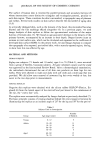
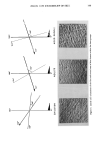
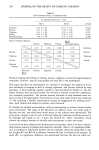
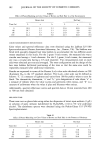
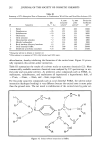
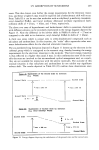
146 JOURNAL OF THE SOCIETY OF COSMETIC CHEMISTS The surface of human skin is traversed by parallel primary and secondary furrows (2) whose intersections create distinctive triangular and rectangular patterns, peculiar to each skin region. These constitute the skin's microrelief, a topographic map of plateaus and valleys. Several early studies on skin surface describe the microrelief of aging skin (3,4). In actinically damaged skin, such as the dorsum of the hand, this microrelief becomes blurred and the fine markings effaced altogether (4). In a previous paper, we used Image Analysis of skin replicas to follow the age-associated evolution of the major furrows of forearm skin (5). We found an age-associated decrease in the density of the primary furrows, accompanied by an increase in their depth. Deeper furrows cause an increase in total surface area, which can be calculated and expressed as the coefficient of developed skin surface (CDSS). In the present work, we used Image Analysis to compare the topography of an exposed, peri-orbital skin, with a scarcely exposed region, the leg, to show how this was affected by age. MATERIAL AND METHODS HUMAN SUBJECTS Eighty-one subjects (71 female and 10 male), ages 6 to 76 (Table I), were recruited from a group of healthy, Caucasian subjects. All gave informed consent and the study was approved by the Institutional Review Board. After a dermatological examination, the individuals discontinued the use of all skin care products on their legs for two weeks. They were allowed to wash once daily with soft cloth and a mild soap that was provided. We did allow razor removal of unwanted leg hair twice weekly or less, but never in the two days prior to measurements. SURFACE REPLICAS Negative skin replicas were obtained with the silicon rubber SILFLO © (Flexico, En- gland) (6) from the lateral aspect of the mid-calf and just lateral to the commissure of the eye, the "crow's foot" area. The replicas were automatically analyzed by Image Analysis as previously described (7). The basic principle consists of creating shadows behind the crests (negative furrows) by illuminating the replicas at an incident angle of 26 ø for the leg and 38 ø for the peri-or- Table I Subjects Used in Investigation Number Group Age range (years) of Subjects Young Adults Aged 0-12 9 19-28 13 30-39 10 4O-49 13 5O-59 9 6O-69 15 70-79 12
Purchased for the exclusive use of nofirst nolast (unknown)
From: SCC Media Library & Resource Center (library.scconline.org)