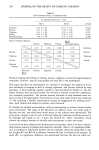
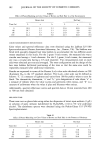
BLEACHING OF HAIR 181 Pheomelanin has recently been under increased scrutiny, as some earlier data suggested (3) that it is readily decomposed by the action of UV light and oxygen. This finding was linked to many of the abnormal reactions of the skin of redheads and blondes to sunlight, including their high susceptibility to skin cancer. This finding was somewhat inconsistent with the commonly held view, based primarily on subjective observations, that red hair undergoes little, if any, color change during the summer months. In fact, the results of recent investigations (4) questioned the claims of photolability of pheo- melanin. The published experiments on the photoreactivity of pheomelanin were per- formed, however, with pigment samples which were either synthetically prepared or isolated from their natural milieu. We felt that an examination of the photoreactivity of pheomelanin in its natural element might be a valuable contribution to the under- standing of its properties. An evaluation of the photoresponse of eumelanin under sim- ilar conditions was deemed to be an appropriate control. MATERIALS AND METHODS HUMAN HAIR Two prime sources of hair were used. The hair samples, one brown and another red in color, were obtained from two female subjects. Their hair was not subjected to any cosmetic modification involving chemically reactive products (such as permanent waves, bleaches, dyes, etc.) prior to sampling. Furthermore, the brown and red hair were of similar pigmentation intensity as indicated by the initial lightness (L) values (which are given in Table I). The portion of hair closest to the root end was used to prepare tresses for the photo-bleaching and chemical bleaching experiments. PHOTO-BLEACHING OF HAIR Accelerated exposure was carried out in an Atlas Fade-Ometer (Atlas Electric Devices Co., Chicago, IL) equipped with a sunshine carbon arc lamp. The lamp was centrally located in a 19V2-inch specimen rack which rotates at approximately three revolutions per minute during the exposure period. One tress of each type of hair was used per experimental condition. The tresses, 0.3 gram and 3 inches in length, were mounted on the specimen rack suspended in individual quartz tubes, which contained either a small amount of water or anhydrous sodium sulfate to maintain a humid or dry environment, respectively. The tubes were sealed only with rubber stoppers. The full length of the tress was exposed to the radiation for 16-hour time intervals. After such time, the tresses were removed from the tubes and color values and spectral reflectance data were obtained. CHEMICAL BLEACHING OF HAIR Hair bleaching was performed using solutions of 3% H202 adjusted to pH 10 with NH4OH. Treatment was carried out for a total time of 90 minutes at a solution-to-hair ratio of 50:1 in an oven maintained at 36 -+ iøC. After bleaching, each tress was throughly rinsed under lukewarm running tap water, allowed to air dry, and then spectral reflectance data were obtained. A single 2-gram 5-inch-long tress of each type of hair was used.

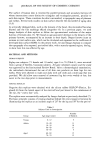
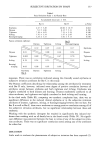
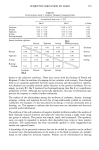
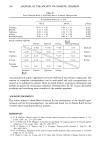
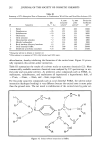
182 JOURNAL OF THE SOCIETY OF COSMETIC CHEMISTS Table I Effect of Photo-Bleaching on Color Values of Brown and Red Hair in a Dry Environment Brown hair Red hair Time (hr) L a b L a b 0 19.9 3.4 5.1 21.6 10.0 8.0 48 20.7 3.5 5.1 21.9 9.8 8.1 96 21.1 3.7 5.3 21.8 9.9 8.1 192 22.2 3.9 5.6 22.3 10.0 8.4 COLOR MEASUREMENTS (REFLECTANCE) Color values and spectral reflectance data were obtained using the LabScan LS-5100 Spectrocolorimeter (Hunter Associates Laboratory, Inc., Reston, VA). The LabScan was fitted with specially designed hair tress holders to accommodate the two different-sized tresses employed in this study. For the 2-gram 5-inch tresses, the measured site was a circular area having a 1-inch diameter. For the 0.3-gram 3-inch tresses, the measured site was a circular area having a 0.5-inch diameter. Two measurements (one on each side) were obtained per tress and averaged. The tress configuration and the design of the hair tress holders facilitated positioning of the tress so that the same area could be repeatedly measured after additional treatments. Results are expressed in terms of the Hunter L,a,b color scale calculated relative to CIE illuminant D65 to the 10 ø standard observer. The L,a,b, color scale can be defined as follows: "L" is a measure of lightness and varies from 100 for perfect white to zero for black. The chromaticity dimensions, "a" and "b," give designations of color where "a" is a measure of redness when the value is plus and greenness when minus, and "b" is a measure of yellowness when the value is plus and blueness when minus. Additionally, spectral reflectance curves and spectral data at 20-nm intervals from 400 to 700 nm were obtained. MELANIN FILMS These were cast on glass slides using either the dispersion of intact sepia melanin (1 g/L) or solution of sepia melanin [solubilized by H202/NH 3 (11)] in 5% w/w polyvinyl alcohol. The absorbance spectra were obtained using the Perkin-Elmer 553 UV/VIS Spectrophotometer. Table II Effect of Photo-Bleaching on Color Values of Brown and Red Hair in the Presence of Moisture Brown hair Red hair Time (hr) L a b L a b 0 21.2 3.5 5.4 22.0 9.8 8.1 48 21.4 4.0 5.7 22.3 10.4 8.8 96 23.4 4.1 6.7 23.3 9.8 8.7 192 28.6 4.2 8.2 25.0 10.0 9.9
Purchased for the exclusive use of nofirst nolast (unknown)
From: SCC Media Library & Resource Center (library.scconline.org)