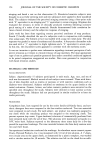
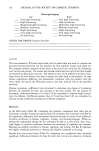
SUBJECTIVE IRRITATION BY SOAPS 155 tional 30 seconds before being removed with a paper towel which had been moistened with tap water. The area was then patted dry with dry paper towels. EVALUATIONS Each test area was scored for erythema prior to each washing using the following scale: 0 = no redness 1 = slight redness 2 = definite redness 3 = circumscribed red area, well-defined enough to be visible from a distance of 10 feet 4 = extremely red, well defined 5 = extremely red, well defined, edema and/or vesicles Prior to the third clinical evaluation each day, subjects evaluated the feel of their skin for dryness, tightness, itching, and burning/stinging, using the following seven-point category scale. This scale was adapted from that used to measure off flavors in foods (8). SKINFEEL QUESTIONNAIRE INSTRUCTIONS: For each question below, check (v/) the response on the scale which best describes the feel of your skin. __ Very high dryness __ High dryness __ Moderately high dryness __ Moderate dryness __ Slight dryness __ Very slight dryness __ No dryness Dryness Tightness __ Very high tightness __ High tightness __ Moderately high tightness __ Moderate tightness __ Slight tightness __ Very slight tightness __ No tightness __ Very high itching __ High itching __ Moderately high itching __ Moderate itching __ Slight itching __ Very slight itching __ No itching Itching Right __ Very high dryness __ High dryness __ Moderately high dryness __ Moderate dryness __ Slight dryness __ Very slight dryness __ No dryness Right __ Very high tightness __ High tightness __ Moderately high tightness __ Moderate tightness __ Slight tightness __ Very slight tightness __ No tightness Right __ Very high itching __ High itching __ Moderately high itching __ Moderate itching __ Slight itching __ Very slight itching __ No itching (Continued on next page)

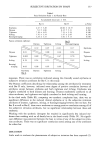
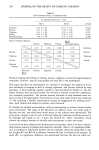
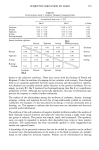
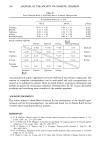
156 JOURNAL OF THE SOCIETY OF COSMETIC CHEMISTS Burning/stinging Very high burn/sting High burn/sting Moderately high burn/sting Moderate burn/sting Slight burn/sting Very slight burn/sting No burn/sting Right __ Very high burn/sting __ High burn/sting __ Moderately high burn/sting __ Moderate burn/sting __ Slight burn/sting __ Very slight burn/sting __ No burn/sting OTHER DISCOMFORT (please describe): ANALYSIS The non-parametric Wilcoxon Sign Rank test for paired data was used to compare the irritation potential between the two products for each attribute within each study (9). The response variable consisted of the mean of the sum of the scores for all evaluations over the five-day period. The means and standard deviations for each of the four studies are reported as descriptive statistics. The absolute value of the difference between treat- ment scores for each subject was used to assign the ranks used in the analysis. In cases where a significant difference was determined, treatment with the product with the lower mean did match the Wilcoxon statistic and thus induced less of the specified irritation. Pearson correlation coefficients were calculated to determine the degree of correlation between all attributes for each test material in the four studies. For the purpose of discussion, coefficients between 0.65 and 0.70 are considered to indicate slight correla- tion of attributes. Coefficients greater than 0.70 and less than 0.85 are considered to indicate strong correlations among the attributes compared. RESULTS In the third study (Table III), comparing two synthetic complexion bars, there was no Treatment with Bar A produced significantly less erythema than treatment with Bar B. No significant differences were determined between the bars in terms of the subjective irritation attributes of dryness, tightness, itching, and burning/stinging. When as- sessing the relationship among the five attributes for Bar A in this study, there was a high degree of positive correlation between the attributes of tightness and dryness. Burning was slightly correlated to dryness, tightness, and itching. For Bar B, tightness was highly correlated positively to dryness and slightly correlated to burning. Results from the second study (Table II), comparing two complexion bars, indicated significant differences between the bars for both the clinical and subjective irritation
Purchased for the exclusive use of nofirst nolast (unknown)
From: SCC Media Library & Resource Center (library.scconline.org)