j. Soc. Cosmet. Chem., 82, 171-177 (May/June 1987) Biophysical characterization of dry facial skin J. L. LEVEQUE, G. GROVE, J. de RIGAL, P. CORCUFF, A. M. KLIGMAN, AND D. SAINT LEGER, Laboratoires de Recherche de l'Oreal, 1 Avenue Eugene Schueller, 93600 Aulnay Sous Bois, France (J. L. L., J. d.R., P.C., D.S.L. ), Skin Study Center, 3401 Market Street, Philadelphia, PA 19104 (G.G.), and Department of Dermatology, School of Medicine, University of Pennsylvania, Philadelphia, PA 19104 (A.M.K.). Received December 1 O, 1986. Synopsis Skin conductance, extensibility, corneocyte size, sebum excretion rate (SER), and transepidermal water loss (TEWL) were assessed for 5 5 healthy adults showing typical winter xerosis. The variation of these param- eters with the severity of skin dryness (assessed through a standardized clinical grading) was plotted. Both skin conductance and skin extensibility decreased with the severity of skin dryness, suggesting that winter xerosis may lead to either thicker or drier stratum corneum (SC). In addition, there is an inverse relation- ship between the size of corneocytes and the severity of the xerosis, which could mean that a subclinical inflammation process underlies this skin affliction. Results show no clear relationship between skin dryness and SER or TEWL. INTRODUCTION "No one can talk authoritatively about dry skin. Virtually everything that can be said is speculative and controversial" (1). While dry skin is a common disorder which can make people miserable, the fact is we know very little about it. Indeed, dryness is merely a descriptive term that implies lack of water, but this has not been shown conclusively. The ichthyotic syndromes can be considered as extreme examples of dry skin. Ironically, we know a good deal more about these rare conditions than the ordi- nary wintertime xerosis which is the focus of this work. Electron microscopy has so far not illuminated the basic structural defect that underlies dry skin. A currently popular approach to the enigmatic problem of dry skin is the use of a variety of ingenious instruments to measure the optical, mechanical, and electrical properties by noninvasive technology. Despite a rush of activity, the interpretation and relevance of the data obtained is still a matter of uncertainty and dispute. The various nonintrusive tech- niques that have been applied to this problem have been recently reviewed (2). The great appeal of this bioengineering approach is the securing of quantitative data ame- nable to statistical analysis. Another valuable feature is that the various tests can be speedily performed, enabling measurements on large sample sizes, a partial antidote to the marked individual differences which plague studies of human skin. Some of these are of interest as they are usually simple, noninvasive, and can therefore be applied on 171

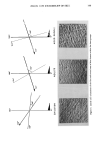
172 JOURNAL OF THE SOCIETY OF COSMETIC CHEMISTS large numbers of subjects. They therefore allow an objective characterization of the human stratum corneum and its functional state. In this regard, no area of skin is more complex than the face, and none is more interesting. Genetic and environmental influ- ences have a huge impact on the quality of facial skin. Dry facial skin is a very frequent complaint of middle-aged women, and extraordinary measures are used to combat it. To gain better insight into the nature of dry skin, we made a number of nonintrusive measurements. MATERIAL AND METHODS This investigation was carried out on 55 human volunteers at the Skin Study Center (Philadelphia, PA) in January when dry skin is worst. The subjects were selected for severity of dry skin by screening from a group of 165 people. Informed consent was obtained. Except for a mild soap that was provided, the skin received no cosmetic applications for two weeks prior to the first measurement. DRYNESS SCORING Dryness of the forehead and cheeks was scored by an experienced physician, following the global grading system of Kligman: 0 = surface smooth, no peeling. 1 = slight dryness sparse, small scales. 2 = moderate dryness larger, more numerous scales. 3 = extreme dryness prominent large scales, densely covering the surface. BIOPHYSICAL MEASUREMENTS 1. Extensibility of the stratum corneum was measured on the cheek by means of the Twistometer ©, which applies a weak torque to a disc through a twist of about 3 ø (6). When the distance between the disc and a surrounding guard ring is less than 1 mm, the measurement reflects the resistance of the stratum corneum to stretching, an indi- rect measure of its degree of hydration. 2. Electrical conductance was determined on the cheek and forehead, by means of a DermoDiag © (7). This instrument is an auto-oscillator that delivers 27 MHz waves. The coaxial cylindrical electrode is applied under a constant pressure for a constant time. 3. Forced desquamation of corneocytes was carried out by a turbine machine which mechanically rotates a disc of wool in a glass cup filled with a Triton X 100 solution as in the detergent scrub technique (8). 4. Transepidermal water loss (TEWL) was determined on the forehead using the Ser- vomed © evaporimeter after the method of Nilson (3). The subjects were at rest for at least 45 minutes till steady-state values were obtained. ß 5. Sebum excretion rate (SER) was measured on the forehead using the lipometre © as previously described (4). The forehead was cleaned by wiping with cotton balls soaked
Purchased for the exclusive use of nofirst nolast (unknown)
From: SCC Media Library & Resource Center (library.scconline.org)