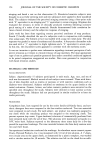
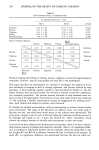
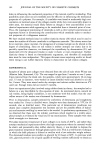
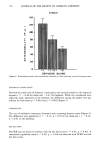
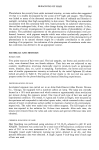
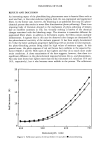
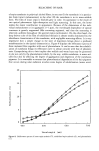
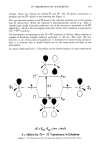
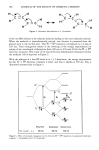
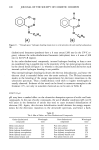
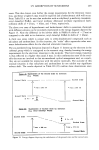
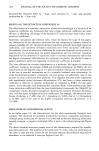
UV ABSORPTION BY SUNSCREENS 195 orbitals. These two orbitals are labeled [i and If*. The [i orbital contributes to bonding and the II* orbital to anti-bonding (see Figure 1). The two electrons present in the If-bond of the ethylene molecule are in the ground state [I orbital (Egr). When the molecule is photochemically excited (e.g., when it absorbs high energy ultraviolet radiation), one of the electrons is promoted to the II* orbital (Ecx), which is the next highest molecular orbital. This transition is expressed as a [i -- If* transition. The wavelength corresponding to this II-- If* transition is 180 nm. Hence ethylene is capable of absorbing sunlight radiation equivalent to 180 nm. This value 180 nm, however, is not of any practical significance to formulators of sunscreening products, since it is radiation that is usually filtered out by the ozone protective layer in our stratosphere. In a more complicated case, 1,3-butadiene can be viewed simply as a linear combination i t I I % % c AE ,Eex % f Egr AE = Eex -Eg r = h•' = hc/?x ?x = 180nrn for ]'[--, ]'[ Transitions in Ethylene Figure 1. The formation of the two molecular orbitals in ethylene (CH2 = CHQ.

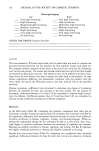
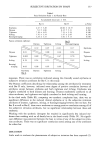
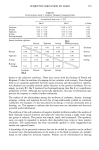
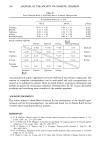
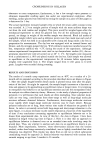
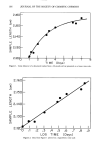
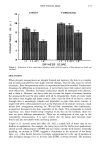
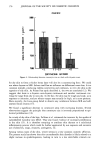
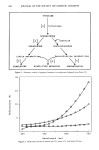
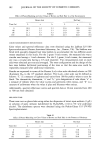
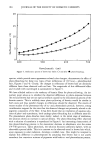
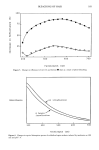
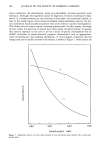
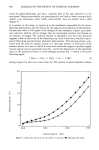
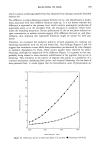
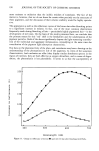
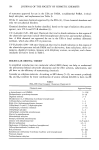
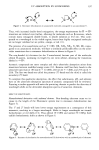
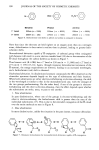
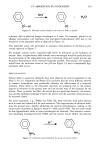
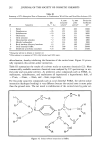
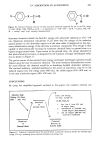
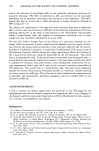
196 JOURNAL OF THE SOCIETY OF COSMETIC CHEMISTS H\C • /H --C H / N•= /H H / XH H\Dc/H ' H / •"'-• /H C--C H / +•H Figure 2. Resonance delocalization in 1,3-butadiene. of the two MO orbitals in the ethylene molecule leading to four new molecular orbitals. When the molecule is photochemically excited, one electron is promoted from the ground state to the excited state. This II -• II* transition corresponds to a X max of 230 nm. Thus conjugation results in the lowering of the energy requirements (or raising of the wavelength of absorption from 180 nm to 230 nm) (9) for the II --• II* electronic transition. This is due to the ease of electron delocalization (resonance) within the molecule (10) as depicted in Figure 2. With the addition of a third H-bond as in 1,3,5-hexatriene, the energy requirements for this II -• II* electronic transition is lower, and thus it absorbs at 258 nm. This is illustrated schematically in Figure 3. i I I I i I I \ Ethylene Butadlene Hexatrlene For ]'[---*:]'[*, • = 180 nm 230 nm 258 nm Figure 3. Effect of increased conjugation on the electronic II -- II* transitions in unsaturated molecules: ethylene, 1,3-butadiene and 1,3,5-hexatriene.
Purchased for the exclusive use of nofirst nolast (unknown)
From: SCC Media Library & Resource Center (library.scconline.org)