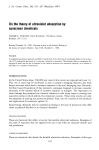
j. Soc. Cosmet. Chem., 82, 193-207 (May/June 1987) On the theory of ultraviolet absorption by sunscreen chemicals NADIM A. SHAATH, Felton Worldwide, 599Johnson Avenue, Brooklyn, NY 11237. Received November 18, I986. Presented in part at the Annual Meeting of the Society of Cosmetic Chemists, New York, December 5, 1986. Synopsis A simplified qualitative approach suitable for prediction of the direction of wavelength shifts in the ultravi- olet (UV) absorption spectrum of a sunscreen chemical is presented. Wavelength shifts at maximum ab- sorption (• max) may be due to changes in the chemical structure of a sunscreen chemical, or to solvent or pH effects in a cosmetic formulation. INTRODUCTION In the United States alone, 500,000 new cases of skin cancer are reported each year (1). This rise in cases may be attributed in part to people's changing lifestyles and their leisure activities which lead to excessive exposure to the sun's damaging rays. Recently, the Skin Cancer Foundation (2) has initiated a campaign designed to increase consumer awareness of the harmful effects of excessive exposure to sunlight. The importance of these findings has prompted the cosmetic industry to take major steps in creating new sunscreen products which address this important concern. These steps involve not only the expansion of existing sun protection product lines, but the creation of new products and applications for sunscreen agents (3). Sunscreening chemicals may be classified according to the type of protection they offer either as physical blockers or as chemical absorbers. PHYSICAL BLOCKERS These are chemicals that reflect or scatter the harmful ultraviolet radiation. Examples of this type of sunscreen that are approved for use in the USA are titanium dioxide and red petrolatum. CHEMICAL ABSORBERS These are chemicals that absorb the harmful ultraviolet radiation. Examples of this type 193

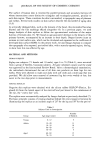
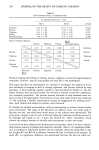
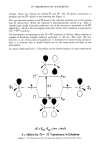
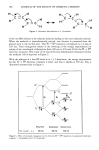
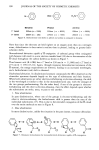
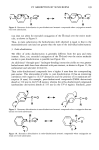
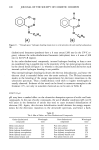
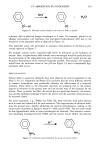
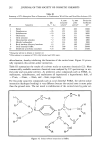
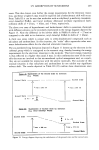
194 JOURNAL OF THE SOCIETY OF COSMETIC CHEMISTS of sunscreen approved for use in the USA are PABA, octyldimethyl PABA, 2-ethyl- hexyl salicylate, and oxybenzone (see Table I). Of the 21 sunscreen chemicals approved by the FDA (4), 19 are chemical absorbers and only two are physical blockers. Chemical absorbers may be further classified, based on the type of radiation they protect against, into UV-A and UV-B absorbers (3): UV-A absorbers (320-400 nm): Chemicals that tend to absorb radiation in this region of the ultraviolet spectrum include three benzophenone derivatives and menthyl anthrani- late. A fifth chemical not approved for use in the USA is butyl methoxy dibenzoyl methane, which also offers UV-A protection. UV-B absorbers (290-320 nm): Chemicals that tend to absorb radiation in this region of the ultraviolet spectrum include PABA and its derivatives, three salicylates, three cin- namates, digalloyl trioleate, lawsone with dihydroxy acetone, an acrylate, and a benz- imidazole derivative listed in Table I. MOLECULAR ORBITAL THEORY A simplified introduction into molecular orbital (MO) theory can help to understand the phenomena behind ultraviolet absorption and the effect solvents, substituents, and pH have on the efficiency of sunscreening chemicals. Consider an ethylene molecule. According to MO theory (5-8), two atomic p-orbitals (4)1 and 4)2) combine by linear combination of atomic orbitals (LCAO) to form two II Table I FDA-OTC Panel Category I Sunscreen Chemicals (4) Chemical name Approved dosage p-Aminobenzoic acid (PABA) Diethanolamine p-methoxycinnamate Digalloyl trioleate Dioxybenzone (2,2'-Dihydroxy-4-methoxy benzophenone) 2-Ethoxyethyl-p-methoxycinnamate Ethyl-4-bis (hydroxypropyl)amino benzoate 2-Ethylhexyl-2-cyano-3,3-diphenylacrylate 2-Ethylhexyl p-methoxy cinnamate 2-Ethylhexyl salicylate 2-Ethylhexyl-4-dimethyl aminobenzoate Glyceryl p-aminobenzoate Homomenthyl salicylate Isoamyl p-dimethyl aminobenzoate Lawsone with dihydroxyacetone Menthyl anthranilate Oxybenzone (2-Hydroxy-4-methoxy benzophenone) 2-Phenylbenzimidazole- 5-sulfonic acid Red petrolatum Sulisobenzone (2-Hydroxy-4-methoxy-5-sulfonic acid benzophenone) Titanium dioxide Triethanolamine salicylate 5-15% 8-10 2-5 3 1-3 1-5 7-10 2-7.5 3-5 1.4-8 2-3 4-15 1-5 0.25 with 3 3.5-5 2-6 1-4 30-100 5- 10 2-25 5-12
Purchased for the exclusive use of nofirst nolast (unknown)
From: SCC Media Library & Resource Center (library.scconline.org)