AMPHIPHILIC ASSOCIATION STRUCTURES 171 (25) (26) (27) (28) (29) (30) C. L. Froebe, F. A. Simion, H. Ohlineyer, L. D. Rhein, J. Mattai, R. H. Cagan, and S. E. Friberg, Prevention of stratum corneum lipid phase transitions in vitro by glycerol--An alternative mechanism for skin moisturization. J. Soc. Cosmet. Chem. (in press). G. Grubauer, K. R. Feingold, R. M. Harris, and P. M. Elias, Lipid content and lipid type as determinants of the epidermal permeability barrier, J. Lipid Res., 30, 89-96 (1989). S. E. Friberg, I. Kayall, W. Beckerman, L. Rhein, and F. A. Simion, Water permeation of reaggre- gated stratum corneum with model lipids, J. Invest. Dermatol. (in press). S. E. Friberg and I. Kayall, Water evaporation rates from a model of the stratum. J. Pharm. Sci., 78, 639-643 (1989). G. O. Burr and M. M. Burr, A new deficiency disease produced by the rigid exclusion of fat from the diet,J. Biol. Chem., 82, 335-336 (1929). P.M. Elias and B. E. Brown, The mammalian cutaneous permeability barrier: Defective barrier in essential fatty acid deficiency correlates with abnormal intercellular lipid deposition, Lab. Invest., 39, 574-583 (1978).

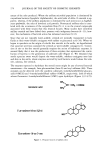
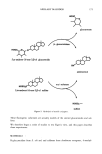
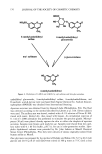
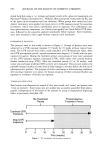
j. Soc. Cosmet. Chem., 41, 173-185 (May/June 1990) Axillary malodor production' A new mechanism C. FROEBE, A. SIMONE, A. CHARIG, and E. EIGEN, Colgate-Palmolive Technical Center, 909 River Road, Piscataway, NJ 08854. Received May 15, 1990. Synopsis The mechanism proposed by Eigen (1) for the generation of axillary malodor from steroids has been ex- plored. Previous work indicated that axillary odor is largely due to the steroids 16,5ot-androstene-313-ol and 16,5ot-androsten-3-one. Following Eigen, we theorize that sterile and odorless apocrine secretions from the axilla contain these steroids as their water-soluble sulfates and glucoronides and that odor is produced only after the volatile free steroids are liberated from these esters by bacterial hydrolyric enzymes such as aryl sulfatase and beta-glucuronidase. Support for this hypothesis was obtained by producing odor from sterile, odorless, apocrine sweat by the addition of either of the two enzymes, or of the corynebacterial strains that produce them. Finally, steroid realodor production can be prevented by inhibitors of beta-glu- curonidase and of aryl sulftase. INTRODUCTION The human axilla is populated with two classes of sweat gland: The eccrine glands produce a watery secretion in response to heat. Apocrine glands produce microdroplets of a viscous secretion in response to emotional stress. Apocrine sweat is a complex mixture containing cholesterol, steroids, and other lipids, as well as 10% protein. It was recognized as early as 1956 that axillary odor is generated from apocrine secretion. Although the sterile fluid is odorless, bacterial action on certain components present in sweat produces the characteristic underarm odor (2). Although the initial view of Strauss and Kligman was that any or all of the axillary population could cause odor, within a few years Shehadeh and Kligman found that it was caused chiefly by gram-pos- itive types (3). Recent work suggests two classes of odorants in the axilla: short-chain fatty acids, e.g. isovaleric acid, and the androgen steroids, especially 5-ot-androstenol and 5-ot-andros- tenone (see Figure 1) (4). It must be mentioned that, while these species have been chemically identified in the axilla through gas chromatographic methods, the identifi- cation of them as axillary odorants has relied upon organoleptic means. Therefore, the positive identification of these three species as the principal axillary odorants has not yet been made. Indeed, other related compounds may contribute to the complex odor. A correlation has been found between the composition of the underarm flora and the 173
Purchased for the exclusive use of nofirst nolast (unknown)
From: SCC Media Library & Resource Center (library.scconline.org)