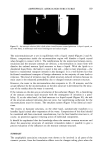
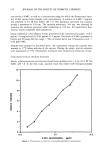
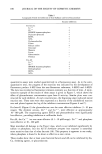
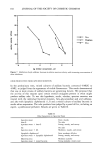
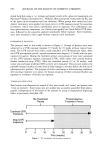
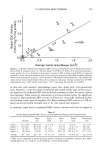
UV-INDUCED SKIN TUMORS 191 ASSAY OF ODC ACTIVITY Mouse epidermal ODC activity was determined as previously described (18). For the assay of human epidermal ODC activity, epidermal shave biopsies (• 1 cm 2) were ob- tained using a double-edged razor blade, the outer edges covered with cellophane tape, leaving the desired 1-cm cutting edge exposed [34]. Anesthesia for biopsy was achieved by applying an ice cube to the skin for two minutes prior to biopsy. Biopsies were immediately transferred to a tube containing 0.6 ml ice-cold homogenization buffer [50 mM sodium phosphate (pH 7.0), 1.25 mM EDTA, 2.5 mM dithiothreitol, and 0.1 mM pyridoxal 5'-phosphate]. Within two hours of biopsy, the samples were homoge- nized on ice using a Tekmar Tissumizer (Cincinnati, OH) at setting 8 for 20 sec. The homogenate was then centrifuged at 16,000 x g for 10 min at 4øC to obtain a soluble epidermal fraction. ODC activity in the soluble fraction was determined immediately after homogenate centrifugation by measuring the release of •4CO2 from L-[1-•4C]or- nithine hydrochloride, as described previously for the assay of mouse epidermal ODC activity [18]. RESULTS AND DISCUSSION MOUSE BASAL EPIDERMAL ODC ACTIVITY AND TOTAL TUMOR AREA Using the pre-damage protocol depicted in Figure 1, groups of mice were pre-exposed to sub-MED UVR, then topically treated with various photoprotective agents. Treat- ments included an SPF 8 sunscreen, an antioxidant (o•-tocopherol), three different iron chelators (e.g., 2,2'-dipyridylamine), and a vehicle control. At the end of the treatment period, the average total tumor area per mouse and average basal epidermal ODC ac- tivity were measured in each treatment group. ODC activity was measured several days after the last irradiation to ensure that acutely induced levels of ODC activity had returned to true basal level. Most importantly, ODC activity was determined only in the UVR-exposed and treated skin that lacked tumors. ODC activity is known to be elevated in visible tumors (10,17,27,35). Since these studies were staggered over a period of about one year, there were three different vehicle control groups in the data set. The relationship between the basal epidermal ODC activity in the non-involved skin and the tumor area per mouse is presented in Table I and plotted in Figure 2. The data show that the extent of skin photodamage, as assessed by total tumor area, is directly related to the basal epidermal ODC activity (p 0.001). Mice showing no visible tumors (non-irradiated control groups) had the lowest ODC activity (Points 1-3 in Figure 2). Mice with the greatest photodamage (vehicle-treated, continued UVR expo- sure) had the highest levels of epidermal ODC activity (Points 13, 15, and 16 in Figure 2). In general, those mice with progressively more total tumor area had progressively higher enzyme activities. Mice treated with photoprotective agents had lower levels of visible skin damage and epidermal ODC activity compared to their vehicle-treated and similarly irradiated counterparts. For example, mice treated 12 weeks with chelator 3 in the presence of continued UVB exposures(Point 9) had 53% less total tumor area and 92% lower basal ODC activity compared to the vehicle-treated, continually irradiated control mice (Point 13). Similarly, mice treated 12 weeks with a combination of che-

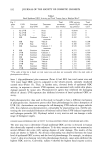
192 JOURNAL OF THE SOCIETY OF COSMETIC CHEMISTS Table I Basal Epidermal ODC Activity and Total Tumor Area in Hairless Mice* Fig. 2 Total ODC activity Total point UVR Continue/ Treatment treatment (nmol CO2/h/ tumor area no. type stop UVR class time (weeks) mg protein) (cm 2) 1 No UVR -- None 12 0.0078 0 2 No UVR -- None 12 0.016 0 3 No UVR -- None 20 0.037 0 4 SSR Continue Chelator 1 + 12 0.392 0.16 sunscreen 5 SSR Stop Vehicle 12 0.602 0.208 6 UVB Stop Vehicle 12 0. 100 0.29 ! 7 SSR Continue Chelator 2 + 12 0.529 0.292 sunscreen 8 SSR Continue Sunscreen !2 0.572 0.355 9 UVB Continue Chelator 3 !2 0.221 0.490 !0 UVB Continue Antioxidant !2 0.680 0.832 ! ! SSR Continue Chelator 2 !2 0.638 0.846 !2 UVB Stop Chelator 3 20 !. !23 0.909 !3 UVB Continue Vehicle !2 2.795 !.045 !4 UVB Stop Vehicle 20 !. 23 ! !. 230 15 SSR Continue Vehicle !2 2. !72 !. 357 !6 UVB Continue Vehicle !2 2.7 ! 3 !. 490 * The order of this list is based on total tumor area and does not necessarily reflect the rank order of photoprotective efficacy. lator 1 (dipyridylamine) plus sunscreen (Point 4) had 88% less total tumor area and 72% lower basal ODC activity compared to the vehicle-treated, similarly irradiated control mice (Point 15). Thus, in hairless mice, elevated levels of epidermal ODC activity, in response to chronic UVR exposure, are associated with visible skin photo- damage assessed by tumor area. Photoprotective agents that inhibited the damaging effects of chronic UVR exposure also inhibited elevation of basal epidermal ODC ac- tivity. Each photoprotective class used in this study is thought to have a different mechanism of photoprotection. Sunscreens protect skin from photodamage by direct absorption of UVR (36). Antioxidants can scavenge the cell-damaging UVR-induced oxygen radicals (29). Iron chelators are photoprotective, presumably by sequestering iron, thereby pre- venting the iron-catalyzed formation of hydroxyl radical from UVR-induced superoxide and hydrogen peroxide (30). Hydroxyl radical is very reactive and can damage a wide range of biological targets. HUMAN BASAL EPIDERMAL ODC ACTIVITY IN SOLAR-EXPOSED VERSUS UNEXPOSED SKIN SITES The next step was to determine if basal epidermal ODC activity is elevated in human skin chronically exposed to solar radiation. To do this, enzyme activity was measured at several different skin sites with varying degrees of solar damage. The results of this study are shown in Table II. No obvious relationship was observed between the basal level of epidermal ODC activity and the level of photodamage. For example, in subjects 1 and 2, skin sites showing very little photodamage (buttock, inner arm) exhibited the highest ODC activity. Conversely, subject 4 showed the highest basal enzyme activity
Purchased for the exclusive use of nofirst nolast (unknown)
From: SCC Media Library & Resource Center (library.scconline.org)