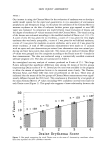
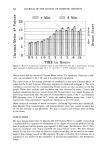
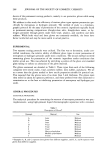
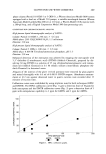
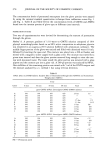
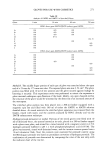
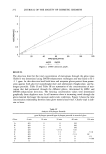
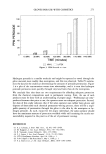
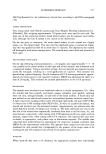
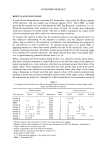
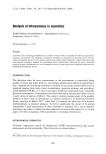
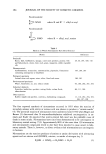
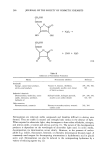
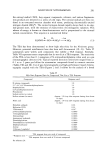
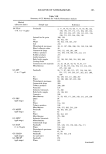
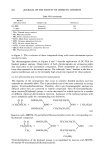
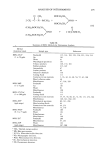
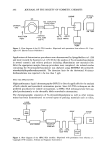
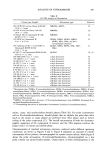
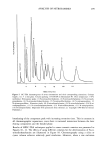
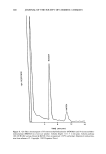
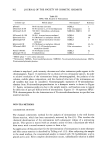
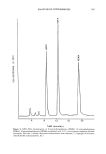
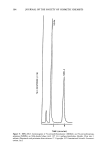
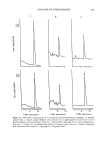
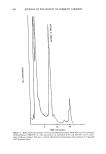
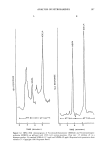
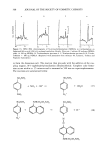
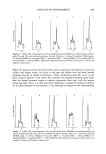
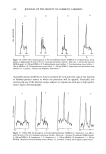
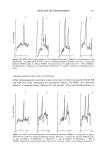
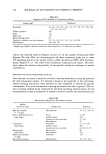
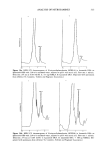
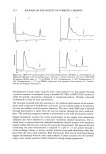
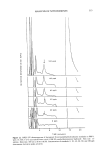
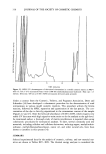
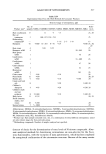
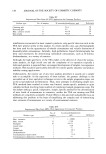
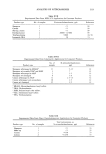
272 JOURNAL OF THE SOCIETY OF COSMETIC CHEMISTS 2.5 1.5 1 0.5 .. 20 40 60 80 100 1 Z0 PPM MERCAPTAN AMTG GMTG •.__• _ _ _ a,c.• - _ _ Figure 2. DTNB calibration graphs. RESULTS The detection limit for the total concentration of mercaptans through the glove types (Table I) was determined using DNTB enhancement techniques and was found to be 3 --- 1 ppm. At this detection level both latex and neoprene gloves protect from perme- ation against both glyceryl monothioglycolate and ammonium thioglycolate, and hy- drogen peroxide. Table II and Table III are summaries of the concentrations of mer- captan that had permeated through the different gloves, determined by HPLC and DNTB enhancement detection. The limiting concentration values were determined graphically from duplicate runs. In all instances there is increasing travel through the glove material the longer the exposure under static conditions. Figure 3 shows the time concentration relationship between latex glove material and vinyl. Clearly vinyl is infe- rior to latex. Table IV Analysis of Hydrogen Peroxide ppm Hydrogen peroxide/ppm hydrogen peroxide in stretched glove Glove 0 min 10 min 30 min 60 min 150 min A 0/0 0 0 0/0 B 0/0 0 0 0/0 C 0/0 0 0 0/0 D 0/0 0 3/3 10 E 0/0 0 1 1 F 0/0 0 1 1/3 G 0/0 0 0 0 H 0/0 0 0 0 I 0 0 0 0 / 10 10/ /3 / 100

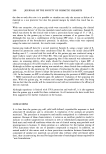
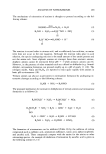
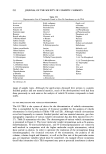
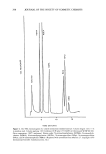
GLOVES FOR USE WITH COSMETICS 273 100 80 60 40 20 10 MIN 30 MIN 60 MIN 420 MIN 960 MIN 1140 MIN 1440 MIN TIME (minutes) • VINYL i• LATEX Figure 3. PPM Peroxide vs. time. Hydrogen peroxide is a smaller molecule and might be expected to travel through the glove material more readily than mercaptans, and this was observed. Table IV summa- rizes the data for the studies at determining the amounts of peroxide permeation. Figure 3 is a plot of the concentration versus time relationship, and it is seen that hydrogen peroxide permeates more quickly through vinyl and latex than do the mercaptans. We conclude first that there are two requirements for affording adequate protection from the chemical compositions used in permanent waving. First, the use of such products must be done with an understanding of proper usage. "Professional use only" products forewarn that prior to use, the operator must use adequate protection. Second, the data of this study indicates that if the salon operator uses rubber latex gloves and disposes of them after each chemical permanent-waving process, there will be a negli- gable quantity of permeation through the glove to the skin by the mercaptan or hy- drogen peroxide. As such, except for the atopic individual, the salon operator should have the maximum amount of protection available while still retaining the tactile ma- nuverability required in the practice of the art of permanent waving. REFERENCES (1) A. J. Lehman, J. Amer. Med. Assoc., 12, 842-845 (1949). (2) M. Rapaport, J. Am. Acad. Dermatol., 9(5), 739-742 (1983). (3) R. Yamasaki, Contact Dermatitis, 11(4), 255 (1984). (4) F. J. Storrs, J. Am. Acad. Dermatol., 11(1), 74-85 (1984). (5) CT?A Developments Newsletter, April 18, 1990, p. 3. (6) F-D-C Reports ("The Rose Sheet"), May 3, 1990, p. 3. (7) F. J. Storrs et al.,J. Am. Acad. Dermatol., 20(6), 1038-1045 (1989).
Purchased for the exclusive use of nofirst nolast (unknown)
From: SCC Media Library & Resource Center (library.scconline.org)