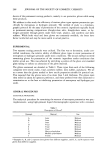
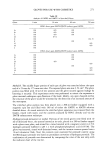
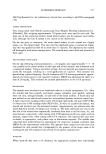
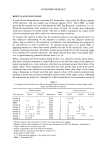
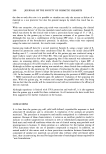
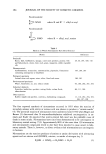
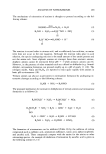
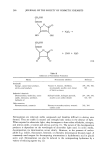
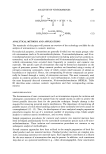
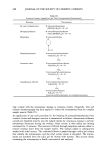
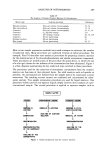
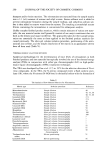
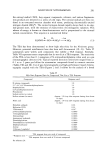
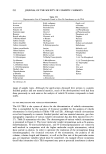
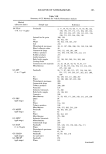
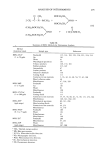
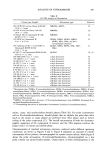
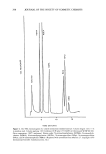
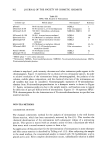
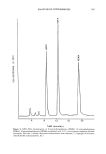
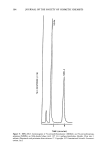
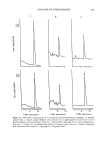
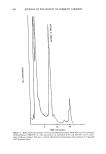
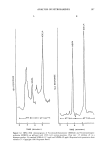
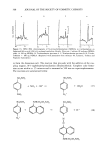
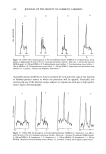
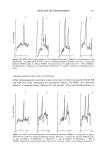
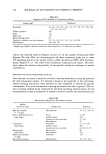
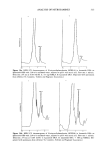
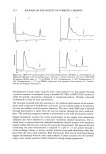
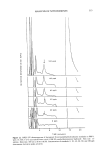
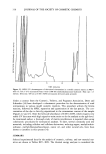
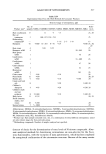
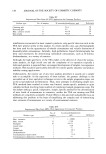
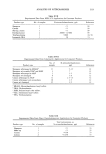
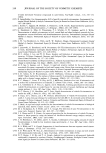
312 JOURNAL OF THE SOCIETY OF COSMETIC CHEMISTS Table XII Summary of TLC Methods for Nitrosamine Analysis Sample type a References Foodstuffs Tobacco products Grain Plant food Metal-working fluids Cosmetics, toiletries, and raw materials Miscellaneous 46, 103, 114, 122, 132, 133, 147, 150, 152, 156, 168, 197, 257, 263, 272 286 143 125 64 25, 113, 116, 119, 121, 131, 210, 280 259, 260, 265 Sample type: Relative detection limits have been reported at 5 to 200 parts per billion. various raw material matrices (Figures 20 and 21). In the analysis of lauramide DEA (Figures 20a and 20b), the chromatograms all show extraneous peaks due to other UV-absorbing species in the sample matrix, unlike the previous HPLC-TEA chromato- grams (Figures 9, 13-19), where fewer extraneous components are visible. This illus- trates again the extreme susceptibility of non-specific analytical techniques to matrix interferences. METHODS FOR TOTAL NITROSAMINE ANALYSIS Over the past two years, a trend has evolved to develop methods for screening materials for total nitrosamine content. If a material is found to test positively in the total nitros- amine screening reaction(s), other methods are then employed to identify the specific contaminant. Two total nitrosamine screening procedures have been reported. The cur- rent screening method being employed by the Food and Drug Administration for the determination of total nitrosamines in cosmetic matrices involves the chemiluminescent Table XIII Miscellaneous Methods for Nitrosamine Analysis Method (detection limit) Sample type References Mass spectrometry (1 to 5 ppb) Direct chemiluminescence (ppb range) Colorimetry (ppb range) Polarography (ppb range) Photoelectro-analysis (1 ppb) Optical spectroscopy Miscellaneous 79, 117, 118, 191 Urine 72, 98 Animal tissues 149 Cosmetics & raw materials 33, 105 Miscellaneous 78 Foodstuffs 93, 112, 293 Animal tissues 149 Cosmetics & raw materials 32, 66, 81, 95 Blood serum 80 Miscellaneous 170 Foodstuffs 126 Miscellaneous 167, 217, 261

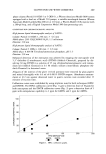
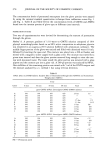
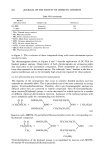
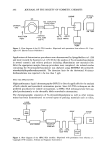
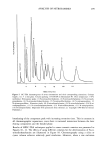
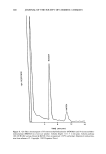
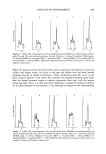
ANALYSIS OF NITROSAMINES 313 B Figure 20a. HPLC-UV chromatograms of N-nitrosodiethanolamine (NDELA) in lauramide DEA on Spherisorb ODS with 2:98 (v/v) methanol-water, adjusted to pH 4 with acetic acid. Flow rate: 1 ml/min. Detection: 254 nm at 0.005 AUFS. A: 333 ng NDELA. B: Lauramide DEA. (Reprinted with permission from reference 56. Cosmetic, Toiletry and Fragrance Association.) NDELA Figure 2Oh. HPLC-UV chromatograms of N-nitrosodiethanolamine (NDELA) in lauramide DEA on Spherisorb ODS with 2:98 (v/v) methanol-water, adjusted to pH 4 with acetic acid. Flow rate: 1 ml/min. Detection: 254 nm at 0.005 AUFS. C: Lauramide DEA. D: Lauramide DEA + 500 ng NDELA. (Re- printed with permission from reference 56, Cosmetic, Toiletry and Fragrance Association.)
Purchased for the exclusive use of nofirst nolast (unknown)
From: SCC Media Library & Resource Center (library.scconline.org)