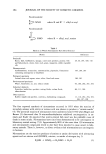
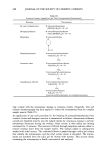
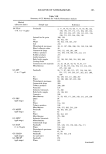
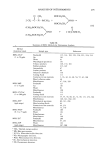
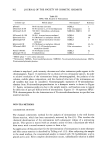
284 JOURNAL OF THE SOCIETY OF COSMETIC CHEMISTS N-nitrosamine R• R""'"' NNO N-nitrosamide O II RC • H• NNO where R and R' = alkyl or aryl where R = alkyl, aryl, amino Table I Matrices in Which Nitrosamines Have Been Detected Matrix References Foodstuffs Bacon, ham, frankfurters, sausage, cured meat products, poultry, fish and fish products, cheese, beer, malt, grain, margarine, edible vegetable oils Pharmaceuticals Antihistamines, tetracycline, oxytetracycline, piperazine, formulation containing aminopyrine or disulfiram Biological specimens Animal tissue and organs, urine, saliva, blood and serum Environmental specimens Water, wastewater, air, soil, tobacco smoke Industrial chemicals Pesticides, herbicides, synthetic cutting fluids, coolant fluids, alkanolamines Other matrices Rubber nipples and pacifiers, cosmetics, dishwashing compounds 28, 46, 294, 309, 310 104, 28O, 283 28O, 285 94, 280, 286, 287, 294 88, 111, 280 13, 110, 282, 294, 305, 3O6, 3O7, 3O8 The first reported synthesis of nitrosamines occurred in 1853 when the reaction of secondary amines with nitrite or nitrous acid was shown to produce a "nitroso amide" (4). The potential toxicity of nitrosamines went undetected until 1956 when Magee and Barnes (5) discovered that N-nitrosodimethylamine exhibited carcinogenicity in an- imals and Ender (6) reported that nitrite-treated fish meal was the probable cause of death in some minks. Nitrosamines have since been demonstrated to be carcinogenic in laboratory animal testing (7,8). Approximately 80% of the more than 120 nitrosamine and nitrosoamide compounds tested to date have been reported to cause cancer in labo- ratory animals. There is, however, no direct evidence that nitrosamines are carcinogenic in humans. Nitrosamines are the reaction products of amines or amine derivatives with nitrosating agents such as nitrous acid (HONO), nitrites, or oxides of nitrogen (eq 1). R2NH + HNO 2 -• R2NNO + H20 (1)

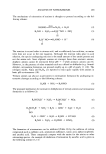
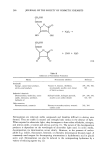
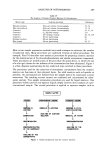
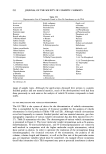
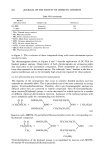
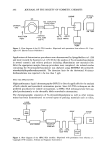
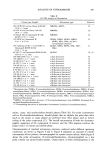
ANALYSIS OF NITROSAMINES 285 The mechanism of nitrosation of amines is thought to proceed according to the fol- lowing scheme: slow 2HONO v N203 q- H20 R2NH q- N203'--•R2•+NO q- NO• H R2• + NO • R2NNO q- H + H (2) (3) (4) The reaction is second order in nitrous acid, and at sufficiently low acidities, an amine term does not occur in the rate equation. Although the reaction takes place in acid solution, the species undergoing reaction is the small amount of free amine present and not the amine salt. Since aliphatic amines are stronger bases than aromatic amines, aliphatic amines cannot be nitrosated below pH = 3 while aromatic amines can (9). However, in the presence of other materials such as a chloral or aldehydes (e.g. formal- dehyde), nitrosamine formation can proceed readily up to a pH of nearly 11 (10). The nitrogen oxides, N203 and N204, are reported to react quite rapidly with amines in basic pH environments (10). Tertiary amines can also act as precursors in nitrosamine formation by undergoing ni- trosative cleavage according to the following scheme: R2NR + NO•----)R2NNO (5) The proposed mechanism for nitrosative dealkylation of tertiary amines and nitrosamine formation is as follows (3): R2NCH2 Rt q- N203 •)R2qqCH2 Rt q- NO• NO R2•CH2 Rt q- NO•---)R2N -• CHR • + N20 q- H20 NO R2N = CHR t + H20---)R2NH + RtCHO R2NH q- N203 • R2NNO q- HNO 2 (6) (7) (8) (9) The formation of nitrosamines can be inhibited (Table II) by the addition of certain compounds such as sulfamic acid, ammonium sulfamate, tannic acid, alpha-tocopherol, and ascorbic acid. These compounds compete with the amine for the nitrite or other nitrosating species. An example of inhibition of nitrosation by ascorbic acid is given in the following scheme (3,11):
Purchased for the exclusive use of nofirst nolast (unknown)
From: SCC Media Library & Resource Center (library.scconline.org)