SUNSCREEN EFFICACY 281 ACKNOWLEDGMENTS The experimental materials were kindly supplied by Dr. Paul Silber of Mary Kay Cos- metics, Inc., Dallas, Texas, and Mr. Bill Durkin of Chattem, Inc., Chattanooga, Ten- nessee. The evaluation of the sun protection factors established at Hill Top Research, Inc., was conducted by Mrs. Janet Powell. REFERENCES (1) J. A. Parrish, "Responses of Skin to Visible and Ultraviolet Radiation," in Biochemistry and Physiology oftheSkin, L. A. Goldsmith, Ed. (Oxford University Press, New York, 1983), pp. 713-733. (2) W. L. Morison, J. A. Parish, and J. H. Epstein, Photoimmunology, Arch. Dermatol., 115, 350-355 (1979). (3) P. D. Forbes, R. E. Davies, and F. Urback, Ageing, environmental influences, and photocarcino- genesis, J. Invest. Dermatol., 73, 131-134 (1979). (4) L. H. Kligman, F. J. Akin, and A.M. Kligman, Prevention of ultraviolet damage to the dermis of hairless mice by sunscreens, J. Invest. Dermatol., 78, 181-189 (1982). (5) M. L. Kripke, Immunosuppressive effects of ultraviolet (280-322 nn) radiation and psoralen plus ultraviolet (320-400 nn) radiation in mice, J.N.C.I., 69, 171-173 (1982). (6) L. H. Kligman, F. J. Akin, and A.M. Kligman, The contributions of UVA and UVB to connective tissue damage in hairless mice, J. Invest. Dermatol., 84, 272-276. (7) P. T. Strickland, Photocarcinogenesis by near-ultraviolet (UVA) radiation in sencar mice, J. Invest. Dermatol., 87, 272-275 (1986). (8) K. Kaidbey and R. W. Grange, Comparison of methods for assessing photoprotection against ultravi- olet A in vivo, J. Am. Acad. Dermatol., 16, 346-353 (1987). (9) J. W. Stanfield, P. A. Feldt, E. S. Csortan, and L. Krochmal, Ultraviolet A sunscreen evaluation in normal subjects,J. Am. Acad. Dermatol., 20, 744-748 (1989). (10) M. Turkoglu, A. A. Sakr, J. L. Lichten, E. V. Buehler, andJ. J. Kreuzmann, An in-vivo assessment of the sun protection index, Cosmetics and Toiletries, 104, 33-38 (1989). (11) S. L. Yankell, G. N. Martin, H. Piechuta, W. A. Hockett, and M. M. Dolan, Solar simulator sunscreen evaluation in guinea pigs, J. Soc. Cosmet. Chem., 21, 607-611 (1970). (12) G. B. Whitman, E. E. Leach, V. A. DeLeo, J. L. Fleiss, B. Conetta, and L. C. Harber, Compara- tive study of erythema response to UV radiation in guinea pigs and humans, Photochem. Photobiol., 42, 399-403 (1985). (13) F. J. Akin, A. P. Rose, III, T. M. Chamness, and E. Marlowe, Sunscreen protection against drug- induced phototoxicity in animal models, Toxic. Appl. Pharmacol., 49, 219-224 (1979). (14) OTC Panel, Sunscreen drug products for over-the-counter human use, Fed. Reg., 43, 38206-38269 (1978). (15) E. A. Newman and R. D. Parker, A device for irradiating guinea pig skin with ultraviolet light, Fd. Cosm. Toxicol., 23, 683-687 (1985). (16) R. Roelandts, N. Sohrabvand, and M. Garmyn, Evaluating the UVA protection of sunscreens, J. Am. Acad. Dermatol., 21, 56-62 (1989). (17) D. J. Cripps, N.J. Lowe, and A. B. Lerner, Action spectra of topical psoralens: A reevaluation, Brit. J. Dermatol., 107, 77-82 (1982).

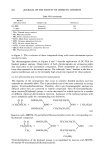
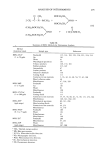
j. Soc. Cosmet. Chem., 41, 283-333 (September/October 1990) Analysis of nitrosamines in cosmetics KANE IKEDA and KENNETH G. MIGLIORESE, Helene Curtis, Incorporated, Chicago, IL 60639. Received September 17, 1990. Synopsis A review of the technology available for the analysis of trace levels of secondary N-nitroso compounds in cosmetics and cosmetic raw materials is presented. Included are discussions on detection limits for indi- vidual nitrosamine species for the various analytical procedures being employed, sample preparation and concentration techniques required for overcoming matrix interferences, achieving the lowest detectable limits of current instrumentation, and nitrosamine selective versus non-selective analytical procedures for quantifying nitrosamine species. INTRODUCTION The detection limit for trace contaminants in the environment is continually being pushed to lower and lower levels by increasingly sophisticated analytical instrumenta- tion. Analyses are now being performed routinely on previously undetectable levels of materials ranging from heavy metal contaminants, pesticide residues, and polychlori- nated biphenyls (PCBs), to a class of secondary N-nitroso compounds more commonly known as nitrosamines. Nitrosamines have been detected at the part per billion level in a wide variety of matrices (Table I). The cosmetic industry became aware of the possible presence of trace levels of nitrosamines in cosmetic products at an American Chemical Society meeting in March 1977, when Fine (1) reported the detection of N-nitroso- diethanolamine in finished products. To better understand the nature of N-nitroso compounds, a brief examination of their chemistry is required. For a more extensive discussion, the reader is referred to other exhaustive reviews of this subject (2,3). In this paper, the term nitrosamine refers specifically to secondary nitrosamines. NITROSAMINE CHEMISTRY N-nitroso compounds contain the characteristic N-NO functional group and include nitrosamines and nitrosoamides. Their structures are shown below: The authors represent the Nitrosamine Task Force of the Cosmetic, Toiletry, and Fragrance Association. 283
Purchased for the exclusive use of nofirst nolast (unknown)
From: SCC Media Library & Resource Center (library.scconline.org)