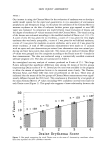
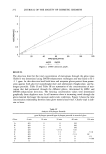
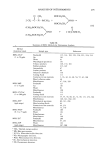
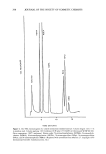
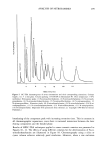
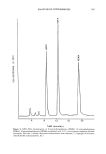
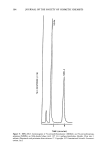
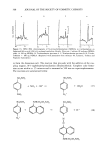
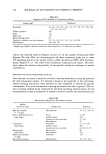
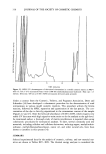
298 JOURNAL OF THE SOCIETY OF COSMETIC CHEMISTS z ! I i 5 10 15 TIME (minutes) Figure 4. GC-TEA chromatogram of a volatile nitrosamine standard mixture. Column length: 14 ft X V• in stainless steel. Column packing: 10% Carbowax 20 M plus 0.5% KOH on Chromosorb W/HP 80/100. Oven temperature: 180øC isothermal. Elution order: N-nitrosodimethylamine (NDMA), N-nitrosodieth- ylamine (NDEA), N-nitrosodipropylamine (NDPA), N-nitrosopiperidine (NPip), N-nitrosopyrrolidine (NPyr), and N-nitrosomorpholine (NMor). (Reprinted with permission from reference 27. Copyright 1979 International Scientific Communications, Inc.)

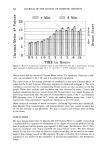
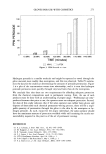
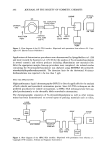
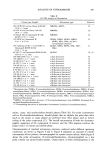
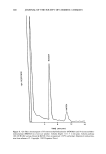
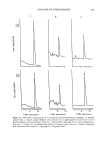
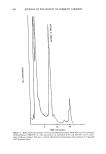
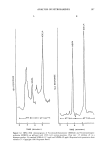
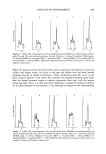
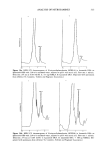
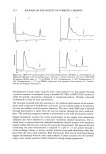
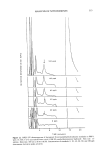
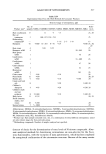
ANALYSIS OF NITROSAMINES 299 4 8 12 16 20 24 TIME (minutes) Figure 5. GC-TEA chromatograms of seven nitrosamines and their corresponding nitramines. Column length: 2 m X 2 mm glass. Column packing: 15% FFAP on Chromosorb W. Oven temperature: 170øC isothermal. Nitrosamine peaks: (1) N-nitrosodimethylamine, (2) N-nitrosodiethylamine, (3) N-nitrosodi- propylamine, (4)N-nitrosomethylpentylamine, (5)N-nitrosodibutylamine, (6)N-nitrosopiperidine, (7) N-nitrosopyrrolidine. Nitfamine peaks: (8) N-nitrodimethylamine, (9) N-nitrodiethylamine, (10) N-ni- trodipropylamine, (11) N-nitromethylpentylamine, (12) N-nitrodibutylamine, (13) N-nitropiperidine, (14) N-nitropyrrolidine. (Reprinted with permission from reference 22. Copyright 1980 Elsevier Science Publishers.) broadening of the component peak with increasing retention time. This is common in all chromatographic separations, since there is increased interaction between the later eluting components and the bonded phase. Results of HPLC-TEA techniques applied to some cosmetic matrices are presented in Figures 10-12. The effects of using different columns for the determination of N-ni- trosodiethanolamine are illustrated in Figure 10. Chromatography using a silica or cyano column achieves relatively good resolution. However, when a size exclusion
Purchased for the exclusive use of nofirst nolast (unknown)
From: SCC Media Library & Resource Center (library.scconline.org)