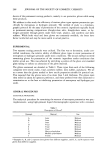
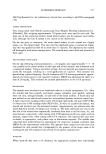
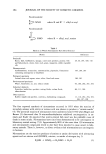
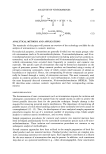
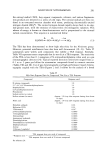
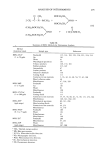
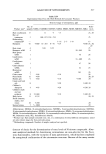
290 JOURNAL OF THE SOCIETY OF COSMETIC CHEMISTS shampoo and/or lotion matrices. The nitrosamines are extracted from the sample matrix into a 1:1 (v/v) mixture of acetone and ethyl acetate. Excess sulfamic acid is added to prevent nitrosamine formation during the sample workup, and anhydrous sodium sul- fate is then added to remove water from the system. The resulting acetone/ethyl acetate tiltrate containing the nitrosamines is concentrated for subsequent analysis. Unlike complex finished product matrices, which contain mixtures of various raw mate- rials, the raw material matrix itself generally consists of one major constituent that acts both as the diluent and major interferent. The approaches taken for their sample prepa- ration are essentially the same as those applied to the finished product matrices dis- cussed previously. The silica gel column isolation procedure, partitioning of the nitro- samines into solvent, and the simple dissolution of the matrix in an appropriate solvent have all been used (Table V). THERMAL ENERGY ANALYZER METHODS Analytical methodology for the determination of trace levels of nitrosamines in both finished products and raw materials has typically involved the use of the thermal energy analyzer (TEA) in conjunction with either gas chromatographic (GC) or high-perfor- mance liquid chromatographic (HPLC) separation techniques. The TEA was developed by Fine et al. (17) in 1974 for the selective detection of N-ni- troso compounds. In the TEA, the N-nitroso compound enters a flash catalytic pyro- lyzer (18), where the N-nitroso (N-NO) bond is thermally broken with the formation of Table V The Analysis of Raw Material Matrices for Nitrosamines Matrix type Isolation procedure References Monoethanolamine Diethanolamine Triethanolamine Lauramide DEA Cocamide DEA Myristamide DEA Stearamide DEA Cocamide DEA Lauramide DEA Morpholine Diethanolamine Triethanolamine Stearalkonium chloride Lauramine oxide Dimethylstearamine Triisopropanolamine Amphoteric matrices Quaternium matrices Alkanolamines Triethanolamine lauryl sulfate Lauramide DEA Simple Simple Simple Simple Simple Simple Simple Simple Simple dilution dilution dilution dilution dilution dilution dilution dilution dilution Simple dilution Silica gel column chromatography Silica gel column chromatography Silica gel column chromatography Silica gel column chromatography Silica gel column chromatography Silica gel column chromatography Silica gel column chromatography Silica gel column chromatography Cation exchange & silica gel column chromatography Solvent partitioning Solvent partitioning 48 48, 55, 60 48, 55, 60 274 274 49 49 5O 5O 54 108 108 7 7 7 7 52 53 30 51 56

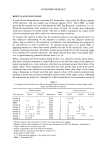
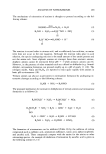
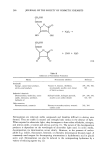
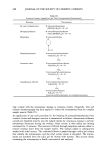
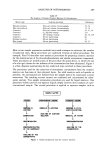
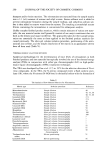
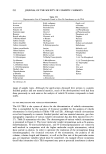
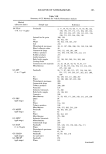
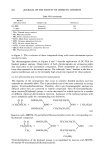
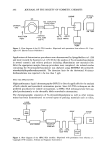
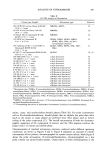
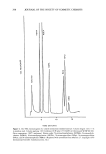
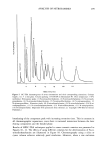
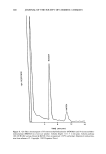
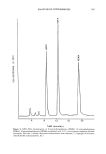
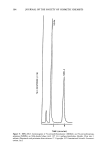
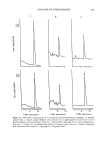
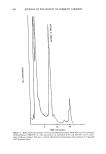
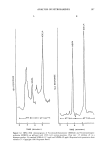
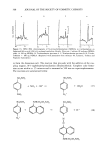
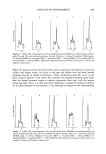
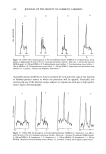
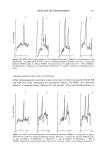
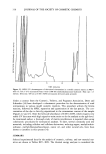
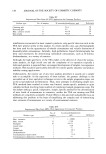
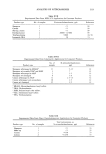
ANALYSIS OF NITROSAMINES 291 the nitrosyl radical ('NO). Any organic compounds, solvents, and various fragmenta- tion products are removed in a series of cold traps. The nitrosyl radicals are then oxi- dized in an evacuated reaction chamber with ozone, producing electronically excited nitrogen dioxide (NO2*). The excited nitrogen dioxide rapidly decays back to its orig- inal ground state, with the emission of characteristic electromagnetic radiation. This release of energy is known as chemiluminescence and is proportional to the nitrosyl radical concentration. This sequence is summarized below: A 03 - hv R2NNO-• 'NO = NO2* • NO 2 (13) The TEA has been demonstrated to show high selectivity for the N-nitroso group. However, potential interferences have also been well documented (19-23). Table VI summarizes some widely used compounds that exhibit a TEA response. Similarly, Table VII represents some compounds that do not elicit a TEA response. The sensitivity of the TEA is less than 0.1 nanogram of N-nitrosodimethylamine when used as a gas chromatographic detector (24). Typical reported detection limits have ranged from ca. 0.1 to ca. 5 parts per billion for nitrosamine compounds found in cosmetic matrices (Tables VIII and IX). Use of gas chromatography and high-performance liquid chroma- tography coupled with the TEA (Figures 2 and 3) allows for the analysis of a broad Table V! Mole Basis Response Ratio for Compounds That Give a TEA Response Compound Response ratio a N-nitroso compounds 1.0 2,2', 4,4', 6,6'-Hexani trod iphenylamine 1.4 Isopentylnitrite 1.0 d, l-Cyc lohexylaminenit rite 1.0 Pentylnitrite 1.0 Sodium nitrite (in water) 1.0 Sodium nitrate (in water) Approx. 1.0 (very slow response lasting from hours to days) Nitric acid Approx. 1.0 (very slow response lasting from hours to days) Dimethyl sulfoxide 0.03 Hydrazine (95 %) 0.03 5-Nitrouracil 0.017 p-Nitrosodiphenylamine 0.0050 3-Nitrophthalimide 0.0030 Nitromethane 0.0018 Ammonium hydroxide 0.0016 Dimethylglyoxime 0.0010 Dimethylamine hydrochloride 0.0009 Diphenylcarbazone 0.0007 Aniline 0.0003 2-Nitroso- 1-naphthol 0.0002 ' Response ratio = See reference 20. TEA response from one mole of compound TEA response from one mole of N-nitroso compound
Purchased for the exclusive use of nofirst nolast (unknown)
From: SCC Media Library & Resource Center (library.scconline.org)