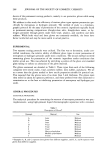
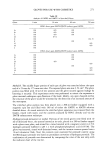
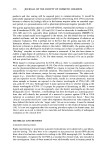
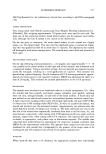
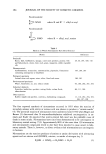
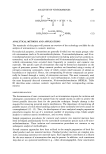
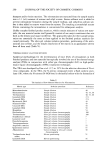
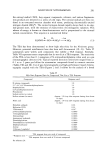
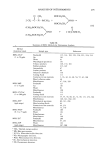
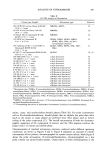
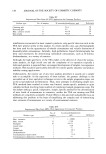
268 JOURNAL OF THE SOCIETY OF COSMETIC CHEMISTS ducers of the permanent-waving products, namely to use protective gloves while using these products. We address in this study the efficiency of various glove types against permeation spe- cifically by mercaptans or hydrogen peroxide. The method of study is a chromato- graphic protocol for the assay of permeation of the cosmetic ingredients typically found in permanent-waving compositions (thioglycolate salts, thioglycolate esters, or hy- drogen peroxide) through gloves made from vinyl, plastics, and synthetic and latex rubbers. While both vinyl and latex gloves are commonly available, the latter have better tactile feel and may be more useful in actual practice. EXPERIMENTAL Two separate testing protocols were utilized. The first was to determine, under con- trolled conditions, the relative ability of different glove types to resist permeation of mercaptans or hydrogen peroxide under static conditions. The second method involved examining gloves for permeation of the cosmetic ingredient under conditions that mimic actual use. This was achieved by stretching a portion of the glove over standard glass tubing to enforce an alteration of the glove material. The gloves examined are detailed in Table I. Three types from each of the following categories were tested: nylon, vinyl, synthetic rubber, latex rubber, and plastic. We set as a caveat that the gloves needed to have tactile properties suitable for practical use. This required that the gloves were of no more than 5-mil thickness. The gloves were then tested in salons for operator preference, and those prefered were then subjected to examination as to the best at inhibiting permeation of mercaptans and hydrogen per- oxide. GENERAL PROCEDURES ANALYTICAL PROCEDURE The analytical procedure for examining the amount of mercaptan permeation was spec- trophotometic, using high-pressure liquid chromatographic separation with a reversed- Table I Description of Gloves* Example Material Size A Latex Medium B Latex Medium C Latex Medium D Vinyl Medium E Vinyl Medium F Vinyl Medium G Heavy polyethylene Medium H Medium polyethylene Medium I Trionic Medium * Examples A, B, and C represent latex gloves from different suppliers, and D, E, and F represent vinyl gloves from different suppliers.

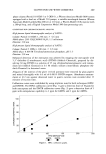
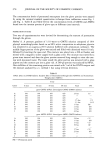
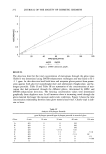
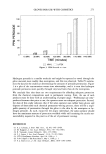
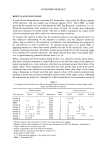
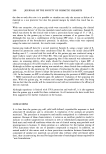
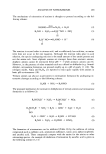
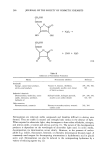
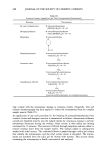
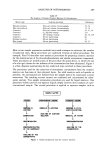
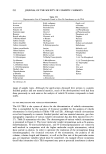
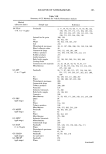
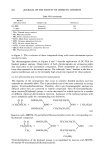
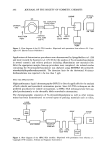
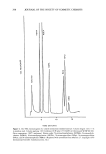
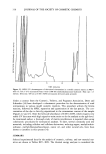
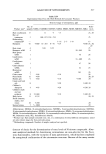
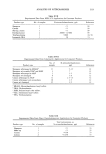
GLOVES FOR USE WITH COSMETICS 269 phase column (Partisil 10 ODS-3 or 5 ODS-3), a Waters Associates Model 6000 system equipped with a dual set of Model 510 pumps, a variable wavelength detector (Waters Associates Model Lambda Max 480 set at 210 nm), a Waters Model 6 UK injector with a 200-•tl loop, and a Digital Corporation Model 380 data processing unit. CONDiTiONS FOR CHROM^TO(3R^VH•C ^N^rYSES High-pressure liquid chromatographic analysis of GMTG.' Column.' Partisil 10 ODS-3, 250 mm X 4.6 mm Mobile phase: 20% CH3CN/80% H20 1.2 ml/minute Detection.' 210 nm High-pressure liquid chromatographic analysis of AMTG: Column: Partisil 50DS-3, 100 mm X 4.6 mm Mobile phase.' O. 005 M Tetrabutylammonium phosphate, pH 3.5 Detection.' 210 nm Enhanced detection of the mercaptan was achieved by trapping the mercaptide with 5,5'-dithiobis-(2-nitrobenzoic acid) (DTNB) (Aldrich Chemical), prepared by dis- solving 30 mg DTNB in a solution of 25 mg ethylenediaminetetraacetic acid tetraso- dium salt (Aldrich Chemical) in 0.1 M tribasic sodium citrate/dibasic phosphate (Al- drich Chemical) in deionized water. Aliquots of the interior of the glove (1.0-ml portions) were removed by glass pipette and mixed thoroughly with 4.0 ml of 0.003% DNTB reagent. Absorbance measure- ments at 412 nm against deionized water in quartz cuvettes were recorded after 15 minutes of reaction time. Calibration curves were established by using triplicate runs for both techniques (HPLC and DNTB). The HPLC calibration curves (Fig. 1) gave a detection limit of 10 ppm for both mercaptans and the DNTB calibration curves (Fig. 2) gave a detection limit of 5 ppm with extrapolation capability to 2 ppm for GMTG and 3 ppm for AMTG. lOO .,a:: 8o -- .,a:: 6o 0 '• 4.0 0 0 20 I 50 100 150 200 PPM MERCAPTAN AMTG GMTG Figure 1. HPLC calibration graphs. 250
Purchased for the exclusive use of nofirst nolast (unknown)
From: SCC Media Library & Resource Center (library.scconline.org)