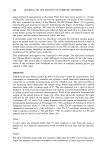
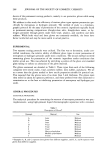
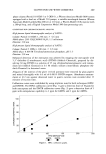
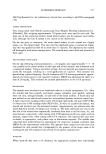
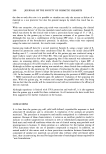
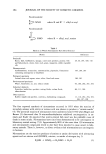
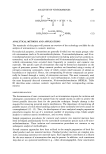
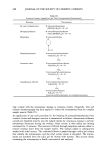
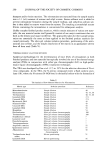
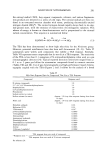
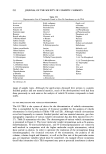
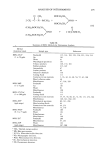
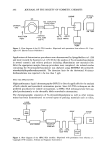
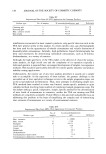
318 JOURNAL OF THE SOCIETY OF COSMETIC CHEMISTS Table XV Experimental Data From GC-ECD Application for Consumer Products Product type No. of samples N-nitrosodiethanolamine, ppb References Cleansing gels 3 •6.3 58 Slimming gels 3 • 1 58 Misc. cosmetic creams 8 •0.38 58 Skin creams 8 •0.25 58 interferences encountered in most cosmetic products, only specific detectors such as the TEA have general utility in this analysis. In certain specific cases, gas chromatography has been used for the quantitation of volatile nitrosamines and volatile derivatives of thermally lablie nitrosamines. Similarly, high-performance liquid chromatography has been used extensively for determining nonvolatile nitrosamines, such as N-nitroso- diethanolamine, in a variety of matrices. Although the high specificity of the TEA makes it the detector of choice for nitrosa- mine analysis, its high initial cost and the complexity of its operation (typically a dedicated operator is required) have encouraged development of simpler, less expensive methods. This would be particularly desirable for routine quality assurance and product stability testing applications. Unfortunately, the routine use of any trace analysis procedure is usually not a simple task to accomplish. In the experience of these authors, the greatest challenge in the successful use of trace analytical techniques occurs in the sample preparation steps, not in the actual analytical determination. Thus, most attempts at developing simple non- TEA methods have resulted in either very limited, matrix-specific methods or quite complex methods involving large numbers of complicated sample preparation steps. For the analyst seeking a quick, inexpensive, simple, specific method for the determination of trace levels of nitrosamines in cosmetics, neither the TEA nor existing non-TEA methods are completely acceptable. Future efforts in this area will undoubtedly focus on addressing this problem in the hope of simplifying the complex task of determining trace amounts of nitrosamines in a variety of environmental matrices. Table XVI Experimental Data From HPLC-TEA Applications for Consumer Products No. of N-nitrosodiethanolamine, Product type samples ppb References Misc. cosmetics 7 1-25000 1 Misc. lotions 13 140 1 Shampoos 16 •4113 1, 57 Liquid soaps 1 20 57 Creams - 1 1 57 Bubble bath 1 26.5 57 Diethanolamine 1 1 57 Triethanolamine lauryl sulfate 1 12.8 57 Triethanolamine alkylamino ethersulfate 1 1 57

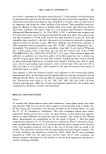
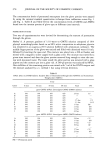
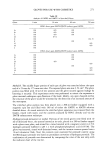
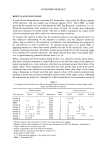
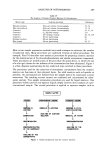
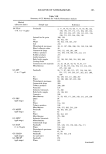
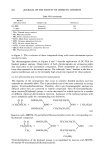
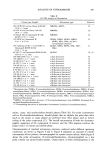
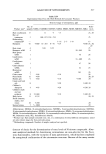
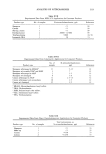
ANALYSIS OF NITROSAMINES 319 Table XVII Experimental Data From HPLC-UV Applications for Consumer Products Product type No. of samples N-nitrosodiethanolamine, ppb References Shampoos 1 1 99 Creams 1 1 99 Shaving creams 1 1 99 Diethanolamine 2 20000- 127000 99 Triethanolamine 3 •800 10, 99 Lauramide DEA 1 50 74 Table XVIII Experimental Data From Colorimetric Applications for Consumer Products No. of N-nitrosodiethanolamine, Product type samples ppb References Shampoos w/bronopol & MEALS a 11 Shampoos w/cocamide DEA b and SLES c 3 Shampoos w/bronopol & ALS d 3 Shampoos w/o bronopol 6 Creams w/bronopol & TEA e 12 Creams w/bronopol and antioxidants 10 Creams w/o bronopol 25 5-22 32 7 32 2.5 32 3.9 32 2.5-15 32 2.5 32 2.5 32 MEALS, Monoethanolamine lauryl sulfate. DEA, Diethanolamine. SLES, Sodium lauryl ether sulfate. ALS, Ammonium lauryl sulfate. TEA, Triethanolamine. Table XlX Experimental Data From Direct Chemiluminescence Applications for Consumer Products Product type No. of samples Total nitrosamines, as N-nitrosodiethanolamine, ppb References Shampoos Make-up Creams Lotions 1 1 •350 •1240 33 33 33 33
Purchased for the exclusive use of nofirst nolast (unknown)
From: SCC Media Library & Resource Center (library.scconline.org)