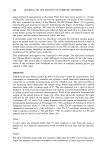
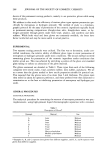
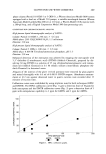
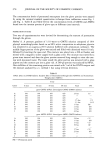
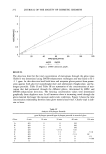
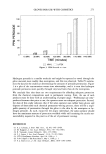
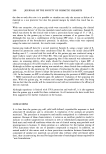
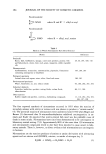
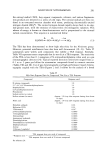
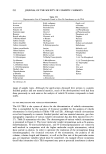
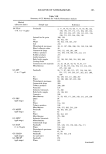
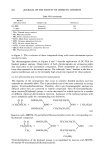
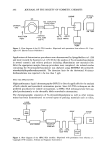
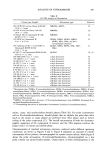
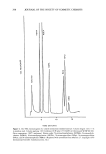
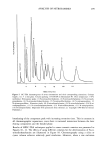
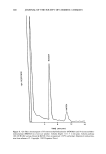
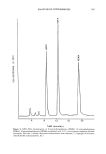
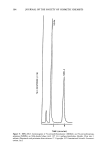
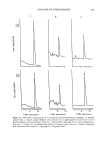
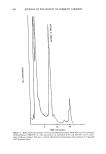
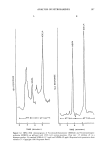
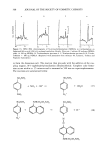
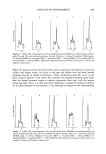
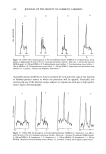
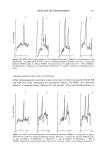
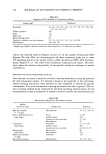
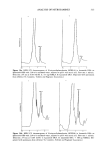
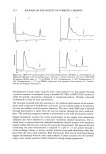
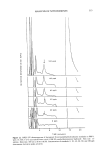
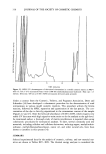
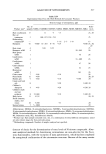
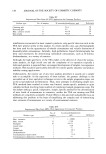
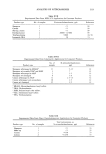
316 JOURNAL OF THE SOCIETY OF COSMETIC CHEMISTS ! ! ! ! 4 I• 12 16 TIME (minutes) Figure 23. HPLC-UV chromatogram of derivatized nitrosamines in a model cosmetic matrix on PRP-1 with 16.5:83.5 (v/v) acetonitrile-water with 0.008 M tetrabutylammonium hydroxide. Flow rate: 1.5 ml/min. Detection: 490 nm at 0.001 AUFS (nitrosamine derivative peak afrowed). Under a contract from the Cosmetic, Toiletry, and Fragrance Association, Derse and Schroeder (34) have developed a colorimetric procedure for the determination of total nitrosamines in various model cosmetic matrices. This procedure utilizes the Griess reaction, followed by HPLC separation and quantitation of the dye species. The con- centration of the dye is directly proportional to the nitrosamine content of the sample (Figures 22 and 23). Note the full-scale absorbance of 0.001 AUFS, which requires very stable UV detectors with high signal-to-noise ratios to do the analysis at the ppb level. As mentioned earlier, a thorough study of matrix interferences is required when using colorimetric procedures for nitrosamine analyses. To date, several commonly used raw materials, including cellulose and cellulose derivatives, reducing sugars, methylisothia- zolinone, methylchloroisothiazolinone, castor oil, and other natural oils, have been shown to interfere in this system (34). SUMMARY Selected experimental data for the analysis of cosmetic, toiletry, and raw material ma- trices are shown in Tables XIV-XIX. The thermal energy analyzer is considered the

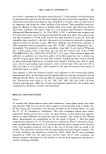
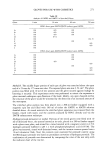
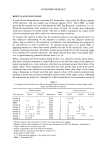
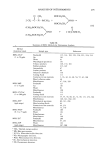
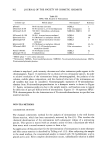
ANALYSIS OF NITROSAMINES 317 Table XlV Experimental Data From GC-TEA Methods for Consumer Products Product type a Detected range of nitrosamines, ppb No. of Refer- samples NDELA NDOMA NMTDA NDMA NMEA NDEA NMODA NMor ences Hair conditioners 17 11 9 5 25, 28 Hot oil treatments 2 604-873 218-254 25 Dishwashing compounds b -- 1 - 11 2- 5 1- 8 13 Shampoos 56 •660 16-203 8-76 •24 •640 25, 28, 29 Hair rinses 4 •83 •25 25 Shampoos w/SO 4 28-969 26 Hair sprays w/SO 1 56 26 Conditioners w/SO 3 33- 688 26 Conditioners w/SCL 1 67 26 Color enhancer w/SCL 1 42 26 Moisturizer w/SCL 1 261 26 Color toners 7 •46 • 10 28 Foam baths 12 •90 28, 29 Shower gels 9 •60 • 10 •380 28 Cream and bath oils 8 •20 •440 28 Children's shampoos 5 •45 •20 •230 28 Children's bath and care products 8 • 1400 • 10 •360 28 Body lotion 11 • 132 28, 29 Facial cleansers, masks, and tonics 29 •200 •3 28 Suntan lotions 5 5 - 2000 29 Abbreviations: NDELA, N-nitrosodiethanolamine NDOMA, N-nitrosododecylmethylamine NMTDA, N-nitrøsømethyltetradecylamine NDMA, N-nitrosodimethylamine NMEA, N-nitrosomethylethylamine NDEA, N-nitrosodiethylamine NMODA, N-nitrosomethyloctadecylamine NMor, N-nitrosomorpholine SO, Stearamine oxide SCL, Stearalkonium chloride. a Product type: Each sample contained none, one, or a combination of several different nitrosamines. Listed are only relative ranges for that particular group. b Dishwashing compounds: Number of samples analyzed not specified. detector of choice for the determination of trace levels of N-nitroso compounds. Alter- nate analytical methods for determining nitrosamines are non-selective for the N-ni- troso functionality, with the exception of mass spectrometry, which has been employed for unequivocal confirmation of the nitrosamine structure. Because of the many matrix
Purchased for the exclusive use of nofirst nolast (unknown)
From: SCC Media Library & Resource Center (library.scconline.org)